Культура. Нацыя · 2026-04-15
№37 - 2026 - 04
Пра часопіс
Часопіс “КУЛЬТУРА. НАЦЫЯ” заснаваны ў 2012 годзе як незалежнае перыядычнае выданьне, прызначанае для абмеркаваньня праблем беларускай культуры і нацыянальнага будаўніцтва.
Першыя шэсць нумароў былі выдадзены пад назвай “САКАВІК”, а з 2018 года часопіс выходзіць два разы на год пад назвай “КУЛЬТУРА. НАЦЫЯ” і публікуецца на вэб-старонцы www.sakavik.net. З кастрычніка 2020 года, часопіс “КУЛЬТУРА. НАЦЫЯ” набыў статус выданьня Беларускага Інстытута Навукі і Мастацтва ў Канадзе (БІНІМ, Канада).
Часопіс зьмяшчае арыгінальныя аналітычныя артыкулы, эсэ, а таксама грунтоўныя дыскусіі і каментары па гісторыі, мове, літаратуры, сацыялогіі, традыцыях, і іншых пытаньнях, маючых дачыненьне да развіцьця беларускай нацыі і нацыянальнага будаўніцтва. Беларуская Мова – асноўная мова часопіса, але магчымы публікацыі і на іншых мовах. Запрашаем да супрацоўніцтва ўсіх зацікаўленых. Свае матэрыялы дасылайце на: kn@binim.org
Рэдакцыя часопіса:
Заснавальнік і рэдактар Пётра Мурзёнак
Сябры рэдакцыі:
Наталія Баркар
Юрась Грыбоўскі
Вольга Іпатава
Аляксандр Каралькевіч
Сяргей Панізьнік
Ігар Пракаповіч
Юрась Рапецкі
Галіна Туміловіч
Атава, Канада
Рэдакцыя часопіса віншуе чытачоў са сьвятам –
Днём Незалежнасьці Беларусі !!!
Анатацыя да 37-га нумара часопіса “Культура. Нацыя”
(красавік 2026; 192 старонкі, 44 здымкі і ілюстрацыі, 8 табліц).
Ў раздзеле “Слова рэдактара” публікуем эсэ Пётры Мурзёнка: “Здалёку не пабачу або Капітана ўсё яшчэ не знайшлі”. Зьмяшчаем у часопісе таксама другі артыкул рэдактара, прысьвечаны вызначэньню характара вайны Расіі Супраць Украіны.
З нагоды 40-годдзя Аварыі на Чарнобыльскай АЭС публікуем пераклад на англійскую мову артыкула сп. І. Сурвілла “FIFTEEN YEARS HAVE PASSED” апублікаваны ў 2002 годзе у газеце “Беларус”, #471, (https://belarus8.tripod.com/hazeta/gady.htm.) Пераклад на англійскую мову зроблены Аляксандрам Каралькевічам.
Ў першыню на старонках часопіса мы прадстаўляем карціны мастачкі Людмілы Андзілеўкі з серыі “ЗОНА”. Малюнак Людмілы Андзілеўкі "Песьня. Беларусь спрадвечная” зьмешчаны на першай старонке гэтага нумара. У раздзеле “Літаратура” размешчаны расказ Людмілы Андзілеўка “Уваскрэшэнне Лазара ці “кардонавыя думкі”, або куды вядзе “Шлях дробнай сволачы” і яе верш “Ляці, Пагоня”.
У 37-м нумары мы пачынаем новую рубрыку “Рэлігійныя чытаньні ад Юрася Рапецкага”, першы артыкул з гэтай рубрыкі называецца “Усіх, каго знойдзеце, клічце на вясельле!”.
У раздзеле "Новыя кнігі" падаем інформацыю аб некаторых беларускіх выданьнях – аб чарговым нумары часопіса "Acta Albaruthenica" і аб трох новых кнігах: Юрася Грыбоўскага “Беларусы ў Латвіі (1918 – 1945 гг.)” (Камунікат, Беласток, 2026), Пётры Мурзёнка “Нарысы Беларуса” (Камунікат, Беласток 2025), і Івонкі Сурвілла “У восем гадоў я была на вайне” (Połackija Łabirynty, Атава-Варшава, 2026).
Падаецца таксама інфармацыя аб прыемё прадстаўнікоў Згуртаваньня Беларусаў Канады і БІНІМ, Канада у пасольстве Чэхіі ў Канадзе, арганізаваным з нагоды міжнароднага дня салідарнасьці з палітвязьнямі (10.12.2025).
Мы разлічваем на вашу падтрымку ў рэкламе часопіса “Культура. Нацыя” сярод блізкіх вам людзей.
Рэдакцыя часопіса, 28 красавіка 2026 года
Наступны 38-мы нумар часопіса “Культура. Нацыя” выйдзе ў лістападзе 2026 года.
Слова Рэдактара
Пётра Мурзёнак: Эсэ: Здалёку не пабачу або Капітана ўсё яшчэ не знайшлі
Abstract:
I decided to write this essay because many Belarusians live after the defeat of the revolution - 2020 in a time of uncertainty and confusion - after the forced emigration of more than half a million active, nationally conscious Belarusians abroad, and again in the absence of clear and certain ways to achieve the Belarusian goal. Recently I listened to Prof. Matskevich, who plans to hold a kind of game to indicate some specific ways out of the crisis in Belarus. A completely valid idea, both for the education and self-organization of Belarusian forces, and for real steps to accelerate changes in Belarus.
Анатацыя:
Гэта эсэ вырашыў напісаць таму, што больш як паўмільёна беларусаў былі змушаны пакінуць Беларусь пасьля разгрому Рэвалюцыі-2020 і у выніку апынуліся у няпэўнасьці і разгубленасьці, ва ўмовах адсутнасьці ясных і пэўных шляхоў асягненьня беларускай мэты.
І. Аналізуючы мінулае
Сёння, аналізуючы мінулае, я часта задаюся пытаннем: якія кнігі або публікацыі ў савецкія часы вялі мяне да глыбокага разумення гісторыі Бацькаўшчыны і фармавалі мой светапогляд адносна беларускай ідэнтычнасці? І не магу прыгадаць нічога канкрэтнага. Я тут не маю на ўвазе беларускую літаратуру якая безумоўна, выхоўвала многія падобныя якасьці. Мне бракавала смелых думак прадстаўнікоў нацыянальнай эліты — пісьменнікаў, філосафаў, інтэлектуалаў. Канешне, найбольш яркі перыяд адноснай “вольнасьці”, прыпадае на гады, якія ішлі непасрэдна за развалам СССР- і былі лепшымі гадамі дзейнасьці БНФ “АДРАДЖЭНЬНЕ” – 1991-1994. Тады, нягледзячы на савецкае мысьленьне тымчасовых кіраўнікоў Беларусі, такія публікацыі ўсё ж можна было знайсьці у такіх выданьнях як газета “СВАБОДА”, “Народная Воля”, і нават газетакампартыі Беларусі “ЗВЯЗДА”.
З таго часу я выразна памятаю адзін тэкст - артыкул Зянона Пазьняка «Пра расейскі імперыялізм і яго небяспеку» (1994).1 Такая праўда была немагчымая ў савецкай
рэчаіснасці па зразумелай прычыне. Артыкул паўплываў на мяне вельмі моцна: многія думкі знаходзілі ўнутранае пацверджанне, нягледзячы на атмасферу грамадства.
Ці адчыніў мне сп. Пазьняк вочы? – думаю, што так.Многія рэчы выказаныя ў артыкуле знаходзілі пацьверджаньне - падспудна мой розум пагаджаўся са сказаным; і відавочна, што такому сугучнаму разуменьню артыкула не магла спрыяць атмасфера беларуска-савецкага грамадства - хіба што таму дапамагалі меркаваньні людзей ў асяроддзі маіх бацькоў і радні ці асобных выпадковых людзей. Але магу сказаць, што сп. Пазьняк яшчэ тады падштурхнуў мяне займацца вывучэньнем беларускай гісторыі і нацыянальнага пытання, што пазней прывяло да стварэння часопіса «Культура. Нацыя», напісаньня кніг і каля 100 артыкулаў на тэму нацыянальнага будаваньня.2,3 Ідэі ж таго артыкула застаюцца актуальнымі і сёння. На жаль, яны так і не былі ўключаны ў агульную стратэгію нацыянальна-сьвядомых сіл у будаўніцтве нацыянальнай дзяржавы (праўда, да гэтага часу так і не створанай, П.М.). Акрамя артыкула сп. Пазьняка, цяжка назваць тэксты, якія істотна паўплывалі на фармаванне маёй ідэнтычнасці, але тут дапускаю, што можа і дрэнна тады шукаў.3 Кажу тут пра артыкул сп. З. Пазьняка таму што сам быў сьведкам, як мае калегі чыталі і горача абмяркоўвалі гэты артыкул, які закрануў тады шмат беларусаў. Але я згодны з сп. С. Навумчыкам які заўважае ў сваіх мемуарах што народ у 90-я гады быў непадрыхтаваны да зьмен і адпаведна да свайго вызваленьня з няволі. Мяркую што адной з істотных прычын была недастатковая нацыянальная адукацыя. Пазней, займаючыся даследаваннямі, я глыбей зразумеў гэтыя думкі. Асабліва пасля працы над тэмай нацыянальнага будаўніцтва і заснаваньня мной часопіса “Культура. Нацыя”, у якім я вырашыў галоўнай тэматыкай зрабіць пытаньні нацыянальнага будрўніцтва.
Прычыны недастатковай нацыянальнай адукацыі добра апісаў Уладзімір Някляеў, непасрэдны ўдзельнік тагачаснага творчага асяроддзя у сваёй кнізе «Гэй бен гіном»: канфармізм, цэнзура, ціск, страх5. Мы ня ведаем які уплыў кніга У. Някляева акажа на
маладое пакаленьне і усіх беларусаў , якія прынялі удзел у Рэвалюцыі-2020. Праблемы, якія паспытала беларуская эліта ў значнай ступені адпавядаюць тым, якія былі апісаны ў добра вядомым эсэ Чэслава Мілаша “Скуты РОЗУМ6. Падобныя ж праблемы былі характэрныя і для іншых краін Цэнтральнай Еўропы якія апынуліся на доўгі час пад савецкай акупацыяй па выніках Другой сусьветнай вайны.
Мы ня ведаем які уплыў кніга У. Някляева акажа на маладое пакаленьне і усіх беларусаў , якія прынялі удзел у Рэвалюцыі-2020.
Пачынаючы вывучэньне беларускай гісторыі, я звярнуўся да перыяду БНР. Шукаючы дакументы таго часу напаткаў адзін здымак, які да гэтага часу моцна уражае – на здымку дзяржаўны савет Літвы або Літоўская Тарыба (пазьней - Дзяржаўны Савет Літвы) які быў створаны 18-22 верасьня 1917 года і абвясьціў незалежнасць Літвы.
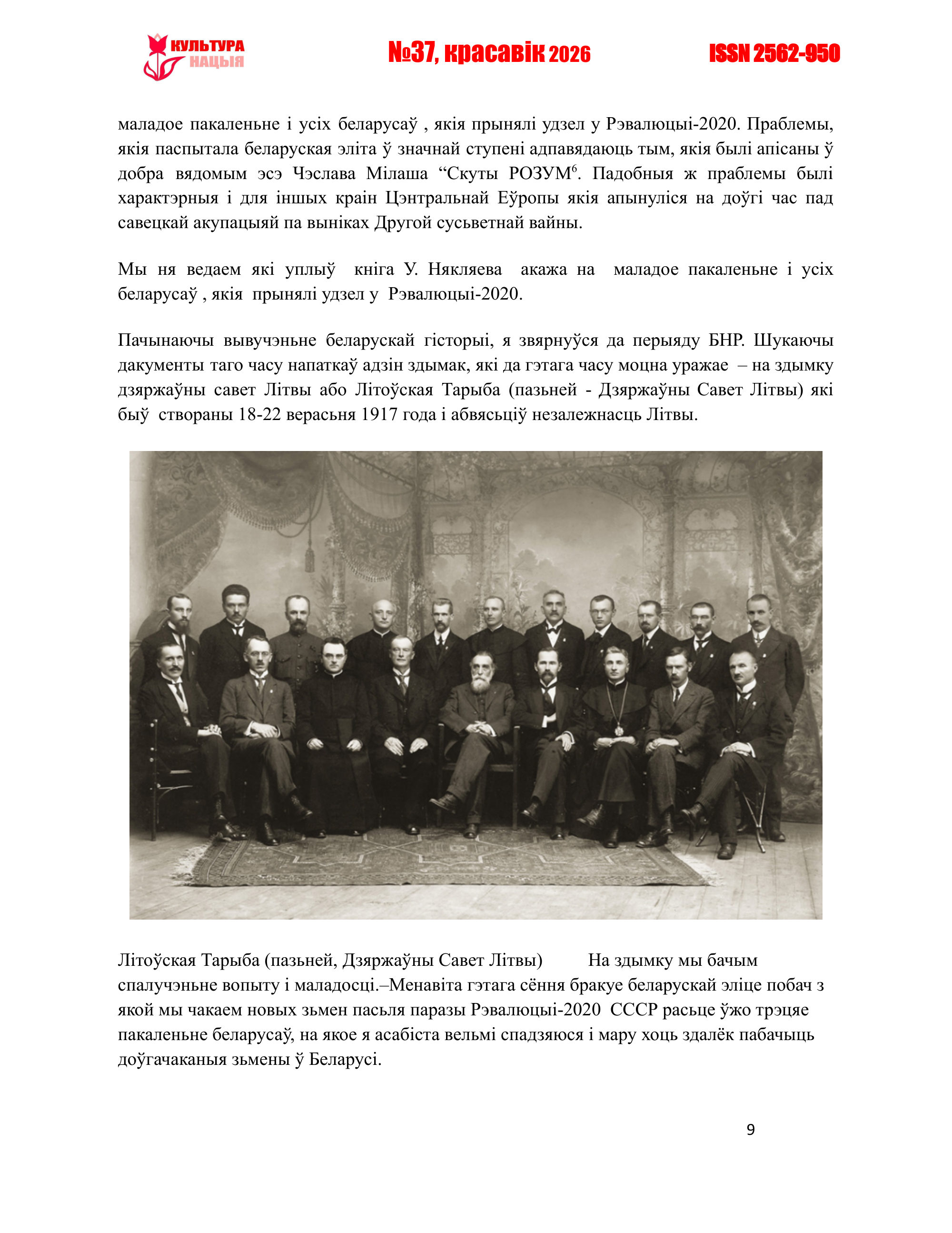
Літоўская Тарыба (пазьней, Дзяржаўны Савет Літвы) На здымку мы бачым спалучэньне вопыту і маладосці.–Менавіта гэтага сёння бракуе беларускай эліце побач з якой мы чакаем новых зьмен пасьля паразы Рэвалюцыі-2020 СССР расьце ўжо трэцяе пакаленьне беларусаў, на якое я асабіста вельмі спадзяюся і мару хоць здалёк пабачыць доўгачаканыя зьмены ў Беларусі.
Хацеў бы адзначыць некалькі публікацый, якія я паступова для сябе адкрываў і з якімі, на мой погляд, варта азнаёміцца кожнаму беларусу. Адна з іх была напісана ў пачатку ХХІ стагоддзя маладым беларускім філосафам Ігнатам Абдзіраловічам (1896-1923). У сваім эсэ «Адвечным шляхам» (1921) ён разглядае разьвіцьцё беларускай дзяржавы не як краіны, якая знаходзіцца на мяжы паміж Усходам і Захадам, а як краіны, якая пераходзіць ад ваганьня між Усходам і Захадам да больш устойлівага стану і выходзіць на асобны шлях разьвіцьця. Упершыню гэта публікацыя для шырокай беларускай публікі адкрылася ў гады адраджэньня, дзякуючы цудоўнаму беларускаму журналісту Сяргею Дубаўцу.4
Відавочна, што гэта эсэ як і шмат другіх істотных публікацый не былі даступнымі доўгі час для савецкіх людзей, як для дарослых,.так і для школьнікаў і студэнтаў. Савецкай уладзе было выгадна трымаць сваіх грамадзян далей ад гісторыі і ад вольных думак. Натуральна. што ў тых умовах беларускія людзі не маглі чытаць і яшчэ адну фундаментальную працу - Вацлава Ластоўскага “Што трэба ведаць кожнаму беларусу?”, таксама напісаную напачатку ХХ стагоддзя.5 Абедзвюм публікацыям ужо больш за 100 гадоў. Відавочна, што абодва артыкулы былі вельмі актуальнымі у той час, бо Беларусы паўставалі тады як самастойная палітычная нацыя.
У сваёй асьветніцкай кнізе В. Ластоўскі задае шмат пытаньняў і там жа дае адказы на іх. Напрыклад:
- Кто мы? - Мы беларусы.
- Кто такие беларусы? - Беларусы — это народ арийской расы, славянского племени.
- Что такое народ или нация? - Народ или нация — это объединение человеческих поколений в их беспрерывном потоке, никогда не прерывающемся и неисчерпаемом, имеющих одно расовое происхождение, т. е. в чьих жилах течёт одна кровь, кто населяет одну территорию, имеет свой оригинальный физический и духовный тип, свои обычаи, культуру, историю и народный характер, которым они отличаются от других людей, говорят на одном языке и демонстрируют свою национальную сознательность и волю.
Улічваючы важнасьць пераемнасьці я, як рэдактар часопіса “Культура. Нацыя” , пераклаў тэксты Ластоўскага на рускую мову6 ды не ад добрага жыцьця - на рынке Беларуси 85% книг друкуецца не на роднай мове, а на русском языке).
З другога боку, мой падыход быў такім, што калі маім перакладам на русскую мову зацікавіцца хаця бы адзін беларус, які б хацеў прачытаць яго на роднай мове, то гэта варта рабіць.
Мы павінны знаходзіць і падтрымлівать кожнага беларуса, у якога яшчэ можа праснуцца жаданьне не только пісать у анкеце, што ён беларус, але і паводзіць сябе як беларус. Можна думаць, што гэты падыход быў апраўданым – сапраўды гэты пераклад з’яўляецца адным з самых наведваемых на старонках часопіса “КУЛЬТУРА. Нацыя”.
З публікацый апошняга часу, якія б нейкім чынам маглі уплываць на нацыянальную свядомасьць можна адзначыць упамянутую кнігу У. Някляева (2021) а таксама шэраг артыкулаў праф. Мацкевіча, напісаных ім напярэдадні і падчас Рэвалюцыі Надзеі-2020.7
ІІ. Надзея застаецца
Я з’яўляюся прыхільнікам яднаньня нацыянальных сіл.8 Мэтазгоднасць гэтага вынікае з аналізу не вельмі пасьпяховых вынікаў адрадженьня у 90-я гады і падчас Рэвалюцыі 2020. І там, і там мы з болям назіралі паразу беларускіх спраў. Яшчэ раней мы параўноўвалі ступені яднаньня ў асяроддзі нацыянальна-сьвядомых сіл у пачатку і ў
канцы ХХ стагоддзя.9 Зроблены аналіз высьвятліў шэраг падабенстваў калі назіралася вялікае жаданьне ў рэалізацыі нацыянальнай ідэі ў тагачасных гістарычных умовах, і, у той жа час, адсутнічала агульная стратэгія і адзінства ў падыходах да вырашэньня нацыянальнага пытаньня, а таксама некрытычная па велічыні падтрымка нацыянальных ідэй з боку насельніцтва. Недахопы, якія мелі месца ў 20х гадах ХХ-га і ХХІ-га стагоддзяў, прывялі да незавершанасьці нацыянальнага будаўніцтва і працягваюць існаваць ў асяроддзі нацыянальна-сьвядомых сіл да гэтага часу.
Усё ж станоўчыя прыклады яднаньня былі адзначаны ў ХХІ-м стагоддзі. Прыкладам таму было вызначэньне сп. А. Мілінкевіча адзіным кандыдатам на пасаду прэзідэнта краіны ад дэмакратычных сіл у 2006 годзе, а таксама сумесная праца трох штабоў кандыдатаў у прэзідэнты ў 2020 годзе.
6 гадоў прайшло пасьля “Рэвалюцыі Надзеі-2020”, і цяпер шмат хто з ўдзельнікаў спрабуюць асэнсаваць чаму яна не была пасьпяховай.
Кіраўнік Nexta Сцяпан Пуціла: “Нам здавалася, сілавікі і чыноўнікі пяройдуць на бок народа”. 8
У. Мацкевіч: «Мы мелі для пасьпяховых, слушных выніковых дзеяньняў літаральна два тыдні пасьля 9 жніўня. І ў гэты час павінна была адбыцца часовая і кампрамісная цэнтралізацыя дзеяньняў. Але момант быў упушчаны».
Па адной з версій, для перамогі пратэстоўцы не мусілі б пакідаць вуліцы. Можна было б уявіць і іншыя сцэнары, па якіх маглі адбывацца падзеі найперш у Мінску.
Далей ідзе невялічкая фантазія, якая прыйшла да мяне ў шпіталі, дзе я нечакана для сябе і родных апынуўся у снежні 2025 года напярэдадні Калядаў.
“Даволі часта бачу прад вачыма жнівеньскія натоўпы ў Мінску ў 2020 годзе.
Па столі і па сьценах палаты шпіталя ў Атаве праплываюць мільгаючыя агенчыкі ад машын хуткай дапамогі, якія амаль кожную паўгадзіны пад’язжаюць да прыёмнага пакоя. Дзесьць ўдалі праз дарогу гараць чырвоныя сігнальныя фанары на пляцоўцы для верталётаў хуткай дапамогі. Увогуле атмасфера ў чырвона-рэвалюцыйных колерах. Міжволі апынуўся на плошчы Леніна сярод 100-тысячнага натоўпу. Што людзі тут робяць? Аказваецца, вось-вось чакаюць вяртаньня з-за мяжы сп. Ціханоўскай. Прайшло ўжо амаль шэсць гадоў пасьля разгрому Рэвалюцыі 2020 – а людзі яшчэ памятаюць
пратэсты, а людзі яшчэ могуць сабрацца і кансалідавацца, так абрыднуў ім лукашэнкаўскі рэжым і сам дыктатар. Магчыма, так толькі бачыцца. Але людзі прыбываюць. Занялі будынак Мінскага гарвыканкама, які ацэплены народнымі дружыньнікамі. Вырашаюць што рабіць. У гарвыканкам выкліканы суддзі Вярхоўнага Суда. Рыхтуецца абвінавачваньне для Дыктатара, якога зьбіраюцца судзіць. Аднаго толькі не хапае. Абвінавачваемага. Якога трэба даставіць на народны суд. У залах шум, гамонка, ідзе пошук адважнага валанцёра, найлепш капітана роты, які зможа выканаць гэту міссію. Абвінавачваньне гатова, за 30 гадоў злачынец столькі натварыў, што зьмяшчэньне дыктатара праз адрачэньне ад трона яму гарантавана. Ці вытрымаюць людзі такі псіхалагічны настрой гістрычнага моманту – звяржэньне дыктатуры і ўстляваньне ТРЭЦЯЙ РЭСПУБЛІКІ.
Каб жа толькі не разышліся як ў 2020 году – паўмільёныя натоўпы людзей не змаглі доўгі час пратрымацца на вуліцах. Калі б змаглі – то рэжым бы напэўна паў, так кажуць цяпер сьведкі тых падзей.
Пад’ехала яшчэ адна машына хуткай дапамогі.
Натоўп на плошчы Леніна не разыходзіцца.
А капітана ўсё няма і гэту ноч, і наступную. Капітана-Патрыёта пакуль што няма.”
А Капітана ўсё няма... Ў галаве сасьпявае яшчэ адна ідэя – магчыма ілюзорная, але на другую ноч, прыйшоў да высновы – яна можа мець шанс. Коратка мы называем гэта Планам “ТРОХ КРОКАЎ”. Гэты План падаецца ніжэй цалкам і будзе вынесены на абмеркаваньне ў адкрытым лісьце да грамадства ”. Каментары і тлумачэньні ад аўтара падаюцца пасьля Ліста.
ІІІ. Адкрыты Ліст
У СМІ было і ёсьць шмат розных ідэй пра тое як ратаваць Беларусь. Якія могуць быць варыянты?
Вось, напрыклад, прапанова С. Алексіевіч — Лукашэнку: Сыдзі ў адстаўку, пакуль не позна.9 Але ж наўрат ці гэты анты-нацыянальны «герой» і злачынец адпусьціць ад крэсла свае пасінелыя ад доўгай улады пальцы?!
А вось прапанова адной з гераінь падзей 20-га года, мужнай сп. М. Калесьнікавай –- «…Каб Еўропа ўступіла ў перамовы з Аляксандрам Лукашэнка». Кароткае апытаньне яе прапановы паказала, што 59% з 718 апытаных падтрымалі такую прапанову у розных варыянтах: “я за” - 24%, “толькі ўзамен на папярэднія крокі з ягонага боку” - 35%. Супраць перамоў выказаліся 41% апытаных. Ў галаве сасьпявае яшчэ адна ідэя – магчымв ілюзорная, але добра абдумаўшы яе на другую ноч, прыйшоў да высновы – яна можа мець шанс. Таму тут дзялюся ёю з вамі. Коратка мы называем ГЭТА – ПЛАНАМ “ТРОХ КРОКАЎ”, які будзе вынесены на абмеркаваньне ў адкрытым лісьце да грамадства (падаецца ніжэй цалкам)” Каментары і тлумачэньні да ЛІСТА падаюцца пасьля яго.
“АДКРЫТЫ ЛІСТ рэдакцыі часопіса "КУЛЬТУРА, НАЦЫЯ"
да асоб і арганізацый беларускага нацыянальнага руху ў замежжы
з прапановамі адносна магчымых крокаў у вырашэньні палітычнага і гуманітарнага крызісу ў Беларусі:
***************************************************************
С.Ціханоўскай, нацыянальнаму лідару Беларусі і кіраўніцы Аб'яднанага Пераходнага Кабінета,
П. Латушка, Кіраўніку Народнaгa антыкрызiснага упраўленьня Беларусі,
І. Сурвілла, Старшыні Рады Беларускай Народнай рэспублікі (БНР),
Кіраўніцтву Еўрапейскага Саюза,
У адміністрацыю Прэзідэнта ЗША, Д. Трампа:
Зьвяртаемся за дапамогай у вырашэньні палітычнага і гуманітарнага крызісу ў Беларусі,дзе:
● Больш двух мільёнаў беларусаў вымушаны былі эміграваць з краіны;
● На беларусаў, якія з замежжа падтрымліваюць сем’і палітвязьняў матэрыяльна і маральна, адбываецца ціск праз родічаў у Беларусі;
● Зафіксаваны выпадкі канфіскацыі у Беларусі маёмасьці беларусаў замежжа;
● У асяроддзі Беларускага Дэмакратычнага руху працягваюцца пошукі, якія да гэтага часу не прывялі да аб’яднаньня і распрацоўкі адзінай стратэгіі
перадоленьня крытычнага становішча. Ў замежжы працуюць тры ўрады на выгнаньні
1. Аб'яднаны Пераходны Кабінет, кераўніца С.Ціханоўская ;
2. Народнае антыкрызіснае упраўленьне Беларусі, кераўні сп. П. Латушка;
3. Рада Беларускай Народнай рэспублікі (БНР), Старшыня - І. Сурвілла.
Сітуацыя з трыма урадамі вельмі нагадвае сітуацыю пасьля абвяшчэньня незалежнасьці БНР у 1918 годзе , калі адначасова працавалі ўрады Луцкевіча, Ластоўскага, Бахановіча.
Не прэтэндуючы на стварэньне яшчэ адной платформы для пошукаў выйсьця з крызісу, прапануем План ТРОХ КРОКАЎ, якія на нашу думку могуць паспрыяць вырашэньню крызіснай сітуацыі ў Беларусі.
КРОК 1. З мэтай павышэньня эфектыўнасьці працы з беларусамі замежжа і са зьнешнімі партнёрамі лічым мэтазгодным утварыць на базе трох упамянутых беларускіх урадаў «Урад Нацыянальнага паратунку», у які могуць быць далучаны па ўзгадненьню паміж кіраўнікамі ўрадаў, іншыя актыўныя палітычныя беларускія дзеячы;
КРОК 2. Двумя бліжэйшымі мэтамі для Урад Нацыянальнага паратунку, лічыць вызваленьне палітычных вязьняў і правядзеньне свабодных і дэмакратычных выбараў у Беларусі, што і была заяўлена у жніўні 2020 года ў праграме Нацыянальнага лідэра сп. С. ЦІханоўскай;
КРОК 3. Для вырашэньня гэтых задач прапануем Ураду Нацыянальнага паратунку распачаць перамовы з урадам Лукашэнкі. Прасіць быць Пасярэднікамі ў перамовах кіраўніцтва ЕС і адміністрацыю прэзідэнта ЗША Д. Трампа. Перадумовай для пачатку перамоў лічыць беумоўнае вызваленьне з турмы Мікалая Статкевіча.
*********************************************************************
На мамант выхаду гэтага нумарам сп. Н. Статкевіч знаходзіцца на волі.
Просім зацікаўленых асоб і прадстаўнікоў беларускіх арганізацый, выказацца адносна прадстаўленых прапаноў. Рэдакцыя будзе вельмі ўдзячна вам за падтрымку і каментары, дасылайце іх на адрас рэдакцыі kn@binim.org . Дапоўнены варыянт Адкрытага Ліста і спіс асоб і аргнізацый, якія падтрамалі Адкрытага Ліста будудуць апублікаваны ў 37-м нумары часопіса «КУЛЬТУРА, НАЦЫЯ» ў красавіку 2026 года.
Рэдакцыя часопіса «Культура. Нацыя
Каментары аўтара да Адкрытага Ліста
1. Не ўсе мае калегі падтрымалі ідэі адлюстраваныя ў Адкрытым Лісце. Некаторыя выказвалі сумнеў у тым, што мы маем дастатковую кампетеэнцыю для такой прапановы, і што тыя тры беларускі ўрады да якіх мы зьвяртаемся, ў той ці іншай ступені (верагодна) займаюцца падобнымі пытаньнямі. Таму ў звароце да канкрэтных лідэраў мы зьвярталіся з асьцярожнымі далікатнымі агаворкамі, каб не нашкодзіць іх намерам і не пакрыўдіць аўтарытэты (Адкрыты Ліст быў накіраваны лідэрам трох памянутух у лісьце урадаў).10
2. Былі таксама думкі пра тое, што падключэньне Трампа (на другім этапе плана) ня ёсьць маральным дзеяньнем з прычыны парушэньня ім і яго адміністрацыяй міжнародных правоў і правоў чалавека.
3. Я асабіста не прыхільнік зваротаў ці заклікаў, бо звычайна лічу іх не вельмі эффектыўнымі. Для таго каб яны былі дзейнымі, яны павінны быць напоўнены канкрэтнымі дзеямі, наяўнасьцю рэальных выканаўцаў з рэальнымі планамі. Аднак, нам здаецца , што прапанаваны План “ТРОХ КРОКАЎ” пры наяўнасьці волі ў яе удзельнікаў мае шанс, і таму лічым вартым яго абмеркаваць на пачатку і ў рэшце – магчыма скарыстаць.
4. Адкрыты Ліст абмяркоўваўся на Еўрадые (з журналістам З. Лукашуком), 2 лютага 2026 года.
5. Натуральна, што ліст пачынаецца з кароткай прэамбулы аб своечасовасьці і актуальнасьці адкрытага ліста ў гэты момант. І актуальнасьць, і своечасовасьць вынікаюць з наяўнасьці ў Беларусі палітычнага і гуманітарнага крызісу і неабходнасьці пошуку шляхоў выйсьця да “нармальнага жыцьця”, а менавіта – да зьмены лукашэнкаўскай улады на дэмакратычную ўладу і ператварэньне Беларусі з несвабоднай краіны у вольную Трэцюю Рэспубліку з адначасовым выхадам з-пад каланіяльнай залежнасьці ад Расіі.
6. Першае пытаньне, якое можа узнікнуць у чытача, і якое было і першым пытаньнем журналіста З.Лукашука - А чаму трох урадаў??11 Сп. Лукашуку падаецца, што і спн. Ціханолўская і сп. Латушка працуюць разам, а старшыня рады БНР спн. Сурвіла, выказвалася ў падрымку урада Ціханоўскай. Тут сапараўды можна пагадзіцца з тым, што ўрады спн. Ціханоўскай і кіраўніка Народнaгa антыкрызiснага упраўленьня Беларусі сп. П. Латушкі працуюць разам. А вось што тычыцца Рады БНР, то мы не знайшлі афіцыйнага рашэньня гэтай структуры аб падрымцы Ўрада Ціханоўскай. Такая падтрымка здавалася нам відавочнай прымаючы да ўвагі тое, што Рада БНР пазіцыяніруе сябе урадам БНР на выгнаньні. Больш таго, кіраўніцтва Рады БНР мае перасьцярогі да перадачы паўнамоцтваў ад рады БНР, існуючай на працягу доўгага гістарычнага часу, да якіх-небудзь іншых структур. Гэта перасьцярога выглядае крыху анахранічнай.
7. Далучэньне Рады БНР да ствараемага аб’яднанага Ўраду Нацыянальнага паратунку магло б дадаць вагі такому ўраду як непасрэдна для беларусаў на радзіме і ў замежжы (якіх налічваецца 2.2 млн), так і ў дачыненьнях беларусаў са зьнешнепалітычнымі партнёрамі. Таксама, гэта можа падкрэсліць гістарычную пераемнасць існаваньня беларусаў як палітычнай нацыі з 1918 года прадэманстраваць кансалідаваны падыход палітычных беларускіх стрктур на зьнешняй арэне, і ўзмацніць перамоўныя сілы на другім этапе плана.
8. Чаму мы лічым, што момант для стварэньня Ўраду Нацыянальнага паратунку зараз вельмі спрыяльны:
а) Значная частка нацыянальна-сьвядомых сіл выказваецца за падобныя парамовы з лукашэнкаўскім рэжымым.
б) Ёсць пазітыўныя сігналы і з боку патэнцыйных пасярэднікаў:
● Спецпрадстаўнікі адміністрацыі ЗША прымалі непасрэдны ўдзел у вызваленьні некалькіх партый беларускіэх палітвязьняў у 2025 годзе і напачатку 2026 г. 12
● Еўрасаюз выказвае намер на перамовах з Расіяй патрабаваць вывад войскаў з Беларусі13
● Падчас візіту ў Брусель сп. Святлана Ціханоўская сустрэлася з Вярхоўнай прадстаўніцай Еўрапейскага Саюза па замежных справах і палітыцы бяспекі Каяй Калас .14
9. Падчас размовы ў эфіры з сп. З. Лукашуком адзначалася нізкая палітычная культуры і адсутнасьць волі некаторых беларускіх лідэраў, якія толькі стварыўшы платформы і маючы па 2.5 чалавекі ў камандзе прэтэндуюць быць лідэрамі беларускай нацыі.
10.Сп. З. Лукашук зрабіў таксама заўвагі адносна звароту да кіраўнікоў ЕС і адміністрацыі Трампа. На што мы патлумачылі, што гэту частку плана мусіць узяць на сябе створаны (калі будзе створаны) Ўрад Нацыянальнага паратунку.
11.Адносна Дзейнасьці і функый аб’яднанага ўрада мы можам даць толькі некаторыя парады і рэкамендацыі.
- Колькасны склад ўраду і размеркаваньне функцый міністраў з’яўляецца прэрагатывай і адказнасьцю аб’яднанага ўраду. Аднак мы лічым, што яго фармаваньне могуць узяць на сябе тры кіраўнікі указаных палітычных структур з далучэньнем іншых вядомых асоб і дзеячаў. Напрыклад, колькасць ураду на пераходны перыяд можа складаць 15 асоб і больш. Асновай аб’яднанага ўраду можа быць цяперашні дзейны пераходны ўрад спн. С. Ціханоўскай. Мы мяркуем, што яна ж можа выконваць гэту ж функцыю і ў новым аб’яднаным урадзе з прычыны яе вядомасці і значнай падтрымкі ў беларускім асяроддзе.
Паводле апытаньня “Народный опрос” (метадалогіі якога можна цалкам давяраць) за С.Ціханоўскую ў 2020 годзе прагаласавалі 3.933.614 чалавек – неверагодная колькасць і адрыў ад іншых кандыдатаў за усю гісторыю прэзідэнцкіх выбараў у Беларусі (больш падрабязна пра разьлікі для іншых кандыдатаў чытайце у 35-м нумары часопіса “Культура. Нацыя”).15 Аб гэтым жа сьведчаць і рэйтынгавыя лічбы папулярнасьці патэнцыйых кандыдатаў у сеціве, што і паказана у наступнай табліцы.
Рэйтынг папулярнасьці беларускіх асоб, якія займаюцца палітыкай (па колькасьці вынікаў пошуку ў сеціве)
Ліпень
2024
Снежань 2024 Сакавік 2026
Святлана Ціханоўская 236.000* 116.000* 115.000*
Анатоль Лябедзька 107.000 25.300 29300
Павел Латушка 60.000 41.300 47500
Зянон Пазьняк – 40.500 50.900 38500
Франак Вячорка - 28.000 23.500 34800
Аліна Коўшык - 18.900 17.000 3920
Аляксандр Мілінкевіч 10.900 6.340 8320
Івонка Сурвілла 9.770 14.900 5280
Андрэй Саннікаў – 8.820 8.940 3330
Валеры Цепкало – 6.020 4.350 54300
Марыя Калесьнікава 8760
Віктар Бабарыка 60.600
Павел Севярынец 43400
Зміцер Дашкевіч 26500
Мікалай Статкевіч 45.000
12.Падчас размовы на Еўрарадыё паралельна ішло абмеркаваньне ў чаце, але мы не мелі магчымасьці адказваць адразу, таму робім гэта са спазненьнем у прыведзеным артыкуле:
Трэба адзначыць, што у чаце была заўважана прысутнасьць гледачоў (ці ботаў) якія запаўнялі чат славесным смеццем які трэба было б “запікаць”. Такія каментары мы да увагі не прыймаем і я не буду траціць час на тлумачэньні. Боты шчыравалі ў прыватнасьці пад вывескай “Народны Інфармацыйны цэнтр” –з гэтага цэнтра тырчалі ногі супрацоўнікаў з вядомай установы і зараз я прашу прабачэньня за тое, што у
размове назваў іх “гаўнюкамі” за перасьлед на радзіме радні тых беларусаў, якія апынуліся часова за мяжой. Паколькі не было магчымасьці адказаць па ходу эфіра, паспрабую адказаць на некаторыя выпады былых і цяперашніх катаў з “народнага” цэнтра (якая іронія) беларускага народа ў гэтым артыкуле:
а) Самае здаецца безабіднае было “Дылетанцкія разважаньні ўзроўня таксіста”:
б) “Мурзенок начал с мракобесия. Не «Слава Украине!» (так я пачаў сваё выступленьньне), а слава нашим братским народам беларусам, украинцам и россиянам; слава Беларуси, Украине и России - вот это от Бога, все остальное - от мракобесия.”
Адказ: Тут зазначу, што не лічу Масковію сваёй радзімай, а расійскія наратывы пра трыадзіны народ ваенныя злачынцы Пуцін і Лукашэнка скарысталі для развязваньня вайны супраць Украіны. З другога боку, у многіх сваіх публікацыях я абгрунтаваў канцэпцыю аб фармаваньні усходнімі славянамі дзьвюх цывілізацый - беларуска-украінскай, або рутэнскай, і Еўразійскай, або расійскай, і што вайна між Расіяй і Украінай мае міжцывілізацыйную прыроду.16
в) «Ну й чым ён адрозьніваецца ад Пуціна зь ягонымі печанегамі? Тое самае, толькі з другога боку. Напоўніцу адарваны ад рэаліяў, што адбываюцца ў беларускім грамадзтве: і геаграфічна, і па часе, у якім знаходзіцца Беларусь, і па ўзросьце.»
Адказ: Вельмі сумняваюся, што аўтары ведаюць хто такія печанегі і аб чым ідзе размова.
-
ІV.
А што ў беларусаў сёньня? Ці бачым мы яркія публікацыі, якія б адначасова і навучалі і накіроўвалі. Бо без іх перамогі нам не відаць. Сьведчаньнем таму ёсць паразы
нацыянальна-сьвядомых сіл у 90-х гадах мінулага стагоддзя і параза ў Рэвалюцыі-2020. Добрай дапамогай магла бы быць серыя артыкулаў “ Что делать”, надрукаваныя метадолагам і філосафам У. Мацкевічам17 у 2019 годзе. Але ці скарысталіся лідэры вуліц і плошчаў таго часу парадамі філосафа – мы не ведаем. Не так шмат ёсць публікацый і сёньня, якія б аналізавалі прычыны паразы рэвалюцыі-2020.18 Філосаф Уладзімір Мацкевіч назваў «самаарганізацыю без кіраўніцтва пад час рэвалюцыі» міфам і паказаў на галоўную прычыну згасання пратэстаў у 2020-м. На яго думку, гэта няздольнасць грамадства фізічна абараняць абраных ім жа лідараў. У адным са сваіх нядаўніх інтэрв'ю ён, як чэсны і дакладны навуковец, вінаваціць сябе ў тым “Што недастаткова зрабіў, каб рэвалюцыя была пасьпяховай”. Пагаджаюся са сп. Мацкевічам цалкам у тым, што посьпех у беларусаў магчымы будзе толькі са значным павышэньнем агульнай культуры, уключна з палітычнай культурай неабходнай для дасягненьня падобнай мэты. Падаецца, асьветніцта мусіла б быць галоўнай праца для нацыянальнай эліты.
Канешне, асьвета можа праводзіцца ў розных формах, нават праз дыскусіі і дыялогі у якіх нараджаецца разуменьне “правільнага” шляху ці шляхоў. Але вельмі часта мы назіраем, што падобныя разважаньні, вядуць не да дыскусій, а выклікаюць злосную
крытыку апанентаў ці можна нават сказаць канкурэнтаў з іншага самаавызначанага дэмакратычнага лагера\кутка.
Abstract:
Piotra Murzionak: Essay: I WILL NOT SEE FROM A FAR or The Captain is Still Missing
I decided to write this essay because many thinking Belarusians live after the defeat of the revolution - 2020 in a time of uncertainty and confusion - after the forced emigration of more than half a million active, nationally conscious Belarusians abroad, and again in the absence of clear and certain ways to achieve the Belarusian goal. Recently I listened to Prof. Matskevich, Who plans to hold a kind of game to indicate some specific ways out of the crisis situation in Belarus. A completely valid idea, both for the education and self-organization of Belarusian forces, and for real steps to accelerate changes in Belarus.
Аннотация:
Пётра Мурзёнак: Эссе: «Издалека не увижу, или Капитана всё ещё нет»
(о публикациях, посвященных путям и средствам достижения белорусской цели в конце XX и начале XXI веков) Я решил написать это эссе, потому что многие мыслящие белорусы живут после поражения революции-2020 во времена неопределенности и смятения, после вынужденной эмиграции более полумиллиона активных, национально сознательных белорусов за границу, и снова в отсутствие четких и определенных путей достижения белорусской цели. Недавно я слушал профессора Мацкевича, который планирует провести своего рода игру (моделирование), чтобы найти конкретные пути выхода из кризисной ситуации в Беларуси. Совершенно обоснованная идея как для воспитания и самоорганизации белорусских сил, так и для реальных шагов по ускорению перемен в Беларуси.
Артыкулы
Юрась Репецкі: Усіх, каго знойдзеце, клічце на вясельле!
(Рэлігійныя чытаньні ад Юрася Репецкага)
******
Abstract:
Juras Rapecki: Invite everyone you find to the wedding! (Religious readings from Juras Rapecki)
Jesus Christ called a group of people together and told a parable to which various invited people, who apparently did not know each other. Some responded with joy when others refused the invitation. Why did this happen? Let’s review the parable and try to understand its meaning.
Аннотация:
Юрий Репецки: Всех, кого встретите приглашайте на на свадьбу! (Религиозные чтения от Юрия Репецкого)
Иисус Христос созвал группу людей, на которую были приглашены разные люди, которые, по-видимому, не знали друг друга и рассказал им притчу. Некоторые отреагировали на приглашение с радостью, тогда как другие отказались от приглашения. Почему это произошло? Давайте рассмотрим притчу и попытаемся понять ее смысл.
******
Паважаны чытач, ці калісьці нехта з тваіх сяброў запрасіў цябе на бяседу і ты пайшоў, але замест таго, каб пабачыць там жа знаёмых сяброў, ты сустрэўся зь незнаёмымі табе людзьмі? Калі б нешта такое здарылася з намі, то, зразумела, мы пачалі б думаць аб сапраўднай мэце гаспадара, чаму ён сазваў такую групу людзей, калі мы адзін аднаго ня ведаем? Ісус Хрыстос расказаў прыповесьць аб бяседзе, на якую былі запрошаны розныя людзі, якія відаць адзін аднаго ня ведалі. Некаторыя адгукнуліся з радасьцю, калі іншыя адмовіліся ад запрашэньня. Чаму так здарылася? Перагледзім тую прыповесьць і пастараемся разабрацца ў яе значэньні.
Чытаем з дваццаць другога разьдзела Дабравесьця паводле Мацьвея: «І, адказваючы, Ісус зноў гаварыў зь імі ў прыповесьцях, кажучы: «Валадарства Нябеснае падобнае да чалавека валадара, які справіў вясельле для сына свайго. І ён паслаў слугаў сваіх запрасіць пакліканых на вясельле; і тыя не хацелі прыйсьці. Зноў паслаў ён іншых слугаў, кажучы: “Скажыце пакліканым: “Вось, я падрыхтаваў бяседу маю, валы мае і, што ўкормлена, зарэзаны, і ўсё падрыхтавана. Прыходзьце на вясельле”. А яны, ня дбаючы пра тое, адступіліся, хто на поле сваё, а хто да гандлю свайго. А
іншыя, узяўшы слугаў ягоных, зьняважылі іх і забілі. Пачуўшы пра гэта, валадар загневаўся і, паслаўшы жаўнераў сваіх, выгубіў забойцаў тых, і горад іхні спаліў. Тады кажа ён слугам сваім: “Сапраўды, вясельле падрыхтаванае, але пакліканыя не былі вартыя. Дык пайдзіце на ростані дарог і ўсіх, каго знойдзеце, клічце на вясельле”. І слугі тыя, выйшаўшы на дарогі, сабралі ўсіх, каго толькі знайшлі, злых і добрых; і на вясельлі было поўна гасьцей. Увайшоўшы ж пабачыць тых, што ўзьлягалі, валадар убачыў там чалавека, не апранутага ў вясельнае адзеньне, і кажа яму: “Дружа, як ты ўвайшоў сюды, ня маючы вясельнага адзеньня?” Той жа маўчаў. Тады сказаў валадар слугам: “Зьвязаўшы яму рукі і ногі, вазьміце яго і ўкіньце ў цемру вонкавую; там будзе плач і скрыгат зубоў. Бо шмат пакліканых, але мала выбраных”».19
Часта ў Дабравесьцях паводле Мацьвея, Марка, Лукаша і Яна мы сустракаем прыповесьці Ісуса Хрыста. Ён імі карыстаўся, каб перадаць слухачам галоўны сэнс Сваіх думак і настаўленьняў. Думаецца, што ў гэтай прыповесьці адно становіцца даволі ясным, менавіта тое, што гаспадаром, Які прыгатаваў вясельную бяседу для сына і запрошаных гасьцей, ёсьць Сам Бог Айцец. Тыя, хто прыйшоў на вясельле, становяцца чальцамі Божага Царства. Мы ведаем, што Бог стагодзьдзямі запрашаў людзей да Сябе, аб чым мы нямала чытаем на старонках Старога запавету. Ён у асаблівасьці клікаў ізраільскі народ да вераваньня, спадзяваньня на Яго і паслухмянасьці Яму, але паўторна народ не цікавіўся Божым поклічам. У гэтай прыповесьці Госпад перш за ўсё зьбірае Сваіх слугаў і пасылае іх на шляхі і дарогі навакольнага сьвету зь місіяй запрашаць ходзячых там жа людзей на вясельле Свайго сына. Слугамі Госпада былі тыя ж старазапаветныя прарокі. І вось гаспадар высылае першую групу слугаў і яны сустракаюцца на шляху з рознымі людзьмі, запрашаюць на вясельле, але яны адмаўляюцца. Гаспадар высылае другую групу слугаў, запрашаюць іншых людзей, але гэтым разам нейкая частка запрошаных ня толькі адмаўляецца, але нават і забівае слугаў гаспадара. Пачуўшы пра такі зьдзек, гаспадар карае іх і спальвае іхні горад. Пасьля таго ён высылае ўжо трэцюю групу слугаў зь місіяй запрашаць ўсялякіх людзей, як сказана – добрых і злых, значыцца, з усіх народаў і канцоў зямлі. Але каб зьявіцца на бяседу ў прыгодным выглядзе кожнаму запрошанаму трэба пераадзецца ў вясельнае ўбраньне і толькі тады уступіць у зал. Гаспадар таксама прыходзіць на вясельле, але хуценька заўважае, што адзін госьць прыйшоў, не пераадзеўшыся ў вясельнае ўбраньне. Ён відаць зьявіўся ў зале у сваёй звычайнай хатняй або працоўнай адзежы. Гаспадар загадвае слугам зьвязаць і ўкінуць такога ў вонкавую цемру, дзе будзе плач і скрыгат зубоў, што указвае на месца, падобнае да пекла.
Калі ўпершыню чытаеш гэтую прыповесьць, то неяк разабрацца ў яе настаўленьні складана, хоць чым больш разважаеш над зьместам, то пакрысе адкрываецца наступная сцэна. У старазапаветныя дні Бог неаднакроць зьвяртаўся да выбранага Ім ізраільскага народа з просьбай яму праявіць дух шчырага служэньня і паслухмянасьці Яму. На жаль у шматлікіх выпадках старазапаветны габрэйскі народ Богу не падпарадкоўваўся. Бог пасылаў Сваіх прарокаў ізраільцянам з папярэджаньнем аб будучым пакараньні, калі яны ня зьменяцца ў стаўленьні да Яго. Але ж народ ўвогуле не зьвяртаў сур'ёзнай увагі да Гасподняй перасьцярогі і нават былі тыя моманты, калі некаторыя зь іх забівалі Гасподніх прарокаў. Мне здаецца гэтая рэчаіснасьць усё-ж-такі праяўляецца ў прыповесьці. Да таго ж, Хрыстос гэтай прыповесьцю прадказваў той час, калі апосталы і першыя хрысьціяне рассыплюцца па паганскіх краінах і народах. Будучы там, яны растлумачаць ім Дабравесьце і ў выніку таго многія зь іх прымуць іхнюю вестку, павераць у Хрыста як Збаўцу і пойдуць усьлед за Ім.
Паважаныя слухачы, мае суайчыньнікі, беларусы! Гэтай прыповесьцю Хрыстос зьвяртаецца да кожнага з нас, каб мы разам зьвярнулі ўвагу на Ягоную добрую вестку і прынялі яе зьмест сапраўдным і праўдзівым. Гэтай прыповесьцю Збаўца Хрыстос выказаў карыснае настаўленьне, што Ягонае Дабравесьце накіравана ўсім народам і людзям. Ён запрашае усіх нас на вясельле, гэта значыць, Ён адкрыў нам дзьверы, каб мы ўвайшлі ў вясельны зал і сталіся чальцамі Ягонай сям'і і ўвайшлі ў Ягонае Царства. Гэтае запрашэньне насамрэч накіравана і нам беларусам. Ці мы гатовыя зьвярнуць сур'ёзную ўвагу на Ягонае запрашэньне? Спадзяюся, што так!
Але ідзём далей. У Кнізе Дзеі апосталаў мы чытаем пра асаблівы момант ў жыцьці і служэньні апостала Паўла, які стаўся асаблівым апосталам для паганаў. У сорак чацьвёртым разьдзеле Дзеяў апосталаў расказваецца, што апостал Павал і ягоны партнэр Барнаба адведалі горад Антыёхію і сустрэліся зь некаторымі зь яе жыхарамі. Што тычыцца юдэяў, то яны ўвогуле адрэагавалі адмоўна. Мы чытаем: «У наступную суботу амаль увесь горад сабраўся слухаць Слова Божае, а юдэі, убачыўшы натоўп, напоўніліся зайздрасьцю і працівіліся таму, што гаварыў Павал... (а) пагане, чуючы гэта (гэта значыць, добрую вестку аб Хрысьце), радаваліся і славілі слова Госпада, і паверылі ўсе, якія былі прызначаныя да жыцьця вечнага, і разносілася слова Госпада праз усю краіну».20 Паўтараю: Дабравесьце Божае адкрыта для ўсіх людзей па ўсім сьвеце, і ў дні апосталаў многія пагане, пачуўшы яго, прынялі сказанае ім і пайшлі ўсьлед за Хрыстом, што і тычыцца нас беларусаў.
Псальмасьпявак ня раз гаворыць а неабходнасьці і разумнасьці тых, хто прымае Дабравесьце Гасподняе, што для нас сёньня выкладваецца на старонках Божага слова. Напрыклад, у трыццаць трэцім псальме мы чытаем: «Няхай баіцца Госпада ўся зямля, няхай дрыжаць перад Ім усе жыхары сусьвету... намер Госпада будзе трываць на вякі, думкі сэрца Ягонага – з пакаленьня ў пакаленьне. Шчасьлівы народ, у якога Госпад ёсьць Бог, народ, які Ён выбраў на спадчыну для Сябе. Зь неба Госпад глядзіць, Ён бачыць усіх сыноў чалавечых, зь месца, дзе Ён жыве, Ён паглядае на ўсіх жыхароў зямлі».21 І далей псальмасьпявак дадае: «Паспытайце і ўбачыце, які добры Госпад. Шчасьлівы той чалавек, які ў Ім мае надзею. Бойцеся Госпада, вы, сьвятыя Ягоныя! Бо ня маюць нястачы тыя, якія баяцца Яго... Ухіляйся ад ліхога і рабі добрае; шукай супакою і імкніся да яго. Вочы Госпада – на праведных, і вушы Ягоныя – на лямант іхні. Аблічча Госпада – супраць тых, якія робяць ліхое, каб вынішчыць зь зямлі памяць пра іх».22
Вось такія абяцаньні Бог дае тым, хто ідзе ўсьлед за Ім і Яго слухаецца. Прыповесьць заканчваецца слушным здарэньнем. Гаспадар нарэшце сам прыходзіць на вясельле. Ён пераглядае ўсіх запрошаных і заўважае, што адзін увайшоў у зал, не пераадзеўшыся ў прымальныя для вясельля строі. Усе іншыя госьці пераадзеліся, як трэба было, але ня гэты. Чаму гэта вучыць? Таму, што Збаўца гэтым указвае на неабходнасьць кожнага прызнацца ў неабходнасьці прыняць збаўленьне па веры ў Збаўцу Хрыста. Гэта мусіць быць той момант, калі чалавек, пачуўшы Дабравесьце, навяртаецца да Хрыста з каяньнем і вераваньнем у Хрыста як Збаўцу. Мы чытаем аб гэтым у трэцім разьдзеле Дабравесьця паводле Яна, дзе апісваецца сустрэча і размова паміж фарысэем Нікадымам і Хрыстом. Хрыстос сказаў яму: «Калі хто не народзіцца звыш, ня можа ўбачыць Валадарства Божага...Калі хто не народзіцца з вады і Духа (гэта значыць – Духа Сьвятога), ня можа ўвайсьці ў Валадарства Божае».23 Чалавек перажывае духоўнае адраджэньне, калі ён прызнае сваю патрэбу ў збаўленьні, каецца ў сваёй грэшнасьці і веруе ў Ісуса Хрыста як Збаўцу і прымае Яго сваім Госпадам. Хрыстос сышоў зь неба і стаўся дзіцяткам, пражыў бязгрэшным жыцьцём на зямлі і быў абвінавачаны ў блюзьнерстве. Яго нявінна ўкрыжавалі, калі на самай справе Ён быў Сынам Божым і Сынам Чалавечым. Біблія кажа, што Хрыстос прыйшоў ад Бога дзеля нашага збаўленьня. Ён вучыў пра Бога, пражыў жыцьцё без грахоў, быў несправядліва засуджаны на ўкрыжаваньне як чыстае ягня Божае. Ён узяў на Сябе нашыя грахі і панёс іх на крыжы як ахвяра за іх.
Апостал Павал напісаў так пра крыжовую сьмерць Хрыста: «Таго, Які грэху ня ведаў, Ён (гэта значыць, Бог Айцец) зрабіў за нас грэхам (у сэнсе ахвярай за нашыя грахі), каб мы ў Ім сталіся праведнасьцю Божай».24 Бог пакрывае таго чалавека, які каецца ў сваіх грахах ды веруе ў Хрыста, праведнасьцю Хрыстовай. У Пасланьні да рымлянаў мы чытаем: «А цяпер, незалежна ад Закону, зьяўлена праведнасьць Божая, засьведчаная праз Закон і прарокаў – праведнасьць Божая празь веру ў Ісуса Хрыста для ўсіх і на ўсіх тых, хто верыць, бо няма розьніцы, бо ўсе зграшылі і пазбаўлены славы Божае, атрымліваючы апраўданьне дарма ласкай Ягонай праз адкупленьне ў Хрысьце Ісусе, Якога Бог пастанавіў быць ахвярай памілаваньня ў крыві Ягонай празь веру».25 Вось гэтым жа спосабам Бог пакрывае кожнага, хто навяртаецца да Хрыста з каяньнем і вераваньнем, Ягонай праведнасьцю, а гэта робіць верніка цалкам прымальным у тым Гасподнім вясельным зале. Такі чалавек становіцца чальцом Божай сям'і і ўваходзіць у Ягонае Царства.
А. В. Сімакоў: Абшарнікі мараць пра прэрыі: індзеяністыка ў
сядзібах
Асноўныя індзеянісцкія праявы, якія мы заўважылі, – гэта напісанне артыкулаў і кніг, стварэнне перакладаў, у якіх была інфармацыя пра індзейцаў (уражвае разважанне Т. Нарбута ў т. 2 (1837) яго "Старажытнай гісторыі літоўскага народа"), наяўнасць адпаведных друкаваных выданняў у кнігазборах, а таксама рэчаў, чытанне, паездкі ў Амерыку, гульня ў індзейцаў каля маёнткаў і вёсак (Сеніца каля Мінска – сваякі У. Самойлы і Я. Купалы, паводле аповесці З. Бандарынай; Таруcічы каля Гродна – Чахоўскія, паводле біяграфіі славутага волата), сельская гаспадарка (аграномія, жывёлагадоўля), а таксама інтрадукцыя раслін, хатнія жывёлы паходжаннем з
Амерыкі – імёны гаспадароў шматлікіх гаспадарак, якія прэтэндуюць быць піянерамі практыкі вырошчвання або гадавання пэўных відаў, сабраныя намі са шматлікіх крыніц.
Феномен розных асацыяцый і фантазій, суму і нудоты ад звыклага свайго і мар пра Амерыку сфармуляваны А. Грынам. Пакуль этнографы працягвалі адкрываць «нейкую новую Амерыку» ў беларускай вёсцы, у інтэлігенцыі ўзнікалі новыя палітызаваныя «амерыканскія» арыентацыі. Доктар Русель (маёнтак Фастава Мсціслаўскага пав.) – з гэтай плыні.
Фальварак Амерыка з «польскімі» жыхарамі, як пракаментаваў мінулае в. Савецкая (Жлобінскі р-н) сустрэты намі там 2.09.2018 г. гаспадар адной з сядзіб, – адзін з некалькіх падобных выпадкаў тапанімічнай «амерыканізацыі» ў Беларусі. Назва фальварка Панюшкавічы (Бабруйскі пав.), радзімы В. Дуніна-Марцінкевіча, непасрэдна звязаная з модным у свой час звычаем нюхаць табаку.
На радзіме (в. Рудакоў Хойніцкага р-на) аўтару гэтага паведамлення таксама бачыліся пэўныя «экзатычныя», «каланіяльныя» элементы, як падзел вёскі «алеяй» на былы маёнтак (Аскеркаў і Ваньковічаў), а пазней МТС і комплекс ПТВ, і ўласна вёску з «абарыгенамі» [6, с. 73]. З гэтым у матэрыяле, змешчаным на краязнаўчым сайце Хойнікшчыны (http://hojniki.ucoz.ru/index/dostoprimechatelnosti/0-24), не згадзіўся мясцовы краязнавец С. Бельскі.
Прыкладам інтрадукцыі можа служыць бяроза папяровая (Betula papyrifera), якая высаджаная ў Беларусі ў пачатку 20 ст., – адно з месцаў, у якіх выяўленыя адзінкавыя дрэвы, спецыяліст на парках называе в. Шчамысліцу (у 2-ой палове 19 ст. яе здавалі ў арэнду шляхецкім сем'ям Арцішэўскіх, Чартовічаў і інш., у 1917 г. тут, пры сядзібе графіні Ю. Чапскай, знаходзіўся фальварак). Гэта адзіная расліна, па якой аўтар дае каментарый пра ўжыванне яе індзейцамі – кара добра падыходзіла для вырабу лодак і як дахавы матэрыял [7, с. 29-30].
Т. Зан, які перапісваўся і / або сустракаўся з такімі вучонымі і падарожнікамі, як І. Дамейка і А. Гумбальт, пераклаў чатырохтомны твор В. Ірвінга пра Х. Калумба, але гэты пераклад не быў выдадзены. В. Ірвінга перакладаў у ссылцы таксама Я. Чачот.
Ураджэнец Ігуменскага пав., літаратар, гісторык і хавальнік нясвіжскага архіва
Радзівілаў М. Богуш-Шышка пераклаў два тамы падарожжаў Ж. Араго (1853) і
чатыры тамы – А. Гумбальта (1861), а таксама двухтомную «Усеагульную гісторыю»
Г. Вэбера (1860-1861).
Радзівілы мелі адносіны да каланіяльных пачынанняў Галандыі і Курляндыі праз асобы генерала К. Арцішэўскага (Бразілія) і герцага Я. Кетлера (Табага). Такім чынам, Радзівілы ўскосным чынам удзельнічалі ў падрыхтоўцы ваенных акцый супраць індзейцаў. Заслугоўвае ўвагі версія, што амерыканская іканаграфія з'явілася ў Радзівілаў дзякуючы сувязі Арцішэўскага з Морыцам, прынцам Аранскім. Калекцыі Радзівілаў, вопіс якіх, у прыватнасці, рабіла Т. Сулежыская (яе ліст да нас ад 7.02.1992), уключалі, акрамя «індыйскіх бажкоў», і «індыйскія» ж карціны, якія, па ўсёй верагоднасці, адлюстроўвалі прыроду Амерыкі, а таксама карты частак свету і асобную карту Бразіліі. Суседства індзейскіх рэчаў у трох вялікіх залах радзівілаўскага палаца ў Нясвіжы ў часы Караля прадставіў Ю. Крашэўскі, які вывучаў дакументы, што датычыліся скарбніцы: «Панскае багацце рэпрэзентавалі» – ідзе пералік, у канцы якога «егіпецкія муміі, зброя дзікіх індзейцаў – усяго гэтага хапала, каб прыемна і з карысцю заняць некалькі гадзін часу» [5, с. 103].
Канкрэтна індзейская зброя – гэта можа быць прадуктам пісьменніцкай фантазіі, але С. Лорэнц, звяртаючы ўвагу на зборы Багуслава Радзівіла ў 17 ст., указвае, што, акрамя каля тысячы карцін, ён меў, падобна да іншых уладароў цэнтральнай Еўропы, «кабінет мастацтва і асаблівасцей» з «raritates», якія ўключалі і «вырабы амерыканскіх індзейцаў» [9, c. 13-14].
Далейшы лёс індзейскіх рэчаў, якія знаходзіліся ў калекцыях Радзівілаў, прасачыць цяжка.
Ф. Булгарыну вясной 1795 г., калі ён у маёнтку Маковішча Бабруйскага пав. сутыкнуўся з рускімі, было каля 16 гадоў. Капітан Паліцын вельмі галантна і клапатліва паставіўся да яго сям'і. «Тады так баяліся рускіх, што матуля мая не верыла, каб капітан быў прыродны рускі, і сказала: "На шчасце наша, гэта альбо паляк, альбо ліфляндзец, альбо курляндзец! […]". Зрэшты, капітан Паліцын вельмі нядрэнна размаўляў па-польску; ён правёў доўгі час у Польшчы, і як пасля казаў, меў шчырых прыяцеляў паміж палякамі. Яшчэ б такому чалавеку не мець прыяцеляў! Ды ён знайшоў бы іх і паміж іракойцамі [іракезамі]» [2, c. 30].
Адносна «новай знаці» заўважана, што «ва ўмовах абсалютнай манархіі яна не магла сабе дазваляць на такую анархію і такую сваволю, як магнаты ў Рэчы Паспалітай. Памешчыкі Віцебскай і Магілёўскай губерняў дрыжалі перад вядомым рускім паэтам Г. Дзяржавіным, які, будучы сенатарам, прыязджаў сюды разбірацца ў іх злоўжываннях» [5, с. 125]. Характэрна, што ў яго п'есе «Аталіба, або Разбурэнне Перуанскай імперыі» імператар інкаў гаварыў аб жорсткасці і хцівасці іспанскіх заваёўнікаў, якія ў пагоні за «бліскучай граззю» – золатам – гатовыя на любыя злачынствы і жорсткасці.
М. Румянцаў, несумненна, быў у курсе расійска-індзейскіх сувязей, пра што сведчыць яго перапіска, змешчаная ў зборніках дакументаў па адносінах Расіі і ЗША. За ходам асваення Рускай Амерыкі ён сачыў і са сваіх гомельскіх уладанняў (напрыклад, калі 3.08.1818 г. «Рурык» стаў на Няве каля яго дома, граф знаходзіўся ў сваіх маёнтках – яго прыйшлося чакаць да пачатку верасня). Ён накіроўваў падзеі і пісаў лісты, прычым некаторыя з іх доўга захоўваліся ў Нова-Архангельску
Экспедыцыя О. Кацэбу абгінала Амерыку з падыходам да Алеуцкіх астравоў, Аляскі, Каліфорніі, усюды выконваючы даручэнне шукаць і набываць «рэдкасці». Сярод пачынанняў, у арганізацыі якіх прымаў удзел Румянцаў, была і аляскінская экспедыцыя П. Карсакоўскага. В. Хромчанка, былы штурман «Рурыка» і мічман галіёта «Румянцаў», у 1821 г. камандаваў брыгам «Галаўнін», які быў падрыхтаваны РАК галоўным чынам на сродкі Румянцава і які даследаваў берагі Аляскі. Граф садзейнічаў развіццю асветы сярод каланістаў, абарыгенаў і крэолаў, перадаўшы на Аляску, напрыклад, бібліятэку кніг.
Штосьці з яго калекцый, у т.л. каліфарнійскія прадметы, магло апынуцца ў гомельскім палацы (яны знаходзіліся пазней у маскоўскім Румянцаўскім музеі, пакуль не былі перададзены разам з «паўночна-заходнімі» ў Музей антрапалогіі МДУ і Кунсткамеру).
Румянцаў апекаваўся над Р. Лангсдорфам, які пры яго садзейнічанні паехаў генеральным консулам у Рыа-дэ-Жанейра і быў арганізатарам і кіраўніком першай рускай навуковай экспедыцыі ў Бразіліі, у час якой вывучаліся і індзейцы.
Геаграфічныя цікавасці графа (у т.л. намер выдаць том «Старажытныя падарожжы расіян» [3, с. 85]) і «патрыятычныя подзвігі мараплаўцаў, здзейсненых за кошт ахвяраванняў Румянцава» [3, с. 84-85] (такім чынам, ускосна фінансавалі гэта і працаўнікі, падпарадкаваныя графу ў Беларусі) згадваў у «Біяграфічным нарысе, чытаным 15, 16 і 17 верасня 1869 года ва ўрачыстай зале ўніверсітэта св. Уладзіміра…» А. Іваноўскі, адзначыўшы і такую дэталь, як заахвочванне ўдзелу ў даследчых экспедыцыях карэнных жыхароў па абодва бакі ад Берынгава праліва. «Падобнае даручэнне дадзенае было графам Румянцавым і капітану Гагенмейстэру, які быў у 1817 годзе правіцелем нашых былых паўночна-амерыканскіх пасяленняў. Гагенмейстэр таксама на сумы Румянцава ўзнагароджваў тубыльцаў, што рабілі паездкі ўнутр паўночнай Амерыкі» [3, с. 84].
Пры жыцці яго іменем былі названыя гавань і заліў на каліфарнійскім узбярэжжы (цяпер Бадэга) і мыс [3, c. 85] на Алясцы, а пасля смерці яно было ўшанаванае ў назве хрыбта на поўначы Аляскі (названы ў 1826 г. Д. Франклінам) – такая колькасць назваў тлумачыцца і яго роллю ў дзейнасці РАК.
Вось як апісаў тое, што адбывалася ў адным з названых у гонар Румянцава месцаў, удзельнік кругасветнага падарожжа Ф. Мацюшкін: «Іспанцы распаўсюджваюць сваё паляванне за людзьмі да самай Вялікай Бадэгі. У гэты час усе індыйскія [так] плямёны збягаюцца пад гарматы Роса ў г[авань] Румянцава, дзе яны думаюць, што 4 фальканеты і трое рускіх іх у стане абараніць ад іспанцаў. Летась, калі мноства народа сабралася каля Славянска і патрабавалі яго абароны, ён [капітан Кускоў] іх угаварыў засесці ў лясах і цяснінах гор і потым нечакана напасці на іспанцаў. Дзікія яго паслухаліся і заселі ў лесе, які відаць з гавані Румянцава ў бок Вялікай Бадэгі. Але іспанцы, даведаўшыся пра гэта, кінулі сваё праследаванне» [4, с. 68].
Румянцаў пакінуў пасля сябе вялікія зборы кніг, рукапісаў, прадметаў мастацтва і матэрыяльнай культуры многіх народаў, у т. л. беларусаў і індзейцаў, але і ў бібліятэцы Паскевічаў былі творы Дж. Ф. Купера, Ф. Р. дэ Шатабрыяна, кнігі па гісторыі Амерыкі і г.д. – поўны «амерыканскі» яе спіс яшчэ чакае свайго «ўкладальніка».
У важнай «дыдактычнай аповесці» «арыгінальнай задумы», «квазірамане» аўтар, які выхоўваўся, ствараў яго і памёр у Мясаце, у лістах ад імя прадстаўніцы першых народаў Канады ў «Літве» (твор прывязаны да гуронаў і да Мінска, «Мінаграда») каментуе многія рэчы, найбольш грунтоўна – літаратурныя кірункі і школы. Мы пісалі ў школьны музей в. Мясата Маладзечанскага р-на (Я. Костачка) 24.05.1990 г.:
«Г. А. Каханоўскі параіў звярнуцца да Вас у сувязі з праблемай вывучэння біяграфіі і творчай спадчыны А. Тышынскага.
Наша цікавасць да гэтага пісьменніка тлумачыцца тым, што ён з'яўляецца аўтарам
твора "Амерыканка ў Польшчы", дзе індыянкі [бадай, індыянка і яе дачка-метыска – у
"Літве" жыла канадская індыянка з дачкой] "вывучаюць" краіну, яе літаратуру і г.д.
Крыху штучна створаная, але надзвычай цікавая сітуацыя культурнага дыялогу.
Ці не маеце Вы якіх-небудзь спецыфічна "мясцовых" матэрыялаў пра А. Тышынскага і яго сям'ю? У прыватнасці – пра склеп у Красным (мы былі б Вам удзячны за фота, калі ў Вас ёсць або ёсць магчымасць зрабіць). Мы даведаліся, што месца пахавання Тышынскіх знаходзіцца ў не вельмі добрым стане. Што трэба зрабіць, каб яго палепшыць? (Магчыма, яго пажадаюць наведаць індзейцы з ЗША, якія ў пачатку кастрычніка плануюць прайсці праз Беларусь з боку Каўнаса на Кіеў (т.зв. Свяшчэнны Бег – Еўропа 1990).)
Што да кнігі Тышынскага, то ці не зацікаўлены Вы мець копію яе ў экспазіцыі музея? Экзэмпляр ёсць у Дзярж. бібліятэцы БССР. Ваш музей і наша таварыства маглі б аб’яднацца ў гэтай справе. Акрамя таго, думаем, варта б было хаця б паспрабаваць
зацікавіць каго-небудзь з тых, хто добра перакладае з польскай, у збеларушванні "Амерыканкі ў Польшчы"».
Раман Тышынскага ўключае апісанне прыгод польскага эмігранта, легіянера, які апынуўся ў Канадзе, прыроды, абрадаў абарыгенаў, замужжа з індыянкай, знаходжанне Карысты з дачкой Анакаанай на радзіме мужа, любоўныя прыгоды Анакааны ў Беларусі.
Цвярскі дваранін і «флібусцьерскі» пісьменнік У. Войт выйшаў у адстаўку ў 1868 г. і да смерці ў 1900 г. звязаў сваё жыццё з Лепельскім пав. (маёнтак Забалацце). Спосаб жыцця і мыслення стаў у яго больш сузіральны, пісаць буйныя белетрыстычныя творы тут ён перастаў, хоць і выступаў у перыёдыцы. Яго кніга 1887 г. [1] – гэта марская гісторыя Расіі з І. Крузенштэрнам і іншымі славутасцямі.
Славіст Я. Карловіч, які ў 1870-х – пачатку 1880-х гг. жыў у маёнтках Падзітва (Воранаўскі р-н) і Вішнеў (Смаргонскі р-н), знаходзіўся ў ЗША ў 1876 г. 70 дзён і напісаў «Нарысы з філадэльфійскай выставы». Яго ўвагу, акрамя біблейскіх выданняў на індзейскіх мовах сярод прадстаўленых на 164 мовах і дыялектах («Вядома, паміж імі знаходзяцца амаль усе славянскія мовы, але ёсць і такія, назваў якіх чытач, напэўна, ніколі не чуў, напрыклад, анейцюм, аймара, кры, дуала, эраманга, грэба і інш.») [8, с. 36], прыцягнулі археалагічныя калекцыі з Ілінойса і род-айлендская ваза з чыстага срэбра, на якой адлюстраваліся постаці «Індзейца і амерыканскага Піянера, самых заўзятых пакарыцеляў некранутай прыроды, першых працаўнікоў стэпу і пушчы» [8, с. 34], а таксама вялікі выраб з нікелю, пакрытага срэбрам, які паказвае прагрэс Амерыкі з 15 да 19 ст.: на адным баку урны – барацьба «дзікіх тубыльцаў Амерыкі» з прыродай, жывёламі, на другім – карціна, што сімвалізуе «спакойныя, вольныя і магутныя Злучаныя Штаты» [8, с. 33-34].
Творы М. Радзевіч, жыццё якой праходзіла папераменна ў маёнтку Грушава каля Кобрына і ў Варшаве, уключаюць індзейскія матывы, якія мы знайшлі у 9 яе аповесцях і адным апавяданні. У «Дзевайцісе» (1888) Уладка, жанчына з крэсаў, гіне ад рук індзейца [10, с. 151].
Літаратура
1. Войт, В. Воспоминания и впечатления : очерки деятельности наших моряков / В. Войт. – СПб. : Общественная Польза, 1887. – 136 с.
2. Булгарин, Ф. В. Воспоминания: отрывки из виденного, слышанного и испытанного в жизни: [в 6 ч.] / Ф. В. Булгарин. – СПб. : изд. М. Д. Ольхина, 1846. – Ч. 1. – XXIV, 332, [3] с.
3. Ивановский, А. Д. Государственный канцлер граф Николай Петрович Румянцов [Румянцев] : биогр. очерк / [А. Д. Ивановский]. – СПб. : тип. Ф. С. Сущинского, 1871. – 172 с.
4. Матюшкин, Ф. Ф. Журнал кругосветного плавания на шлюпе «Камчатка» под командою капитана Головнина / Ф. Ф. Матюшкин // Шур, Л. А. К берегам Нового Света: из неопубликованных записок русских путешественников начала XIX века / Л. А. Шур. – М. : Наука, 1971. – С. 27-76.
5. Мальдзіс, А. Беларусь у люстэрку мемуарнай літаратуры ХVIII стагоддзя: нарысы быту і звычаяў / А. Мальдзіс. – Мінск : Маст. літ., 1982. – 256 с.
6. Сімакоў, А. Аляксандр Аскерка / А. Сімакоў // Праз смугу стагоддзяў / уклад. М. Багадзяж. – Мінск : Нар. асвета, 1993. – С. 73-78.
7. Федорук, А. Т. Опыт интродукции древестных лиственных растений в Белоруссии / А. Т. Федорук. – Минск : Университетское, 1985. – 160 c.
8. Karlowicz, J. Szkice z wystawy filadelfijskiej 1876 r. / J. Karlowicz // Biblioteka Warszawska. – 1877. – T. 1. – S. 25-37 ; T. 2. – S. 66-67, 442-468.
9. Lorentz, S. Przewodnik po muzeach i zbiorach w Polsce / S. Lorentz. – Warszawa : Interpress, 1971. – 345 s.
10. Martuszewska, A. Jak szumi Dewajtis? : studia o powieściach Marii Rodziewiczówny / A. Martuszewska. – Kraków : Wyd. Literackie, 1989. – 255 s.
Аннатацыя:
А. В. Сімакоў (г. Гомель): Абшарнікі мараць пра прэрыі: індзеяністяка ў сядзібах
У цэнтр нашага агляду як тых, хто адрозніваецца найбольш істотным індзеянісцкім кампанентам і выразнай прывязкай да сядзібных комплексаў, мы ставім прыклады магнацкіх і шляхецкіх (дваранскіх) родаў – Радзівілаў (з імі звязаная работа М. Богуша-Шышкі), Румянцавых і Паскевічаў – па іх калекцыях і занятках ёсць і значны аб'ём звестак, але ўвагі заслугоўваюць таксама Ф. Булгарын, А. Тышынскі, У. Войт, Я. Карловіч, М. Радзевіч і інш.
Abstract:
A. V. Simakov: Landowners dream of prairies: a indzeyanistyaka in estates
At the center of our review, as those who are distinguished by the most significant Indian component and a clear connection to estate complexes, we put examples of magnate and gentry (noble) families - the Radziwills (the work of M. Bohus-Shyshko is related to them), Rumyantsevs and Paskeviches - there is a significant amount of information on their collections and occupations, but F. Bulgarin, A. Tyshinsky, U. Voit, Ya. Karlovich, M. Radzevich and others also deserve attention.
Аннотация:
А. В. Симаков (Гомель): Послужители мечтают о прериях: нндеанистика в имениях
В центре нашего обзора, как наиболее значимые представители индийской культуры и имеющие явную связь с именинными комплексами, мы приводим примеры магнатских и дворянских семей — Радзивилов (к ним относится труд М. Богус-Шишко), Румянцев и Паскевичей — имеется значительное количество информации об их коллекциях и занятиях, но Ф. Булгарин, А. Тышинский, У. Войт, Я. Карлович, М. Радзиевич и другие также заслуживают внимания.
Івонка Сурвілла: Прайшло 15 гадоў (Translation from Belarusian
by A. Karalkevich)
Ад рэдакцыі:
Прайшло 40 гадоў з таго часу, як 26 красавіка 1986 года адбылася Чарнобыльская трагедыя. Нават праз столькі гадоў наступствы радыяцыйнага забруджвання ўсё яшчэ адчуваюцца. Рэдакцыя прадстаўляе англійскамоўную версію артыкула, напісанага ў 2001 годзе Івонкай Сурвілай, якая глыбока перажыла трагедыю і шмат зрабіла, каб дапамагчы беларускім дзецям аднавіцца пасля наступстваў радыяцыі, якіх прывезлі ў Канаду.
Пераклад на англійскую мову зроблены Аляксандрам Каралькевічам. Арыгінальная беларуская версія прыкладаецца (апублікавана ў газеце “Беларус” #471 у 2002 годзе)https://belarus8.tripod.com/hazeta/gady.htm)
FIFTEEN YEARS HAVE PASSED by I. Survila (Translation from Bearusian by A. Karalkevich)
I remember it was like yesterday, that morning in April 1986, when my husband and I heard the news on the radio about the explosion of a nuclear power plant in the Soviet Union.
I thought: “My God, if only it weren’t in Belarus!”
It’s hard to describe the resentment we felt when we realized that Belarus was contaminated, because “the wind had driven a nuclear cloud from Ukraine to the north.” It seemed that everything that had been done so far had suddenly lost all meaning. All our efforts over the course of half a century to help Belarus survive difficult times, survive, and become an independent state were in vain…
However, after a while we calmed down. The nuclear department of the Ministry of Health of Canada told us that there was nothing to worry about. They said, “the news from the Soviet Union is good, nothing catastrophic has happened.”
There was no news from Belarus about the disaster either. I really wanted to believe that, as they say here: “If there is no news, it means that everything is fine”...
It was only three years later that we realized that we had been lied to. In 1989, Belarusian newspapers began to write about overcrowded hospitals, began to print pictures of sick children, and asked people of goodwill from all over the world to help. I remember that in our house at that time we only thought and talked about this. What to do, how to help?... The idea quickly arose to somehow share our misfortune with Canada, to start collecting funds to buy and send to Belarus medicines, soap, disposable syringes, everything that was lacking there. We learned that Father Nadson in England had already started doing this. We thought we would join him. The first to think about the need to create an official registered charitable organization in Canada was my husband Janka. This was his condition for taking responsibility for the money. After all, no one can find fault with a registered organization, under the full control of the Canadian administration... Zina Gimpelevich joined us as soon as we shared our intentions with her. The third person we needed to register the Canadian Chernobyl Victims Assistance Fund in Belarus (we needed three signatures from people not from the same family) agreed to be our friend Paulina Pashkevich, born in Canada, but
whose parents came from Polessie. Janka and I started working on it in September 1989. We had to prove to the authorities what and why, how, and who... Fortunately, a good lawyer helped us. We received permission to operate the Fund on November 20, 1989, and the status of a public charitable organization - at the end of June 1990.
In the meantime, according to Canadian law, it was necessary to create a board. We assumed that the chairmen of the main Belarusian organizations in Canada should have joined it. And indeed, they all did this by the fourth anniversary of the Chernobyl disaster. The first board of the Canadian Relief Fund for Chernobyl Victims in Belarus consisted of the following persons: Ivonka Survilla - chairman, Zina Gimpelevich - treasurer, Paulina Pashkevich - secretary. Vladyka Nikolai, Dr. Raisa Zhuk-Gryshkevich, Mikola Ganko and Dr. Barys Ragula - members. The first task of the newly created Foundation was to inform as many people as possible about the Chernobyl disaster and its consequences in Belarus. We did not know then how much effort it would cost us. First, for the whole world, which still remembered Chernobyl, the disaster happened in Ukraine, so what does Belarus have to do with it? The Ukrainians, by the way, very cleverly used this circumstance, and in their efforts to help Ukraine, not only completely hushed up the consequences of Chernobyl in Belarus, but also used photographs and information from Belarus for their propaganda.
When I contacted the Red Cross, I was invited out of courtesy to a report by a Ukrainian Red Cross employee responsible for the entire affected area. But when I asked for the floor after the report to ask if he could tell me something about the consequences of Chernobyl in Belarus, he replied that Belarus had not suffered much and that the Red Cross had already sent a mobile medical dispensary there.
The press, for its part, believed that Chernobyl was no longer news. The disaster had happened four years ago, no one had heard of Belarus, which meant that the topic would not interest readers... After several telephone conversations, including with the editor-in-chief, the Ottawa Citizen newspaper sent its reporter. But on April 26, instead of the article about Belarus that I had been counting on, it placed an article that a journalist from Moscow had sent her, where Chernobyl was presented from the local point of view. Only our friends noticed a small note about my efforts and sent several checks to the Fund. This allowed us to send, with the help of Dr. Ragula, the first pack of syringes (for 1,600 Canadian dollars) to the Belarusian Charitable Foundation for the Children of Chernobyl in Minsk.
In the first year of the “Canadian Relief Fund for Chernobyl Victims in Belarus” existence in Belarus, despite the fact that there was no opportunity that we did not use to inform people about the plight of our people, we collected only about five thousand Canadian dollars. And this was with the help of a group of journalists from Alberta, who, after spending two weeks in Belarus, returned with the intention of helping us. They were sure, by the way, like us, that if the people in Canada learned the truth, they would not hesitate to help.
In the meantime, at the Meeting of Belarusians of North America, I met Gennady Hrushavy, and was fascinated by the work he was doing in Belarus to help children affected by radiation. During the banquet, I collected about four thousand dollars from those present, which I then handed over to the chairman of the Belarusian Charitable Foundation for the Children of Chernobyl. When Gennady Hrushavy came to Canada in 1991 at the invitation of Boris Ragula, my husband and I organized a number of meetings for him in Ottawa: at the Ministry of Health, the Red Cross, the Canadian Medical Association, etc. The most important meeting, however, turned out to be the interview he gave to the Ottawa Citizen newspaper. During this interview, we decided to bring a group of Belarusian children to Ottawa for a vacation. The next day, there was a wonderful article about it in the newspaper, and I gave Hrushavy an invitation for 15 kids. Ten days later, we already had seventy families ready to take in a Chernobyl child. At Hrushavoy's request, we stopped accepting new families, because according to our agreement, the Belarusian Charity Fund was supposed to pay for the children's travel to Canada, and Hrushavoy was afraid that he would not find the funds for more.
It is difficult to describe the enthusiasm of our employees and our happiness in this first year, when we were able to bring 69 children from Belarus to Canada for health and summer vacation (one got sick at the last moment and did not come). We worked literally day and night. Suddenly, the press and television began to be interested in our efforts. Over the summer, I gave more than fifty interviews. A problem arose when Minsk informed us at the last moment that 24 children would not be able to come due to lack of funds. We had to find 12,000 Canadian dollars for tickets in a week. We took out a loan. Then "the sea was knee-deep," as Yanka said. In reality, I strongly believe that God was with us. The summer passed like a fairy tale. If it weren't for the filming, it would have seemed like a dream. By the way, in that first year, together with the children, we sent forty-four wheelchairs (wheelchairs, as they say here) to Belarus for Belarusian disabled people. This program was implemented thanks to a blind employee - she collected wheelchairs from people who didn't need them - and two specialists, a husband and wife, who restored them. We packed the wheelchairs with talcum powder all day. The memory still pleases me.
In 1992, we were able to pay for the children's trip ourselves, because after each interview, people sent help. We brought 110 of them. In 1993, we had to raise money for the trip ourselves, together with the families who took the children. Every year, more and more young Belarusian victims of Chernobyl came. In 1997, more than 600 came.
Until 1994, several people did all the work in the evenings. Just to pay off the money received and thank each benefactor, it took half of my evenings (because I worked during the day). In the second half of the year, it was necessary to organize the arrival of children, which also took up every free minute. People began to get sick from fatigue. In 1995, it was necessary to hire the first paid employee. The foundation became a large organization.
Medicines were sent to Belarus, doctors were brought for internships in Canadian hospitals,
computers were brought to the Chauva school. In April 1992, at our request, the Canadian
Ministry of Foreign Affairs sent a million dollars (three planes) worth of medicines to
Belarus. In 1993, she donated half a million dollars to conduct a vaccination campaign in
Belarus. Without our intervention, all of this would have gone to Moscow.
During these ten years, thousands of children from Belarus have been to Canada on vacation. Family ties have been established between many Belarusian and Canadian families. Hundreds of Canadians have visited Belarus (56 in March 1996 alone!), including journalists. Numerous articles about Belarus have been published in newspapers. One series of articles, by journalist David Evans, was published under the title "Belarus with Love." And this, perhaps, fills the heart with happiness the most. Finally, Canada has learned about Belarus. At the last annual meeting of the Foundation, Zina Gimpelevich and I listened with tears in our eyes to the statements of our employees, Canadians, who have come to love our people so much and so much want to help them.
Now the Foundation has thousands of friends, from ocean to ocean. The latest Canadian province to join us is Novaya Zemlya (Newfoundland). Canadian families collect money all year round to cover the costs associated with the child's arrival (airline ticket, visas, buses in Belarus to the airport, insurance during the child's stay in Canada, costs associated with the arrival of an interpreter-guardian). A series of other organizations have been created that are also trying to help Belarus. Medicines and various equipment are sent to hospitals, namely to the hospital in Chavusy, which we were the first to start helping. Our London (London in Canada) department, organized by Dr. Ragul, has taken over the medical internship program and brings several doctors to Canada for practice every year. We bring many children from orphanages, who, upon returning, take care of their friends and girlfriends in the house where they live. Families take them for twelve weeks. (The shortest stay of a child in Canada is six weeks).
I was the Chair of the Foundation until September 1997. The current Chair is Ms. Lori Lause?, a wonderful woman - a teacher, who also runs the orphan program and who, together with her husband, adopted a little Belarusian, Petya. The Executive Director is Maggie MacLeod. This year Lori and Maggie will be attending the "World After Chernobyl" conference in Minsk. The Foundation's board consists of eighteen people from all over Canada. Maggie runs the children's program with the help of regional chairs and group chairs. It should be noted that all of these people, except for one person, work for the Foundation without any salary. A novel will soon be published in which the writer Beryl Yong describes the experience of her son's family, which took in a girl from Chavus several times. Even more Canadians will learn that there is such a country as Belarus and that its people desperately need help to survive the great misfortune that the Soviet Union left them as a legacy.
Івонка Сурвіла: ПРАЙШЛО ПЯТНАЦЦАЦЬ ГАДОЎ
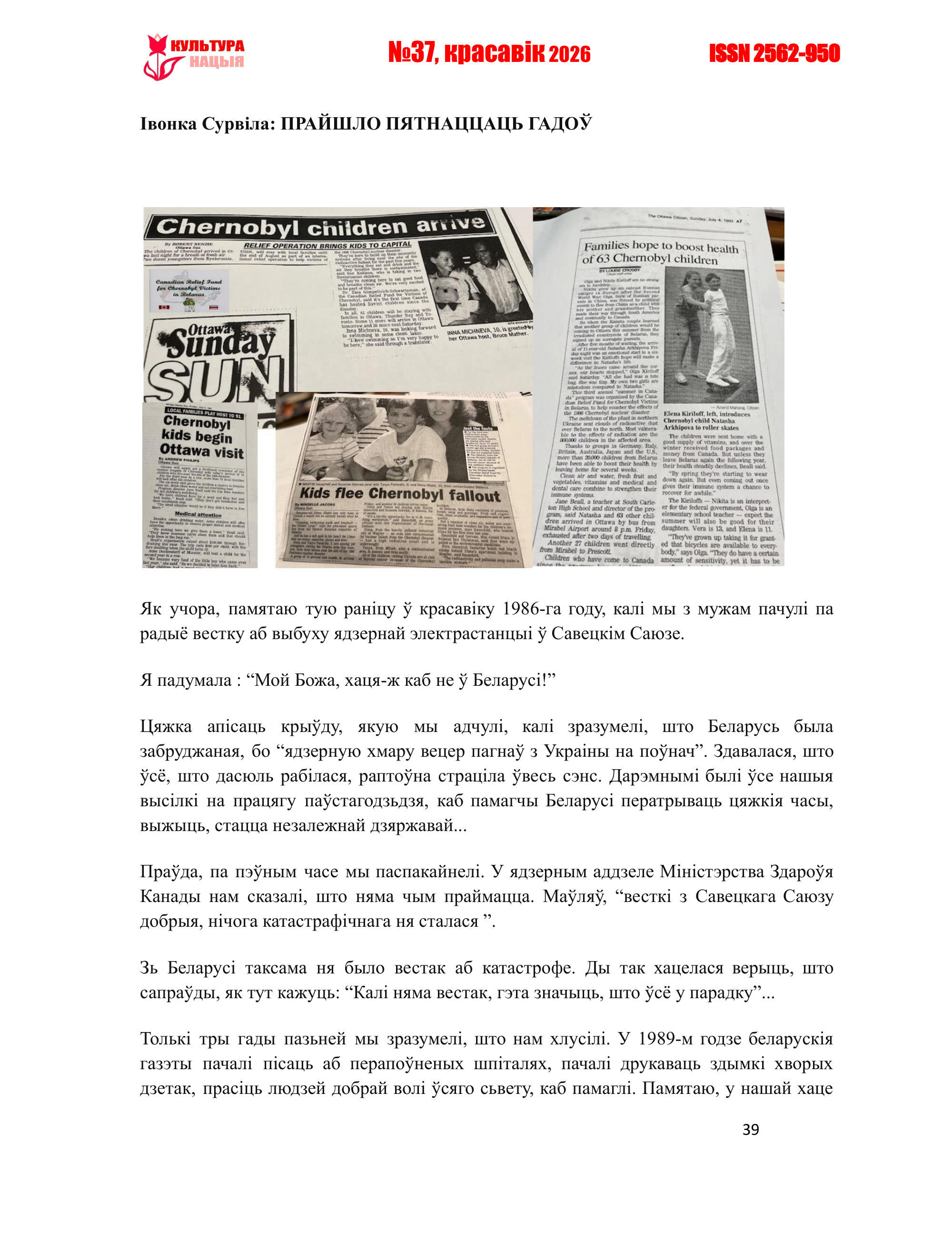
Як учора, памятаю тую раніцу ў красавіку 1986-га году, калі мы з мужам пачулі па радыё вестку аб выбуху ядзернай электрастанцыі ў Савецкім Саюзе.
Я падумала : “Мой Божа, хаця-ж каб не ў Беларусі!”
Цяжка апісаць крыўду, якую мы адчулі, калі зразумелі, што Беларусь была забруджаная, бо “ядзерную хмару вецер пагнаў з Украіны на поўнач”. Здавалася, што ўсё, што дасюль рабілася, раптоўна страціла ўвесь сэнс. Дарэмнымі былі ўсе нашыя высілкі на працягу паўстагодзьдзя, каб памагчы Беларусі ператрываць цяжкія часы, выжыць, стацца незалежнай дзяржавай...
Праўда, па пэўным часе мы паспакайнелі. У ядзерным аддзеле Міністэрства Здароўя Канады нам сказалі, што няма чым праймацца. Маўляў, “весткі з Савецкага Саюзу добрыя, нічога катастрафічнага ня сталася ”.
Зь Беларусі таксама ня было вестак аб катастрофе. Ды так хацелася верыць, што сапраўды, як тут кажуць: “Калі няма вестак, гэта значыць, што ўсё у парадку”...
Толькі тры гады пазьней мы зразумелі, што нам хлусілі. У 1989-м годзе беларускія газэты пачалі пісаць аб перапоўненых шпіталях, пачалі друкаваць здымкі хворых дзетак, прасіць людзей добрай волі ўсяго сьвету, каб памаглі. Памятаю, у нашай хаце
тады мы толькі аб гэтым і думалі і гаварылі. Што зрабіць, як памагчы?... Хутка паўстала думка нейкім чынам падзяліцца з Канадаю нашым няшчасьцем, пачать зьбіраць сродкі, каб купляць ды высылаць Беларусі лекі, мыла, аднаразовыя шпрыцы, усё, чаго там не хапала. Даведаліся, што а. Надсан у Англіі ўжо пачаў гэта рабіць. Думалі, што мо далучымся да яго.
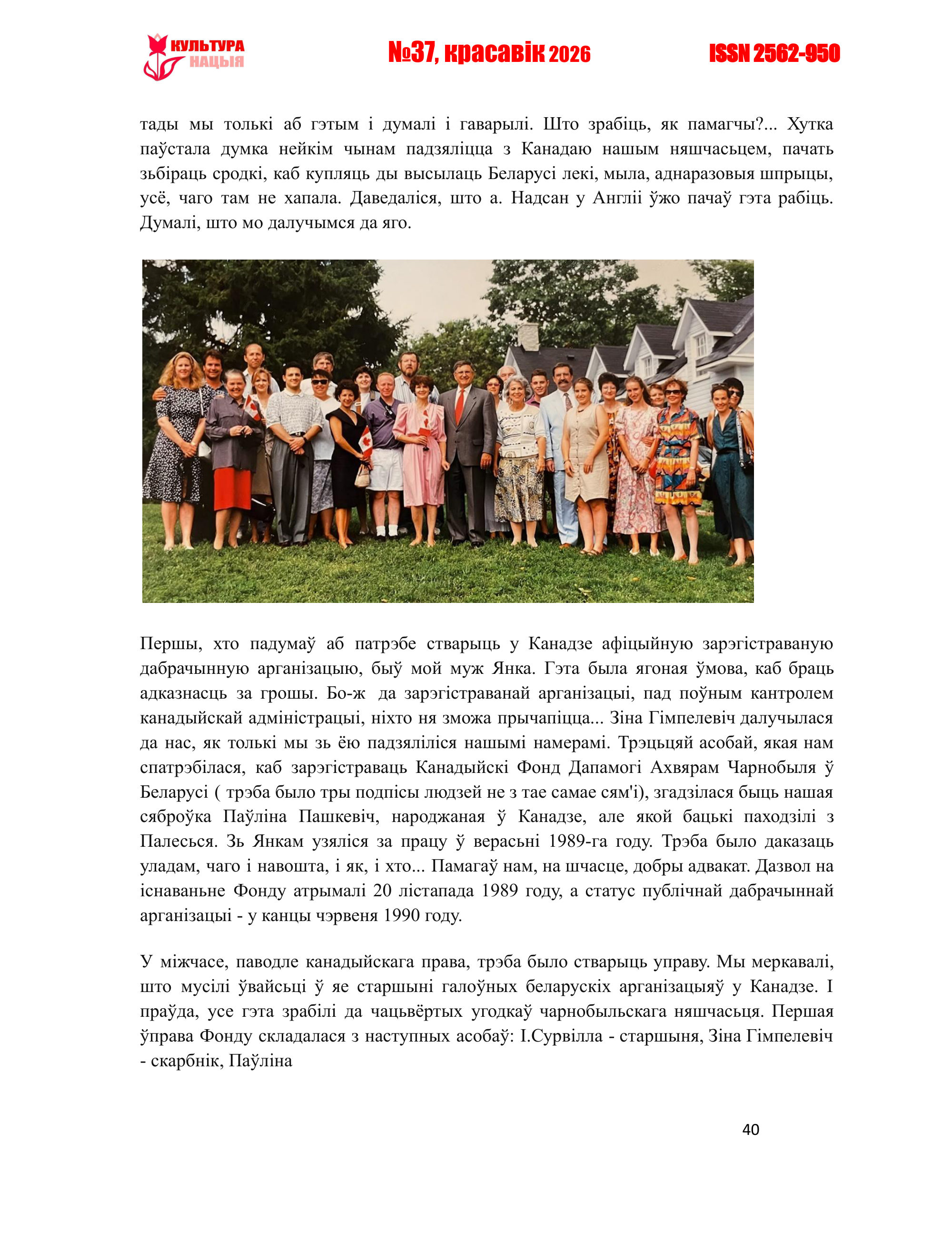
Першы, хто падумаў аб патрэбе стварыць у Канадзе афіцыйную зарэгістраваную дабрачынную арганізацыю, быў мой муж Янка. Гэта была ягоная ўмова, каб браць адказнасць за грошы. Бо-ж да зарэгістраванай арганізацыі, пад поўным кантролем канадыйскай адміністрацыі, ніхто ня зможа прычапіцца... Зіна Гімпелевіч далучылася да нас, як толькі мы зь ёю падзяліліся нашымі намерамі. Трэцьцяй асобай, якая нам спатрэбілася, каб зарэгістраваць Канадыйскі Фонд Дапамогі Ахвярам Чарнобыля ў Беларусі ( трэба было тры подпісы людзей не з тае самае сям'і), згадзілася быць нашая сяброўка Паўліна Пашкевіч, народжаная ў Канадзе, але якой бацькі паходзілі з Палесься. Зь Янкам узяліся за працу ў верасьні 1989-га году. Трэба было даказаць уладам, чаго і навошта, і як, і хто... Памагаў нам, на шчасце, добры адвакат. Дазвол на існаваньне Фонду атрымалі 20 лістапада 1989 году, а статус публічнай дабрачыннай арганізацыі - у канцы чэрвеня 1990 году.
У міжчасе, паводле канадыйскага права, трэба было стварыць управу. Мы меркавалі, што мусілі ўвайсьці ў яе старшыні галоўных беларускіх арганізацыяў у Канадзе. І праўда, усе гэта зрабілі да чацьвёртых угодкаў чарнобыльскага няшчасьця. Першая ўправа Фонду складалася з наступных асобаў: І.Сурвілла - старшыня, Зіна Гімпелевіч - скарбнік, Паўліна
Пашкевіч - сакратар. Уладыка Мікалай, др. Раіса Жук-Грышкевіч, Мікола Ганько і др. Барыс Рагуля - сябры.
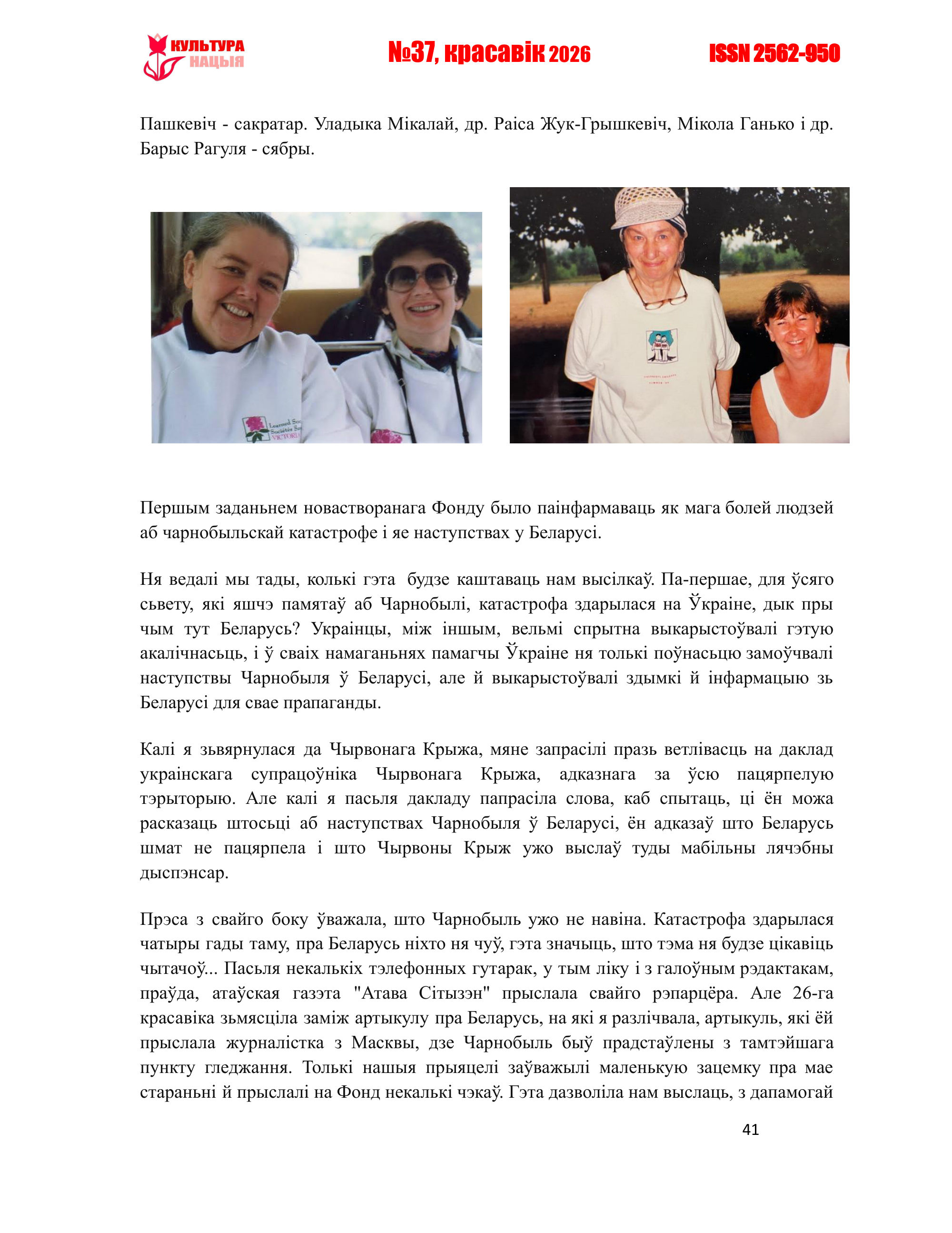
Першым заданьнем новастворанага Фонду было паінфармаваць як мага болей людзей аб чарнобыльскай катастрофе і яе наступствах у Беларусі.
Ня ведалі мы тады, колькі гэта будзе каштаваць нам высілкаў. Па-першае, для ўсяго сьвету, які яшчэ памятаў аб Чарнобылі, катастрофа здарылася на Ўкраіне, дык пры чым тут Беларусь? Украінцы, між іншым, вельмі спрытна выкарыстоўвалі гэтую акалічнасьць, і ў сваіх намаганьнях памагчы Ўкраіне ня толькі поўнасьцю замоўчвалі наступствы Чарнобыля ў Беларусі, але й выкарыстоўвалі здымкі й інфармацыю зь Беларусі для свае прапаганды.
Калі я зьвярнулася да Чырвонага Крыжа, мяне запрасілі празь ветлівасць на даклад украінскага супрацоўніка Чырвонага Крыжа, адказнага за ўсю пацярпелую тэрыторыю. Але калі я пасьля дакладу папрасіла слова, каб спытаць, ці ён можа расказаць штосьці аб наступствах Чарнобыля ў Беларусі, ён адказаў што Беларусь шмат не пацярпела і што Чырвоны Крыж ужо выслаў туды мабільны лячэбны дыспэнсар.
Прэса з свайго боку ўважала, што Чарнобыль ужо не навіна. Катастрофа здарылася чатыры гады таму, пра Беларусь ніхто ня чуў, гэта значыць, што тэма ня будзе цікавіць чытачоў... Пасьля некалькіх тэлефонных гутарак, у тым ліку і з галоўным рэдактакам, праўда, атаўская газэта "Атава Сітызэн" прыслала свайго рэпарцёра. Але 26-га красавіка зьмясціла заміж артыкулу пра Беларусь, на які я разлічвала, артыкуль, які ёй прыслала журналістка з Масквы, дзе Чарнобыль быў прадстаўлены з тамтэйшага пункту гледжання. Толькі нашыя прыяцелі заўважылі маленькую зацемку пра мае стараньні й прыслалі на Фонд некалькі чэкаў. Гэта дазволіла нам выслаць, з дапамогай
доктара Рагулі, першую пачку шпрыцаў (на 1600 кан. даляраў) Беларускаму Дабрачыннаму Фонду Дзецям Чарнобыля ў Менску.
У першы год існавання Канадыйскага Фонду Дапамогі Ахвярам Чарнобыля ў Белврусі, ня гледзячы на тое, што ня было тае магчымасьці, якой мы ня выкарысталі, каб інфармаваць людзей пра нядолю нашага народу, мы сабралі толькі каля пяці тысячаў канадыйскіх далараў. І гэта з дапамогай групы журналістаў з Альберты, якія правёўшы два тыдні ў Беларусі, вярнуліся з намерам нам памагчы. Яны былі пэўныя, між іншым, як і мы, што калі людзі ў Канадзе даведаюцца праўду, не адмовяць свае помачы.
У міжчасе, на Сустрэчы Беларусаў Паўночнай Амэрыкі я спаткала Генадзя Грушавога, і была захопленая працай, якую ён рабіў у Беларусі, каб памагчы дзеткам пацярпеўшым ад радыяцыі. Падчас банкету сабрала між прысутнымі каля чатырох тысяч даляраў, якія там і перадала старшыні Беларускага Дабрачыннага Фонду Дзецям Чарнобыля. Калі Генадзь Грушавы прыехаў на запрошаньне Барыса Рагулі ў Канаду ў 1991 годзе, мы з мужам зарганізавалі яму шэраг спатканьняў у Атаве: у Міністэрстве Здароўя, у Чырвоным Крыжы, у Канадыйскай Асацыяцыі Лекараў і.г.д. Найважнейшым спатканьнем аказалася аднак інтэрв'ю, якое ён даў газеце "Атава Сітызэн". Падчас гэтага інтэрв'ю мы й вырашылі прывезьці групу беларускіх дзетак на адпачынак у Атаву. Назаўтра аб гэтым быў у газеце цудоўны артыкуль, і я перадала Грушавому запрашэньне на 15 малышоў. Дзесятак дзён пазьней, мы ужо мелі семдзесят сем'яў гатовых прыняць у сябе чарнобыльскае дзіця. На просьбу Грушавога, мы на гэтым спынілі прыймаць новыя сем'і, бо паводле нашага дагавору, тады яшчэ Беларускі Дабрачынны Фонд меўся плаціць за дарогу дзетак у Канаду, і Грушавы баяўся, што ня знойдзе сродкаў на болей.
Цяжка апісаць энтузіязм нашых супрацоўнікаў і нашае шчасьце ў гэты першы год, калі мы змаглі прывезьці 69 дзетак зь Беларусі ў Канаду на аздараўленьне й летні адпачынак (адно ў вапошні мамэнт захварэла, ня прыехала). Працавалі мы праўда даслоўна дзень і ноч. Раптоўна прэса і тэлебачаньне пачалі цікавіцца нашымі высілкамі. За лета я дала больш пяцідзесяці інтэрв'ю. Была паўстала праблема, калі зь Менску нам паведамілі ў вапошні мамэнт, што 24 дзетак ня змогуць прыехаць дзеля адсутнасьці сродкаў. Прышлося тады знайсьці за тыдзень часу 12000 кан. даляраў на білеты. Узялі пазыку. Тады "мора было па калені", як казаў Янка. У сапраўднасьці-ж, я моцна веру, што Бог быў з намі. Прайшло лета, як у казцы. Каб ня здымкі, дык здавалася-б, што сьнілася. Між іншым, у тым першым годзе мы паслалі разам зь дзеткамі ў Беларусь сорак чатыры каляскі (крэслы на колах, як тут кажуць) для беларускіх інвалідаў. Гэтую праграму ажыцьцявілі дзякуючы сляпой супрацоўніцы - яна зьбірала каляскі ў людзей, якім яны ня былі патрэбныя - і двум спецыялістам,
мужу з жонкай, якія іх аднаўлялі. Пакавалі каляскі талакой цэлы дзень. Успамін яшчэ цяпер цешыць.
У 1992 годзе, мы былі здольныя самі аплаціць падарожжа дзетак, бо пасьля кожнага інтэрв'ю людзі слалі дапамогу. Прывезьлі іх 110. У 1993 годзе ўжо трэба было самым, разам зь сем'ямі, якія бралі дзетак, зьбіраць грошы на падарожжа. Кожны год прыяжджала болей маленькіх беларускіх ахвяраў Чарнобыля. У 1997-м прыехала болей за 600.
Да 1994 году, некалькі асобаў рабілі ўсю працу вечарамі. Толькі каб паквітаваць атрыманыя грошы і падзякаваць кожнаму дабрачынцу, займала паўгоду маіх вечароў (бо-ж днём працавала). Другога паўгоду трэба было арганізаваць прыезд дзетак, што таксама займала кожную вольную хвілінку. Людзі пачалі хварэць ад утомленасьці. У 1995 годзе трэба было наняць першага платнага супрацоўніка. Фонд стаўся вялікай арганізацыяй. Пасылалі лекі ў Беларусь, прывозілі лекараў на стажыроўкі ў канадыйскіх шпіталях, завезьлі камп'ютары у Чавускую школу. У красавіку 1992 году, на нашу просьбу канадыйскае Міністэрства Замежных Спраў выслала ў Беларусь на мільён даляраў (тры самалёты) лекаў. У 1993 годзе ахвяравала паўмільёна далараў, каб правесьці ў Беларусі кампанію вакцынацыі. Без нашай інтэрвэнцыі ўсё гэта пайшло-б у Маскву.
За гэтых дзесяць гадоў тысячы дзетак зь Беларусі былі ў Канадзе на адпачынку. Завязаліся сямейныя суадносіны між шматлікімі беларускімі й канадыйскімі сем'ямі. Сотні канадыйцаў адведалі Беларусь (56 толькі ў сакавіку 1996 году!), уключна з журналістамі. У газэтах былі апублікаваныя шматлікія артыкулы пра Беларусь. Адна сэрыя артыкулаў, журналіста Дэвіда Эванса, была апублікаваная пад загалоўкам "Беларусь зь любоўю". І гэта, магчыма, найболей напаўняе сэрца шчасьцем. Нарэшце Канада даведалася пра Беларусь. На апошнім гадавым зьезьдзе Фонду, мы зь Зінай Гімпелевіч з сьлязьмі ў вачах слухалі выказваньні нашых супрацоўнікаў, канадыйцаў, якія так моцна палюбілі наш народ, і так моцна жадаюць яму памагчы.
Цяпер Фонд налічвае тысячы сяброў, ад акіяну да акіяну. Апошняя канадыйская правінцыя, якая далучылася да нас - гэта Новая Зямля (Ньюфаўндленд). Канадыйскія сем'і ўвесь год зьбіраюць грошы, каб аплаціць выдаткі зьвязаныя з прыездам дзіцяці (білет на самалёт, візы, аўтобусы ў Беларусі на лётнішча, страхоўку падчас побыту дзіцяці ў Канадзе, выдаткі зьвязаныя з прыездам перакладчыка - апякуна). Стварылася сэрыя другіх арганізацыяў, якія таксама стараюцца памагчы Беларусі. Высылаюцца лекі, рознае абсталяваньне для шпіталяў, а менавіта для шпіталю ў Чавусах, якому мы першыя пачалі памагаць. Наш Лёнданскі (Лёндан у Канадзе) аддзел, які арганізаваў Др.Рагуля, пераняў праграму лекарскіх стажаў і прывозіць на практыку ў Канаду кожны год па некалькі лекараў. Прывозім шмат дзетак з дзіцячых дамоў, якія вязуць,
вяртаючыся, дапамогу сваім сябрам і сяброўкам у доме, дзе жывуць. Іх бяруць сем'і на дванаццаць тыдняў. (Найкарацейшы побыт у Канадзе дзіцяці - шэсьць тыдныў).
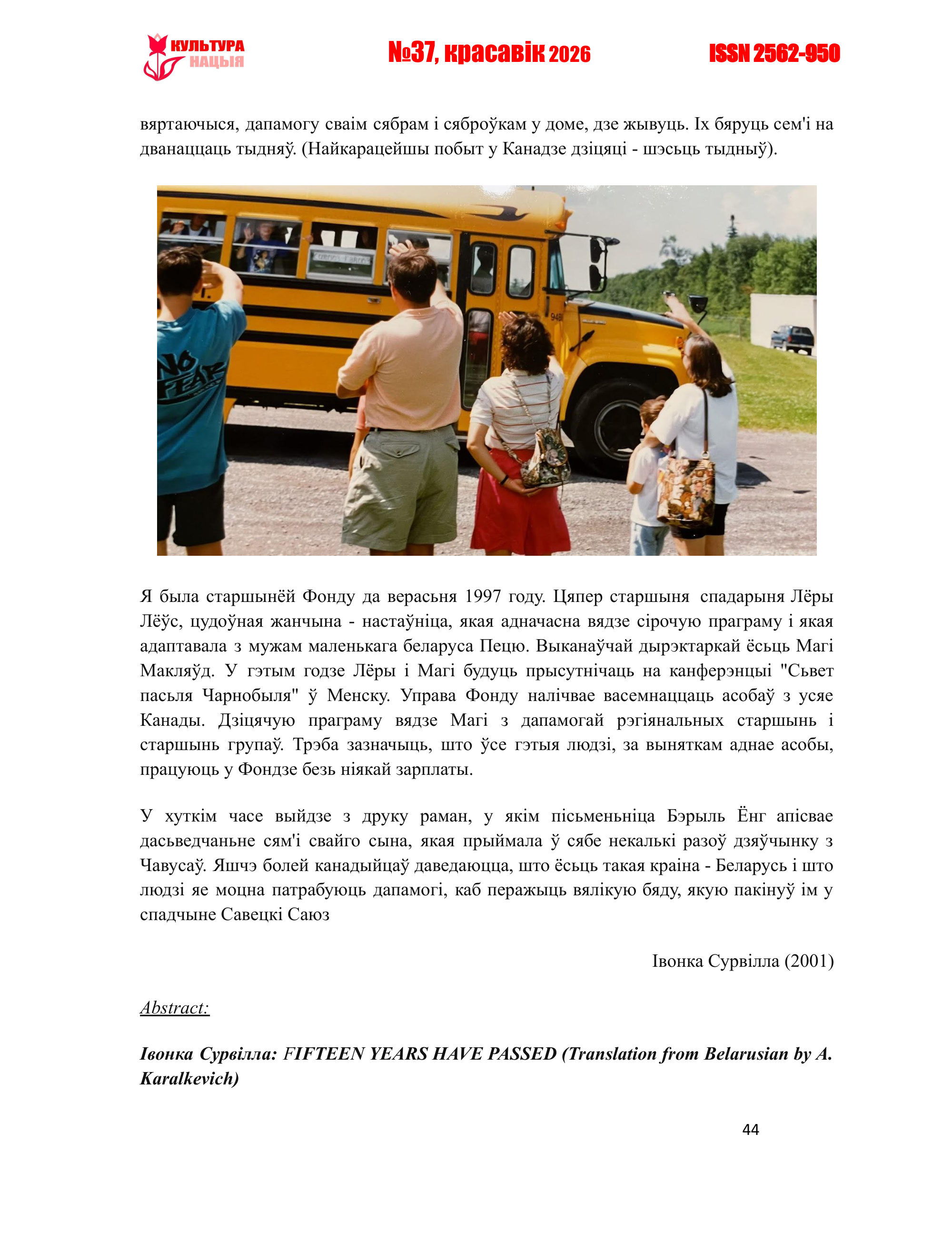
Я была старшынёй Фонду да верасьня 1997 году. Цяпер старшыня спадарыня Лёры Лёўс, цудоўная жанчына - настаўніца, якая адначасна вядзе сірочую праграму і якая адаптавала з мужам маленькага беларуса Пецю. Выканаўчай дырэктаркай ёсьць Магі Макляўд. У гэтым годзе Лёры і Магі будуць прысутнічаць на канферэнцыі "Сьвет пасьля Чарнобыля" ў Менску. Управа Фонду налічвае васемнаццаць асобаў з усяе Канады. Дзіцячую праграму вядзе Магі з дапамогай рэгіянальных старшынь і старшынь групаў. Трэба зазначыць, што ўсе гэтыя людзі, за выняткам аднае асобы, працуюць у Фондзе безь ніякай зарплаты.
У хуткім часе выйдзе з друку раман, у якім пісьменьніца Бэрыль Ёнг апісвае дасьведчаньне сям'і свайго сына, якая прыймала ў сябе некалькі разоў дзяўчынку з Чавусаў. Яшчэ болей канадыйцаў даведаюцца, што ёсьць такая краіна - Беларусь і што людзі яе моцна патрабуюць дапамогі, каб перажыць вялікую бяду, якую пакінуў ім у спадчыне Савецкі Саюз
Івонка Сурвілла (2001)
Abstract:
Івонка Сурвілла: FIFTEEN YEARS HAVE PASSED (Translation from Belarusian by A. Karalkevich)
It has been 40 years since the Chernobyl tragedy occurred on April 26, 1986. Even after so many years, the effects of radiation contamination are still being felt. Here we would like to present an article written in 2001 by Ivonka Survila, who took the tragedy to heart and did a lot to help Belarusian children recover from the effects of radiation by bringing them to Canada.
Аннотация:
Ивонка Сурвилла: ПРОШЛО ПЯТНАДЦАТЬ ЛЕТ
Прошло 40 лет с момента Чернобыльской трагедии 26 апреля 1986 года. Даже спустя столько лет последствия радиационного облучения всё ещё ощущаются. Редакция представляет английскую версию статьи Ивонки Сурвилы, написанной в 2001 году, которая глубоко пережила трагедию и многое сделала для помощи белорусским детям, привезённым в Канаду, в восстановлении после последствий радиации Перевод на английский язык: Александр Каралкевич. Оригинальная белорусская версия прилагается (опубликована в газете «Беларусь» № 471 в 2002 году https://belarus8.tripod.com/hazeta/gady ).
Piotra Murzionak: Russia against Ukraine War – Clash of Civilizations
Abstract.
The relatively calm “geopolitical” period in the world that could be observed after the collapse of the USSR has returned with new force in the form of a drive toward a new division of the world, which can now be outlined quite clearly. One of the hotspots where the Great Powers collide—attempting to change European borders that until recently seemed stable—is the war unleashed by aggressive Russia against Ukraine, the country that has had much in common with Belarus in its historical and cultural inheritance since the IX-X
centuries. An analysis of the roots of Russia-against-Ukraine war leads us deep into history and shows that its causes have civilizational nature.
Introduction
1. Origins of the West-Ruthenian Civilization
1.1. The development of the Eastern Slavs followed different path
1.2. Lines of division between two civilizations
1.2.1. Ethnic and linguistic distinctions
1.2.2. The religious component in the two civilizations 1.2.3. Political dimensions and European values in the Western-Ruthenian civilization
2. Continuation of the Confrontation Between the Western Ruthenian Civilization and the Eurasian Civilization in Our Time
2.1. Periods of colonization of Belarus and Ukraine by Russia
2.2. The nature of political changes in Belarus and Ukraine after the collapse of the USSR
2.3. Russia’s aggression against Ukraine as a continuation of the struggle between East and West
2.4. Current situation in Belarus
2.4.1. Belarusian population
2.4.2. Belarusian elites
2.4.3. Sviatlana Tsikhanouskaya’s government
3. Contemporary Scenarios for Belarus and Western Ruthenian Civilization
In Conclusion
Introduction
The main motivations behind Putin’s declared war of Russia against Ukraine must be sought in the false Russian narratives / theories about the triune nature of the Russian, Belarusian,
and Ukrainian peoples (and, accordingly, that nations such as the Belarusian and Ukrainian supposedly do not exist), about Russia’s own “Slavic character,” and about its exceptional mission in the world—particularly as the heir of the “third Rome.”
Before the start of the current war, the leader of today’s Russian aggression, once again attempted to convince millions of viewers in the world that Ukraine emerged “out of nowhere”— (a) at the will of Lenin and Stalin, (b) that Ukrainian territory is “primordially Russian land” and c) the only one Russian nation exists consisting of Great Russians, Ukrainians, and Belarusians thus denying the right of Ukrainian and Belarusian nations to self-determination asserting falsely that “today the situation in Ukraine is completely different, because there is an attempt [in Ukraine] to forcibly change the identity of the nation”. One may assume vice versa - the main goal of the war declared by Putin is the seizure and destruction of the Ukrainian state.
Most of these narratives stem from the Norman theory of the formation of Rus’ / Kyivan Rus’, developed by Müller in the early XVIII century, later reinforced by histories composed in Russia (Klyuchevsky, Solovyov) or repeated both abroad in the past (Vernadsky) and in contemporary Russia by the neo-Eurasianist Dugin. The works of the latter contain openly proto-fascist motifs. Many of these provocative ideas have been adopted by some Western researchers despite the existence of works by Hrushevsky and other scholars who rejected and continue to reject such ideology.
The Russian Empire, which arose in the early XVII century, acquired the Belarusian and Ukrainian lands - that were an enormous part of the Grand Duchy of Lithuania - only after the partition of the Polish Lithuanian Commonwealth by Great Powers — Russia, Austria, and Prussia in 1795. Both Belarusian and Ukrainian lands never belonged to Russia until that historical episode while after that they were remaining in colonial dependency until the dissolution of the USSR in 1991.
From that time, the previous “bipolar” confrontation between the West and the USSR has transformed now into a tripolar division of the world. These poles are China, which is gradually expanding its influence into all continents; the United States—with President D. Trump promoting the slogan “Make America Great Again”; and finally, Russia, always resentful toward Western civilization, with Putin’s imperial ambitions to restore former greatness and the territories lost during Gorbachev’s time.
Our reading of the history of Belarus and Ukraine has allowed us to show that the development of the Belarusian, Ukrainian, and Great Russian ethnoses followed different paths. Analysis of the objective factors in their development allowed us to propose a hypothesis about the formation of two civilizations by Eastern Slavs in the XIII–XV centuries—the Belarusian Ukrainian or West-Ruthenian sub-civilization of the Western
civilization, and the Eurasian / Russian civilization. In our view, the Belarusian Ukrainian civilization—or West-Ruthenian sub-civilization—corresponds in many respects to the definition of a civilization or sub-civilization and is part of Western civilization alongside its other sub-civilizations (Western-Western, Western-Latin, Jewish, Western-Central) (Table 1). The place of the Western Ruthenian (Belarusian Ukrainian) civilization among other civilizations has been substantiated earlier as well as criticism of classifying Belarus and Ukraine as part of the Eurasian civilization.
Table 1. Classification of Civilizations
S. Huntington (1993)
B. Kuzik, Ya. Yakavets (2006)
A. Targowski (2010)
Our proposal (2013)
Western Western: North American, Latin American and Oceanic, Western European, Eastern
European Western: Western–Western, Western–Latin, Jewish, Western–Central
sub-civilizations Western: Western–Western, Western–Latin, Jewish, and Western Ruthenian
(Belarus, Ukraine) sub-civilizations
Orthodox Eurasian/Russian Eastern Eurasian: Belarus, Bulgaria, Moldova, Russia, Ukraine
Thus, we believe that the evidence presented confirms the idea that Belarus and Ukraine together form a Western Ruthenian (sub-)civilization, which is fundamentally different from the Eurasian (Russian) one. In the article, we provide evidence\facts that Belarus and Ukraine cannot be part of the “Russian world” due to significant ethnic, cultural, sociopsychological and historical differences between Eurasian Russia and the independent Belarusian and Ukrainian peoples who have experienced much in common throughout their historical development, and, finally, that they together constitute a Western Ruthenian civilization. We assume that the development of the Western Ruthenian civilization was significantly hindered by processes of Polonization and Russification. Therefore, it is understandable that its further development—or restoration—requires a long time; however, one can expect that in an era of global change the Western Ruthenian civilization may reveal itself through mutual understanding and cooperation between Belarus and Ukraine.
1. Origins of the West-Ruthenian Civilization
1.1. The development of Eastern Slavs followed different paths
The relevance of demonstrating the true historical paths of Eastern Slavic development arises from the need for ideological resistance to Russian narratives that Ukraine as a state does not exist—and has no right to exist—which are used to justify Russia’s war against Ukraine. Clearly, such ideological “geopolitical” resistance is equally relevant to Belarus.
The Eastern Slavic group includes Belarusians, Ukrainians, and Great Russians. It is believed that the Eastern Slavs came from the north of modern Germany and Poland in the VII–IX centuries and settled the territory later known by historians as Kyivan Rus’. It is not precisely known whether among the Eastern tribes there were distinct groups that later determined the character of the three Eastern Slavic peoples. Our analysis showed that the differentiation of the Eastern Slavs, leading to the formation of two civilizations—the Belarusian Ukrainian or Western-Ruthenian, and the Eurasian or Russian—occurred during and after the period of Kyivan Rus’, driven by various factors such as:
● distinctive traits of Slavic tribes
● natural conditions of the East European Plain and the Eurasian steppe
● assimilation with local tribes
● internecine conflicts between lands and principalities
● the influence of the Mongol Empire (the territory of Muscovy was a colony of the Golden Horde from 1236 to 1480)
● the creation of the Grand Duchy of Lithuania in the mid-XIII century, which saved part of Eastern Slavs living in the territories of modern Belarus and Ukraine from “eurasian influence.”
It may be assumed that the very process of the migration of the Eastern Slavs contributed to their differentiation. Such Slavic tribes as the Dregovichi, Drevlians, Dulebs, Krivichi, and Polatsk Krivichi encountered and assimilated with Baltic tribes in the VII–XII centuries, which created the preconditions for the emergence of a new ethnic community / Belarusian nationality. Other Slavic tribes—the Drevlians and Polians—moved southward, assimilated with the Sarmatians, and likely gave rise to today’s Ukrainians. The movement of this group of Slavs was limited by the presence of warlike nomadic tribes (Khazars, Pechenegs) in the southern regions—the Wild Field. Meanwhile, the Ilmen and Novgorod Slavs, Krivichi, Radimichi, and Severians, moving east and northeast, encountered Finno-Ugric tribes (Merya, Mordvins, Chud, Muroma, Meshchera), with whom they gradually assimilated, thereby giving rise to the Great Russians (we refer to this process as the first wave of
Slavic–Great Russian assimilation whereas the second wave occurred in the XVI–XVIII centuries during Muscovy’s expansion to the east and south).
The fact that the very process of settlement and migration contributed to the differentiation of Eastern Slavic ethnic groups is also evidenced by the dates of the formation of principalities on the territories of today’s three states—Belarus, Russia, and Ukraine (Table 2).
Table 2. Dynamics of principalities creation by Eastern Slavs
Principality center in Kievan Rus Territory of modern Year of creation Geographic longevity
Kyiv Ukraine 882 30.5
Chernigov Ukraine 988 31.3
Pereyaslavl Ukraine 988 31.5
Smolensk Ukraine 1054 32.1
Peremyshl Польшча 1085 22.8
Galich Ukraine 1124 24.7
Volynia Ukraine 1154 24.6
Novgorod-Seversk Ukraine 1185 33.3
Average for “Ukrainian” principalities 1048 (882-1185) 28.9 (23.8-30.2)
Turau Belarus 980 27.1
Polatsk Belarus 987 28.8
Minsk Belarus 1070 27.6
Drutsk Belarus 1101 29.8
Vitebsk Belarus 1101 30.2
Grodno Belarus 1117 23.8
Navahrudak Belarus 1235 25.2
Average for “Belarusian” principalities 1075 (980 – 1235) 27.5 (23.8-30.2)
Ryazan Russia 1078 39.7
Republic of Novgorod Russia 1136 31.3
Vladimir-Suzdal Russia 1157 40.4
Pskov Republic Russia 1200 28.3
Rostov Russia 1207 39.4
Yaroslavl Russia 1216 39.9
Tver Russia 1246 35.9
Moscow Russia 1263 37.6
Average for “Russian” principalities 1188 (1078-1263) 36.6 (28.3-40.4)
As the Eastern Slavs moved northeast within Kyivan Rus’, the establishment of principalities in those regions naturally lagged due to slow migration. For example, the most well-known principality of the Great Russians, the Vladimir–Suzdal principality — the heart of future Muscovy — was founded in 1157, which is 170 and 275 years later than the Polatsk and Kyiv principalities, respectively. We estimated that the average year of principalities’ foundation on territory of modern Belarus and Ukraine combined was 1059 (for Ukraine and for Belarus — 1048 and 1075, respectively) while that average year on territory of Russia was 1188 — that is, 129 years later. If, for instance, we consider the distance from Kyiv to Vladimir (about 1100 km in geographic longitude), then the average speed of migration of the Eastern Slavs, mostly from west to east, can be estimated in this direction at roughly 4 km per year (1100 km : 275 years).
Overall, it can be considered absolutely proven that the road led from Kyiv to Moscow, and not the other way around according to Russia’ narratives
To summarize, the formation of two civilizations by the Eastern Slavs resulted from: a) interactions between peoples during large-scale migrations — Slavs moving from west to east and Eurasian peoples from east to west; b) the dissociation and differentiation of the Eastern Slavs according to cultural, linguistic, and ethnic characteristics. We assume that although the formation of the two civilizations occurred in parallel, it nevertheless differed significantly in time (Table 3).
Table 3. Characteristics of the developmental periods of the Western-Ruthenian and Eurasian civilizations (даць спасылку на 2015 год)
Period Short description
Pre-Kyivan and Kyivan period Initial division of the Eastern Slavs in the IX–XI centuries based on the characteristics of the Slavic tribes, their assimilation with local tribes, and conflicts between lands and principalities
Period of formation Formation of the Western-Ruthenian (Belarusian Ukrainian) civilization in the XIII–XV centuries and the beginning of the formation of the Eurasian civilization in the XV–XVII centuries (after liberation from the Mongol Empire in 1480)
Modern period Began in the late XIX century and continues today
We distinguish three periods in the development of the Western-Ruthenian and Eurasian civilizations. The first period — the pre-Kyivan and Kyivan periods — is characterized by the initial division of the Eastern Slavs in the IX–XI centuries based on the peculiarities of the Slavic tribes themselves, their assimilation with local tribes, and conflicts between lands and principalities. The most distinct features of the formation of the Western-Ruthenian civilization can be attributed to the XIII–XV centuries, whereas the Eurasian civilization — to the XV–XVII centuries. We believe that modern period of development began in the late XIX century and continues to this day.
1.2. Lines of division between two civilizations
We may state that of today the distinctiveness of Belarus and Ukraine from Russia excludes their belonging to the “Russian world” on the basis of many objective factors:
a) the continuous, compact homogenous settlement of Belarusians and Ukrainians on the same territories for centuries;
b) the presence of clear ethnic borders and distinct ethnic nature;
c) the unification of the Ruthenians within the Grand Duchy of Lithuania;
d) civilizational belonging of Ruthenians to Western civilization (Magdeburg law, the processes of Reformation and Counter-Reformation in the Church, the Uniate movement, representative assemblies, and a geographic belonging to Europe);
e) linguistic identification;
f) the presence of national elite;
g) the aggressive character of Russian expansionist policies aimed at restoring former greatness.
Having outlined the factors that initially contributed to the differentiation of the Eastern Slavs and later to the emergence of the Western-Ruthenian and Eurasian civilizations, let’s turn to the periods when their functioning became most distinct and noticeable. Their differences can be observed in such markers as ethnic composition, language, territorial anchoring, by relations with each other and with the outside world.
1.2.1. Ethnic and linguistic differences
It appears that during the existence of Kyivan Rus’ in the IX–XIII centuries, there was no clear division of the Eastern Slavs into the ethnic groups; the Eastern Slavs of the “Kyivan period” can be considered a single ethnonational entity (Ruthenians). According to S. Plokhy, the emergence of the Ruthenian ethno-national identity on the Belarusian and Ukrainian lands in the Grand Duchy of Lithuania was formed in the XVI -XVII centuries.
However, it might be assumed that signs of such a community could have been found a few centuries earlier. At least, a language differentiation in the Kievan Rus became noticeable in the late XIV century (the Old Rus’ language versus the Western-Rus’ language, as well as central, northeastern, and other dialects). Those dialects might be projected to the territories where current Belarusian, Great Russians, and Ukrainian ethnic groups are located.
In addition, the civil war between Svitrigaila and Sigismund at the beginning of the XV century also clearly defined the ethno-national distinctiveness of the Ruthenians within the Grand Duchy of Lithuania. Svitrigaila had significant support from Polatsk, Vitebsk, Smolensk, Kiev, and Volyn in preserving his special role as a Russian/Ruthenian society within the Grand Duchy of Lithuania.
Thus, it might be assumed that the ethnonational differentiation of the Slavs (the Rus’, the Ruthenians) living in the territories of modern Ukraine and Belarus, and the Slavs who settled the lands northeast of Kyivan Rus’ (the territory of the future Muscovite state), might begin even before XIV century especially it became most pronounced with the collapse of Kyivan Rus’. However, real transformation of Belarusian and Ukrainian ethnic groups to nations became evident only in XIX century.
While the Belarusian and Ukrainian ethnic groups continuously lived on the same territories and assimilated with local tribes, the Great Russians, moving eastward all the way to the Far East, expanded their settlement territory by dozens of times in the XV–XIX centuries,
incorporating ever new ethnic groups. In the IX–XII centuries, at the beginning of migration into the northeastern lands of Kyivan Rus’ and beyond, the Eastern Slavs assimilated with Finno-Ugric tribes (what we call the first wave of Great Russian assimilation), while in the XV–XIX centuries, beginning with Ivan III (1462–1505), the Muscovy expanded north, east, and south. Partly this movement was conditioned by the end of the domination of the Golden Horde, which dictated policies to the principalities of Northeastern Rus’ for nearly three centuries, from 1236 to 1480.
Starting with the conquest and liquidation of the Novgorod Republic (1478) and Tver (1485) at the end of the XV century, the XVI century evidenced the conquest and colonization of Ryazan (1521), the Kazan Khanate (1552), Astrakhan (1556), the Great Nogai Horde (1557), the Siberian Khanate (1582), and the Piebald Horde (1619) — what we call the second wave of Great Russians’ assimilation with numerous Turkic peoples. Thus, the ethnic composition in the Eurasian civilization, in contrast to the Western-Ruthenian civilization, changed significantly due to the expansionist policies of the Muscovite state and the Russian Empire.
Analysis of the population growth of Belarusians and Ukrainians over the last five centuries shows that it lagged significantly behind that of Russians/Great Russians, and one reason for that was the direct absorption of people of other nationalities, peoples, and tribes into the Great Russian population. We estimated that the ratio of Slavs in Muscovy to the Slavs-Belarusians and Slavs-Ukrainians at the end of the XV century could have been very close, approximately 1.3:1 as per about 3.75 million Ruthenians - Belarusians and Ukrainians in the GDL and 6 million in Muscovy. However, further analysis of the population based on the 1897 and 1989 censuses in Russia and USSR, respectively, showed that the ratio of Great Russians to Belarusians and Ukrainians shifted significantly in favor of Great Russians. Russia’s history involves permanent territorial expansions during the existence of Muscovy (1263-1547), the Russian tsardom (1547-1721), the Russian Empire (1721-1917), Soviet Russia (1917-1922), the Union of Soviet Socialist Republics (1922-1991), and the Russian Federation (since 1991). Additions and changes in the Russian population were not only quantitative but also qualitative. Now there are more than 180 nations in multinational Russia, in accordance with official statistics.
According to the 1897 Russian census, the ratio Ruthenians - Belarusians and Ukrainians to
Great Russians was already 2:1, and according to the 1989 Soviet census — 2.7:1 (Table 4).
It is evident that over five centuries the relative number of Great Russians grew 2.5 times
faster than that of the Ruthenians (Belarusians and Ukrainians).
Table 4. Comparison of Eastern Slavs population growth in the end of XIX and XX centuries
Survey 1897:
all Russian population, 125,6 mln Survey 1989:
All population of the USSR, 285,7 mln
Great Russians, mln (%) 55,7 (44,3%) 147,4 (51,4%)
Ukrainians, mln (%) 22,4 (17,8%) 44,2 (15,5%)
Belarusians, mln (%) 5,9 (4,7%) 10,0 (3,5%)
Belarusians + Ukrainians, mln (%) 28,3 (22,5%) 54,2 (19,0%)
Ratio: Great Russians to Belarusians and Ukrainians combined
2:1
2,7:1
While the number of Belarusians and Ukrainians increased by 17.3 million (from 28.3 to 45.6 million) between 1897 and 1989, the number of Russians grew much more — by 91.7 million (from 55.7 to 147.4 million). Meanwhile, the share of Belarusians and Ukrainians combined decreased significantly (from 22.5% to 19.0%), while the share of Russians increased (from 44.3% to 51.4%). These figures reflect both substantial assimilation of Slavs with the many peoples of Russia over several centuries and also the formal attribution of peoples of other nationalities who speak Russian to the Russian category; i.e., knowledge of the Russian language largely determined national self-identification by the formula: knowing Russian = ethnically Russian.
V. Dahl wrote: “...in the south lived Slavs, while in all of Great Russia lived ‘chukhna’ of various origins. (...) they became Russified before our eyes, and the present generation no longer knows its own language.”
Thus, over five centuries the relative number of Great Russians increased faster as that of Ruthenians and is inflated by 2–2.5 times. This is confirmed by our estimation of current ethnic and religious differences: the ratio between Belarusians, Ukrainians, and Great Russians to other ethnic groups is evidently visible even today — for Belarus it is 30:1 (similar in Ukraine), while in Russia it is 4.8:1. In reality, the ratio in Russia should be even lower, considering the factor “Russian language = Russian.” Numerous Finno-Ugric peoples have gradually assimilated or disappeared, and Russification played a role in this. Recent censuses (1989, 2002, 2010, 2021), compared to pre-war censuses (1926 and 1939), show
declines in Mordvins, Karelians, Vepsians, and Izhorians; and no natural population growth in Chuvashia, Komi, or Udmurtia.
It is evident that the modern pattern of Russian population is the result of assimilation of Great Russians with Finno-Ugric and Turkic peoples during the first and second waves of assimilation, (mainly in the IX–XIII and XV–XVIII centuries, respectively). Furthermore, the question of the not-so-total “Slavicness” of the Russian population is also supported by modern genetic studies. Significant differences in the distribution of genetic material and the presence of gradients from north to south and west to east in Northeastern Rus’ — where Russia originated — indicate Slavic migration and assimilation with non-Slavic peoples. Similar results appear in recent research on the history of genetic exchange between peoples of the world — the difference between Belarusians and Russians is reflected at the genetic level. Among eight peoples in the East European cluster (Belarusians, Bulgarians, Hungarians, Greeks, Lithuanians, Romanians, Russians, and Chuvash), only the most eastern groups — Russians and Chuvash — shared similar patterns of genetic exchange with two sources: one from Southeast Asia and one European.
Some researchers studying Russia, including Russian classical Eurasianists and neo-Eurasianists, have viewed or view now Russia as a Eurasian country, which indeed it is. Thus, Belarusians and Ukrainians, in our view, represent distinct national identities that are significantly different from Great Russians and constitute together the Western-Ruthenian sub-civilization of Western civilization.
1.2.2. The religious component in two civilizations
Another indicator distinguishing between the two civilizations is the religious affiliation of their populations. As for the Eurasian civilization, this indicator is quite closely linked to ethnic composition, since during the expansion of the Muscovite/Russian state, newly conquered territories were populated by ethnically and religiously diverse peoples.
As for the populations lived on the modern territories of Belarus and Ukraine, we may evidence that:
a) they lived continuously on the same territories over long periods (and were relatively ethnically homogeneous);
b) their religious preferences, in our view, were shaped under the influence of the European processes of Reformation and Counter-Reformation, in contrast to Russia, where Orthodoxy was always dominant.
It is important to note here that traditionally Belarus and Ukraine are not classified as belonging to Western (Latin) civilization, but rather to the Eurasian civilization, which also includes Russia, Bulgaria, and Moldova. It appears that some researchers (A. Targowski and S. Huntington) do this insufficiently reasonably — mainly due to (incorrect) assumptions about the spread of Orthodoxy in these countries. But clear differences in religious affiliation between the countries of the Western-Ruthenian and Eurasian civilizations persist even today. This is despite nearly 200 years of colonial Russian rule under which Belarus and Ukraine found themselves before the collapse of the USSR.
It is shown that despite similar proportions of Orthodox populations, Russia and Bulgaria have significant Muslim populations (ratios of Orthodox to Muslims of 7:1 and 5:1, respectively), whereas in Belarus and Ukraine Muslims constitute an insignificant share (less than 0.1%).
Our results were similar: considering the ratios of Christians to Muslims, in Russia and Bulgaria, they are 7:1 and 5:1; in Belarus and Ukraine — 90:1 and 27:1, respectively.
At the same time, Russia and Bulgaria have almost no Catholics, whereas in Belarus and
Ukraine the ratio of Orthodox to Catholics is 6:1 and 8:1, respectively. Our research and that
of other authors show that no more than 50% of today’s Belarusian population belongs to the
Orthodox Church.
Together with data on the number of parishes and the share of adherents of each confession, these findings allow us to assert that Belarus cannot be considered predominantly Orthodox, as officially claimed, but is multi-confessional. Thus, classifying Belarusians and Ukrainians as well into the Eurasian civilization based on the Orthodox affiliation of some population party, is, in our view, entirely incorrect and should be justified.
According to Huntington — who identifies a “religious frontier” between the West and the East over the past 500 years — only a small part of both Belarus and Ukraine belongs to Western civilization (cited from P. Eberhardt, 2016). However, when discussing a new concept of dividing Europe between Latin and Byzantine civilizations, P. Eberhardt includes even smaller areas of Belarus and Ukraine in the Latin/Western world than Huntington, while noting nevertheless that from the late XVI century to late XVIII century all of Belarus and most of Ukraine belonged to Western civilization, which in our opinion reflects reality.
It seems that classification of countries based on religion must account for the dynamics of historical processes associated with the spread of religious denominations in Belarus and Ukraine during the X–XVIII centuries. For example, the introduction of Christianity in Kyivan Rus’ by Prince Vladimir did not immediately lead to the Christianization of the entire population.
For example, in the GDL in the late XIV century, a significant share of the population in what is now Lithuania and Belarus still adhered to paganism.
The early history of the GDL was characterized by balancing religious confessions depending on political circumstances and elite preferences. Modern researchers believe that even Lithuanian grand dukes Gedymin (1275–1341) and Algerd (1295–1377) were pagans. A similar pattern can be seen in the changing religious affiliations of the grand dukes of the GDL (and one may think that the subordinate population may have been subject to forced choices regarding their religious affiliation):
- Mindoug, the first king of Lithuania, was initially a pagan, then became Orthodox, then Catholic, and then pagan again.
- Vytaut was baptized three times — Catholic, Orthodox, Catholic.
- Jagaila long hesitated on whom to marry — the Polish queen Jadwiga and become
Catholic, or the Rus’ princess Sophia, daughter of Dmitry Donskoy, and remain Orthodox.
Jogaila chose Jadwiga, and Catholicism began spreading through the GDL, although much
of the simple population was Orthodox, unlike the elite.
Without doubt, the religious landscape of Belarus and Ukraine was formed not only under the influence of the Christianization of Kyivan Rus’ initiated by Volodymyr the Great but also under the influence of the European processes of Reformation and Counter-Reformation. Ultimately, these factors shaped not only the religious “relief” of Belarus and Ukraine, but also their European belonging.
1.2.3. Political dimensions and European values in the Western-Ruthenian civilization
In the XV–XVII centuries, the Grand Duchy of Lithuania (GDL), as a political entity, defended European values from Eurasian ones. Belarusian lands, together with Ukrainian lands, constituted a significant part of the territory of the GDL and later as well, after the Union of Lublin or the Polish Lithuanian Commonwealth. Accordingly, at the end of the XIV century, about 80% of the inhabitants of the GDL were Ruthenians (Belarusians and Ukrainians), meaning that only one in nine inhabitants was of Samogitian origin. In the mid XVII century, nine out of ten provinces of the GDL were located on Belarusian lands, and the Old Belarusian language was the official language of the GDL. Beginning in the XIV century, the full name of the GDL was the Grand Duchy of Lithuania, Ruthenia, and Samogitia. At that time, the word “Russian” meant “Ruthenian,” due to a historical misunderstanding came to be used only in reference to Russia.
Numerous wars provoked by Muscovy against the GDL under the pretext of protecting the Orthodox population failed, because the people of the GDL defended different civilizational values, including religious tolerance. During the Battle of Grunwald (1410), Grand Duke Vitaut led the troops of the GDL, whose main strength consisted of warriors from Belarusian banners—Polatsk, Vitsebsk, Gronda, Pinsk, Vaukavysk, Lida, Navagrudak, Smalensk, Slonim, Mstsislaul, and others. Of the 40 banners of the GDL, 25 came from towns and townships of present-day Belarus.
It is evident that the union of the GDL with the Kingdom of Poland into the Polish Lithuanian Commonwealth in 1569 was largely prompted by threats from Muscovy. The wars fought at that time by the Commonwealth and the GDL against Muscovy only underscored the impossibility of peaceful coexistence between these countries and the fact that Belarus and Ukraine are not Russia. What brotherhood among the three Slavic peoples can be discussed when Belarusians, between 1492 and 1667—a period of 175 years—spent 80 years directly at war with the Muscovites? This was a clash between two civilizations with many casualties. There were many victims: during the Northern War alone, 1.5 million Belarusians perished. From the late XV century, as soon as the rule of the Golden Horde ended due to its collapse, until the mid XVII century, nine major wars took place between the GDL and Muscovy:
1st Muscovite–Lithuanian War — 1492–1494
2nd — 1500–1503
3rd — 1507–1508
4th — 1512–1522
5th — 1534–1537
Livonian War — 1558–1583
War of Muscovy with the Commonwealth — 1605–1618
Smolensk War — 1632–1634
Northern War — 1654–1667
The distinct status of the Ruthenians within both the GDL and the Commonwealth was emphasized not only by wars with Muscovy, and not only by linguistic, ethnic, and religious factors, but also by political actions. One may assume that the latter were conditioned by the existence of a Ruthenian ethnonational identity in Belarusian and Ukrainian lands within the
GDL, which according to S. Plokhy formed in the XVI–XVII centuries. In our view, signs of such a Ruthenian community can be found two centuries earlier. So, it appears that the civil war between Švitrigaila and Sigismund at the beginning of the XV century, following the death of Vytautas, clearly defined the ethnonational distinctiveness of the Ruthenians within the GDL. Obviously, this attitude was determined not only by religion but rather by political motives. Only thirty years after this civil war (1461), two separate Orthodox metropolises were created, with centers in Navahrudak and Moscow. The establishment of the Cossack Hetmanate by Khmelnitsky in the mid-XVII century also underscores the special status of the Ruthenians within the GDL and the Polish Lithuanian Commonwealth.
Undoubtedly, the political landscape of the GDL was shaped under European influence, which largely underscores the belonging of Belarusian Ukrainian civilization to Western civilization. Moreover, these studies provide good grounds for considering Kyiv and Ukraine, not Muscovy, as the true successors of Kyivan Rus’.
When discussing the European character of Belarus, many key factors confirm this (V.
Kuplevich, 2013): a thousand-year history of Belarus; the presence of major European
civilizational processes (the Renaissance, Reformation, Counter-Reformation, the Union of
Brest, the Enlightenment); and the presence of European institutions (parliament, Sejm,
Magdeburg law, town halls). These statements are equally true for Ukraine. For example,
Magdeburg law existed in many Belarusian towns—Brest (1390), Grodna (1391), Slutsk
(1441), Polatsk (1498), Minsk (1499), Braslau (1500), Navahrudak (1511), Mahiliou (1577),
Pinsk (1581), Vitsebsk (1597), Druya (1618), Orsha (1620)—and in Ukrainian towns—Lviv
(1356), Kremenets (1374), Kyiv (1494–1497). This contrasts with Muscovy, where such a
European institution did not exist.
The influence of the European processes of the Reformation and Counter-Reformation on the religious (and political) life of the GDL in the XVI–XVIII centuries is reflected in many facts. In the GDL, the Orthodox, Catholic, and Greek-Catholic (Uniate) confessions co-existed, though their influence among different social strata varied. In Belarusian and Ukrainian territories, the Uniate Church gained considerable strength; as of 1772 the Commonwealth had nine its eparchies: Kyiv, Polatsk, Smolensk, Pinsk-Turaŭ, Lutsk-Ostrog, Vladimir-Brest, Lviv, and Peremyshl. By the time of the partitions of the Commonwealth, the Ruthenian Uniate Church had 9,300 parishes, 10,300 priests, and 4,500,000 parishioners (36.6% of the total population of 12,300,000). The Uniate Church also had 172 monasteries. To this must be added the publication of Protestant books in the Belarusian language, the establishment of Protestant congregations, and the creation of Jesuit colleges in Belarusian cities—Polatsk, Niasvizh, Orsha, Grodna, Minsk, and Vitsebsk. In the second half of the XVIII century, most of the population of Belarus (about 70%) belonged to the Uniate Church, while a significant part of the Belarusian elite remained Catholic, and a smaller part—Orthodox.
2. Continuation of the Confrontation Between the Western Ruthenian Civilization and the Eurasian Civilization in Our Time
As we know, due to internal discord within the Polish Lithuanian Commonwealth and the aggression of the three empires (the Great Powers — Austria, Prussia, Russia) at the end of the XVIII century, all Belarusian and Ukrainian lands turned out to be - for the first time - within the Russian Empire. Thus, the territories and a significant part of the population of Belarus and Ukraine were occupied and exchanged their European status for a temporary Eurasian one. The features of the Western Ruthenian sub-civilization largely disappeared with the absorption of the Belarusian and Ukrainian lands first by Russia, and later by the USSR; in particular, Magdeburg Law ceased to operate for Belarusians and Ukrainians, the Uniate Church was closed and its parishes were transferred to the Russian Orthodox Church, the nobility lost its privileges and shrank in size...
2.1. Periods of Colonization of Belarus and Ukraine by Russia
Could the contradictions that existed between the Eurasian and Western Ruthenian civilizations until the end of the 18th century disappear? And how long could Belarusians and Ukrainians remain under Russian occupation? In the history of Belarus (and similarly for Ukraine), three periods of colonial dependence on Russia can be identified (Table 5):
Table 5. Periods of Colonization of Belarus and Ukraine by Russia
Periods of colonization, years Brief Description
I. 1795-1918 The first colonial period lasted from 1795 to 1917: Belarusian and Ukrainian lands and populations — starting from the Principality of Polatsk, and during the times of the Grand Duchy of Lithuania and the Polish Lithuanian Commonwealth — had never been under Russian occupation.
II. 1919-1991 The second colonial period — during the existence of the BSSR and the Ukrainian SSR.
ІІІ. Modern period
Continues during the time A. Lukashenka came to power, more precisely from 26 May 1996, when the borders between Belarus and Russia were officially violated.
The first colonial period lasted from 1795 to 1918, following the partition of the Polish
Lithuanian Commonwealth — the Commonwealth of the Two Nations — among the Great
Powers. I want to emphasize that Belarusian lands, like a significant part of Ukrainian lands,
and their populations, had never been under Russian occupation before 1795. A small respite from colonial bondage came during the existence of the Belarusian Democratic Republic (BDR) in 1918, which lasted only 9 months, and the Ukrainian People’s Republic (1917–1920).
Unfortunately, in our time, history repeats itself — the invasion of Russian troops into Belarusian and Ukrainian territories during the Commonwealth in the late XVIII century is repeating in the XXI century. We feel that regardless of circumstances, Belarusians continue to remain a nation belonging to the Western Ruthenian civilization, whose future lies not only in the hands of Belarusians themselves, but to an even greater extent in the hands of Ukrainians. Through heavy sacrifices and incredible efforts, Ukrainian blood is being shed for the cause of freedom — for their own freedom on today’s European continent and for the entire world, for they defend international justice and fight for their rights as a distinct and unique nation (Belarus’s position is presented below as well).
The second colonial period from 1919 to 1991 covers the existence of Belarus as the Belarusian Soviet Socialist Republic (BSSR) and Ukraine as the Ukrainian Soviet Socialist Republic (UkrSSR), until the collapse of the USSR. President of the Russian Federation V. Putin calls the dissolution of the USSR a global geopolitical catastrophe. However, the collapse of the USSR was undoubtedly caused by a few objective reasons — the unresolved national questions on the empire’s peripheries, economic problems, the failed occupation of Afghanistan, and more. Formally, the Soviet republics gained freedom, breaking out of colonial dependence on the USSR, on Russia, and on the Russian Empire. However, did Belarus and several other former Soviet republics truly gain independence?
Belarus and Ukraine are relatively young states in Europe. Having first obtained modern statehood, Belarus (1918) and Ukraine (1917) restored their independence almost on the same day, on 25 and 24 August 1991, respectively. In 1991, all former Soviet republics declared sovereignty, including (paradoxically) Russia itself. Despite proclaimed “relatively peaceful” relations between Russia and the former colonies (at least within the CIS), Russia — due to its massive territory, population size, and military-economic potential —illegitimately assumes today the role of mentor for all, and above all as a “Slavic” mentor for Ukrainians and Belarusians, acting as the “elder sister”. Belarus, by the will of A. Lukashenka and his policy of integration with Russia, has been dragged under this Russian roller. As a result, we have the current period of colonization, ongoing since Lukashenka’s rise to power in 1994 (we may even speak about the occupation of the country).
Immediately after gaining independence in 1991, Belarus still had a chance to break free from colonial dependence on Russia, but this did not happen — due to the inability of the Belarusian Popular Front to manage the political process, and the population’s
unpreparedness for change. Clearly, in such conditions the colonial legacy could not disappear instantly.
Moreover, hopes for real independence ended in 1994 with the rise of A. Lukashenka — a Soviet-minded and anti-national figure. On 14 May 1995, less than a year after taking office, he held his first referendum on economic integration with Russia, which 83.3% of Belarusians supported. A year later, on May 26, 1996, Russian Prime Minister V. Chernomyrdin together with A. Lukashenka symbolically abolished the Belarus–Russia border by digging up a border post on the Brest–Moscow highway.
We believe that from that moment (26.05.1996) until today the third colonization of Belarus by Russia has been underway — a “soft colonization.” Obviously, matters did not end with removing the border posts — on April 2, 1996, Lukashenka and Russian President Boris Yeltsin signed the treaty establishing the Community of Belarus and Russia, which later became the Union State of Belarus and Russia.
The results of the third neo-colonization of Belarus by Russia are:
• Economic dependence: about 50% of Belarusian exports and imports are tied to Russia (around 90% of exported meat and dairy goes to Russia, and about 95% of oil supplies to Belarus come from Russia).
• Military-political dependence (the Russia–Belarus Union State, the Collective Security Treaty Organization (CSTO), Belarus’s involvement in the war against Ukraine).
• Destruction of everything national and Belarusian, both before and after the 2020 Revolution (we define it as an ethnocide of Belarusians).
2.2. Nature of Political Changes in Belarus and Ukraine after the Collapse of the USSR
Comparing the dynamics of both countries’ development at the beginning of the XXI century, we can state that Ukraine is moving much further ahead in its civilizational development (despite economic difficulties and the 11-year war with Russia, 2014–2025). The blame lies in the pro-Soviet (read: pro-communist) worldview of Belarus’s sole president and his pro-Russian course, which again dragged Belarus into the colonial chains of Russia. Belarus lags Ukraine in many parameters (in Table 6, in the “Comments” column, we have conditionally marked this lag in points — by 2–3 points out of an imaginary five for each parameter).
Table 6. Development dynamics of Belarus and Ukraine over the last 30 years
Belarus Ukraine Comments
Constitution
1996, 2022 - Lukashenka 1996 - Kuchma Lukashenka: “I am ready to crawl on my knees to Russia”
Kuchma: “Ukraine is not Russia” (minus 2 points)
Presidential elections
1994 – Lukashenka, II-80.6%
2001 – Lukashenka, 75.7% 2006 – Lukashenka, 83.0%
2010 – Lukashenka, 79.7%
2015 – Lukashenka, 83.5% 2020 – Lukashenka, 67.4% 1991 – Krauchuk, 61.6% 1994 – Kuchma, II-52.2%
1999 – Kuchma, II-56.3%
2004 - Yushchenko, II–52%
2010 - Janukovich, II-49%
2014 – Porashenko, 57.4%
2019 – Zelenski, II-73.2% First president of Belarus was elected 3 years later than in Ukraine (-3 points);
there were 5 elections of 7 with second round in Ukraine, while in Belarus - just one (-4 points)
Critical events in XXI century
2006 – “October square”
2010 – protests after elections
2020 – Revolution of Hope 2004 – Orange Revolution
2013 – Euromaidan – Revolution of dignity Protests in Belarus ended with failure whereas in Ukraine – both revolutions were successful (-4 points)
European Union
In 2020, Belarus suspended membership in the Eastern Partnership program
On June 23, 2022, the European Council granted Ukraine candidate status for EU membership (-2 points)
International relations
Belarus is co-aggressor in the Russia-Ukraine war Ukraine is front fighter for freedom with support of 53 countries Ukraine is a moral leader in the world while most of the world assign sanctions against Russia and Belarus (- 2 points)
One may compare:
• the radically different positions of Lukashenka and Kuchma regarding Russia: Lukashenka’s statements “I am ready to crawl on my knees to Russia”, “A Belarusian is a Russian with a quality mark” versus Kuchma’s book title “Ukraine Is Not Russia”.
• the greater decisiveness of Ukrainians in choosing their president — Ukrainians did so three years earlier than Belarusians (1991 and 1994).
• competition and democratic nature of presidential elections — only the first election in Belarus went to a second round, whereas in Ukraine five of seven presidential elections did.
• major revolutionary events of the XXI century:
- in Belarus, the events ended in defeat,
- in Ukraine two successful democratic revolutions took place: the Orange Revolution (triggered by undemocratic elections) and the Revolution of Dignity (sparked by the suspension of the EU Association Agreement).
• Belarus in 2020 suspended participation in the Eastern Partnership, where it stood together with Ukraine, Azerbaijan, Armenia, Georgia, and Moldova, whereas Ukraine received EU candidate status (23.06.2022), largely due to the EU leadership’s support for Ukraine during the war.
• Because of the 2022 war, Belarus faces various international sanctions, while Ukraine has become a moral example to the entire world in its struggle for its freedom and universal human rights.
Considering Belarus and Ukraine as a whole, when they existed in the same colonial conditions from 1785 to 1991, one may think they could form a similar civilizational unity. However, immediately after the collapse of the USSR, the potential legacy of the Western Ruthenian civilization manifested itself in Ukraine's desire to break free from colonial dependence on Russia, which today has become a civilizational war between Russia and Ukraine. Meanwhile, Lukashenka’s Belarus sided with the aggressor — despite centuries of shared experiences with Ukraine, Belarusian territory was used to expand the war against Ukraine, while offering Russia military and diplomatic assistance.
Thus, projecting the near future of Belarus based on Ukraine’s past 30-year experience and the current situation, Belarusians clearly cannot expect much in the short term. However, the situation could radically change if:
a) Ukraine achieves a decisive victory in the war against Russia.
b) the countries currently supporting Ukraine against the Russian aggressor provide clear military, political, and economic support to the national-minded Belarusian forces in their struggle to overthrow the Lukashenka dictatorship and establish democracy and freedom in the country.
2.3. Russia’s Aggression Against Ukraine as a Continuation of the Struggle Between East and West
In his statement on February 24, 2022, V. Putin characterized the invasion not as a declaration of war, but as a “special military operation,” an act intended to lead to the “denazification and demilitarization” of Ukraine (of course, he could not openly say that he wants to destroy the Ukrainian state — P.M.). Russia’s fascist course also became obvious — tragically supported by a large portion of the Russian population, even though the supposedly “glorious Russian soldiers” are unable to “find and arrest Stepan Bandera.” So, what are the real causes of the war unleashed by Russia?
Unlike Putin, who considers the war noble and inevitable according to his false goals, we believe that the primary cause of this war has a different root — one that emerged from the historical process of inter-civilizational differentiation. As Huntington noted, cultural and religious differences can cause various conflicts in the world. The evidence of differences we presented above shows that Ukraine and Belarus on the one hand, and Russia on the other, originate from two different historical civilizations — the Western Ruthenian (or
Belarusian Ukrainian) and the Eurasian — created by the Eastern Slavs in the XIII–XV centuries. Today’s war between Ukraine and Russia only further demonstrates these distinct pasts and civilizational realities.
Throughout past global and historical eras, spanning many centuries, both civilizations were preceded by massive migrations of peoples from East to West: Sarmatians, Scythians, Huns, Alans, Avars, Khazars, Pechenegs, Kipchaks, Cumans, Mongols, and others.
These movements did never stop and evidenced by:
1. The constant subjugation of many Eurasian peoples by Muscovy (the precursor of modern Russia) from the XV century onward after the collapse of the Mongol Empire.
2. The formation of the socialist bloc of satellite states in the XX century known as the Warsaw Pact.
3. Russian war against Georgia and occupation of North Ossetia after the collapse of the USSR.
4. Russia’s hybrid war against Ukraine in 2014 with its escalation in 2022.
All events above represent a continuation of that unceasing Eurasian movement, pushing westward, with Ukraine today forming the first line of defense against such aggression.
The evidence for the formation of the Western Ruthenian and Eurasian civilizations and their differences, shown above, relates only partly to the psychological and mental differences of the peoples connected to these civilizations (we do not measure them in detail yet, largely for reasons of political correctness). Nevertheless, the barbaric methods used in this war against civilians, and the actions of Russian servicemen witnessed on Ukrainian soil — force, intimidation, looting (one need only recall Bucha, Mariupol, Okhtyrka) — clearly reveal the psychological face of the Eurasian aggressor as before.
This face may be called fascist — evident not only in the brutal inhuman actions of
occupiers and invaders, but also in the writings of ideologues by A. Dugin, D. Medvedev, T.
Sergeitsev. According to D. Medvedev, an aide to the head of Russia’s National Security
Council:
“As for the mythical ‘history of Ukraine’ from the XIV to the XVII centuries, the idea of a single Russian people was brought to nothing.” Another quote shows that the main goal and intention of Putin’s “special operation” in Ukraine is “to change among part of today’s Ukrainians the bloody impression filled with false myths... The goal — for the sake of peace
for future generations of Ukrainians — is [to build] an open Eurasia from Lisbon to Vladivostok.”
Indeed, this last statement underscores Russia’s true intentions — to impose on the world its leader’s vision of what is “best” for humanity. Subjugating peoples to the will of Muscovy-Russia is presented as a noble goal, with one evident aim — strengthening Russia’s Eurasian imperial project. Nothing unusual is revealed except the key point: Putin’s attempt to revive a Eurasian empire — because without Ukraine such an empire would lack the power necessary for Russia to become a global center shaping the world’s future including Europe on the first plan. According to Putin (as a presumed global leader), “there is no such thing as a Ukrainian nation,” and therefore his fabricated motives of denazification, demilitarization, and protection of the Russian language in Ukraine exist only to conceal his intention to subjugate Ukrainians and make them slaves of the empire.
Additional comments must be made regarding Belarus, which in our view is a partner of Ukraine in the civilizational realm of the Western Ruthenian world. The reason is that before and during the war, Belarus’s foreign policy had a dual nature. Under strong economic and military pressure from Russia, and due to the political course adopted by Lukashenka from the beginning of his rule to today (1994–2025), Belarus was forcibly dragged into the war — its territory and military infrastructure were compelled to be surrendered to the will of Russia’s military machine.
According to the former Secretary of Ukraine’s National Security Council A. Danilov, Ukraine’s leadership did not expect attacks from Belarusian territory, because even before the war Lukashenka had promised two Ukrainian presidents — P. Poroshenko and V. Zelenskyy — that they did not need to fear attacks from Belarus. Additionally, Belarus for a long time did not recognize Russia’s annexation of Crimea. Despite this, Russian troops entered the Chernihiv, Kyiv, and Zhytomyr regions of Ukraine from Belarusian territory. Therefore, Belarus cannot avoid responsibility for its participation in the war by claiming it was occupied by Russia — even if such occupation occurred under the guise of joint military exercises.
2.4. Current Situation in Belarus
Ukraine is in the center of the world’s attention and global media while Belarus in much less extent. On Ukraine’s side stand the EU, the USA, and many other democratic countries that provide military, financial, material, and moral assistance. The world places its hopes on D. Trump, the President of the United States, who is attempting to stop the war from a position of strength. That’s why in this section we will mainly focus on Belarus’s position.
Many Belarusians, despite Lukashenko’s criminal policy regarding the war in Ukraine, stand with Ukrainians in their struggle for freedom. Evidence for this includes Belarusians’ anti-war sentiment, visible in protest pickets, acts of sabotage and diversion on the railways, the participation of armed formations such as the Kalinouski Regiment, as well as the official support for the Ukrainian people from Tsikhanouskaya’s Office.
Several circumstances that developed in and around Belarus (Lukashenko’s rise to power, economic and political dependence on Russia, the weakness of the Belarusian elite) have so far prevented the realization of Belarus’s pro-European potential embedded in the past. Things could have gone differently — as shown by the bright but ultimately unsuccessful 2020 Revolution in Belarus. Today, nationally conscious forces are working under very difficult conditions:
• The state of the country after 30 years of Lukashenko’s rule — during which he has been building a Russian-speaking civic nation — can be viewed as an ethnocide of the Belarusian people.
• The national-democratic Revolution of Hope in 2020 has been temporarily crushed, peaceful protests driven into stairwells, and the country now has more than 1,000 political prisoners.
• Over the past year, more than 500,000 Belarusians have left the country, including a significant number of activists.
• Only Belarusians abroad still have the possibility to fight for freedom.
The People’s Democratic Revolution of 2020 (Minsk, August 16, 2020)
We understand that the accumulation of forces inside Belarus against the dictatorship is impossible without a high level of national consciousness; on the other hand, the processes that affect national consciousness have an objective character and require time. Characterizing the periods of nation-building in Belarus in the XX–XXI centuries, and considering their cyclical nature, we predict that the next period will be favorable for the growth of national consciousness and ultimately for the building of a national state — unless these processes accelerate after the end of the inter-civilizational war between Ukraine and Russia, that is, between the Western Ruthenian (Belarusian Ukrainian) and the Eurasian civilizations. We noted earlier, national forces achieved their greatest successes in Belarusian affairs under favorable external conditions (although, unfortunately, the final realization of the Belarusian idea did not occur, perhaps due to a lack of unity among their ranks). Examples include:
• the creation of the Belarusian People’s Republic (BNR) in 1918 under German occupation;
• the Belarusianization of the 1920s–30s, which took place amid the Soviet government’s uncertainty during the New Economic Policy;
• the creation of modern Belarus, which was largely a consequence of the collapse of the Soviet Union in 1991 rather than internal developments;
• the wave of Belarusian revival in the 1990s, successful partly due to the confusion of the then nomenklatura and Russia’s loss of leadership over its former colonies.
Today’ events around Ukraine may become the external factor that helps resolve the Belarusian question. First, the outcome of the war between Ukraine and Russia will determine not only the free life of Ukrainians but also of Belarusians, and indeed the entire world, which after the war will be forced to search for new formats of collective security. Ukraine, as the victor, may become one of the conductors of this process. As a result, Belarusians may be given a chance to achieve democratic change in their country as well. This may sound cynical, but it is indeed possible. This is also supported by a recent poll: more than 85% of Belarusians do not want their soldiers to participate in this war, and about two-thirds oppose allowing Belarusian territory to be used as a launching pad for attacks on Ukraine. The dualistic role of the leadership of Belarus in relation to this war, both before and after its start, is discussed before.
How can Belarus rid itself of colonial dependence on Russia? To answer this, let us consider the potential of the main “players” on the Belarusian stage — the population, the elite, the Lukashenko regime, and the diaspora.
2.4.1. Belarusian Population
The first question that arises is: how do Belarusians define their national identity? This can largely characterize their national consciousness. Based on census data, the share of Belarusians who identify their nationality as Belarusian has relatively increased — 77.9% (1989), 81.2% (1999), 83.7% (2009), 84.9% (2019). However, if we look at the second important component of national self-awareness — the native language — the situation is less optimistic (Table 7). According to the same censuses, the share of Belarusians who named Belarusian as their native language, although still significant, has declined sharply: from 85.6% in 1999 to 59.9% and 60.3% in 2009 and 2019, respectively. This is due to the regime’s anti-national policy, especially in education and official language use by the “mute” bureaucracy, as well as the influence of the “Russian World” culture.
Table 7. The attitude of Belarusians towards their native language
Year Total
residents
Belarusians
Named Belarusian language as their native
Belarusians Named
Russian
language as their native
Belarusians who usually speak at home
in
Belarusian
In
Russian
1999 10 045 237 8 159 073
81.2%
6 986 871
85.6%
1 166 346
14.2%
3 373 276
41.3%
4 782 994 58.6%
2009 9 503 807 7 957 252
83.7%
4 841 319
60.8%
2 943 817
37.0%
2 073 853
26.1%
5 551 527 69.8%
2019 9 413 446 7 990 719
84.9%
4 893 139
61.2%
3 044 850
38.0%
2 275 243
28.4%
5 670 330 71.0%
According to our estimates, in late 2016 about 9.5 million ethnic Belarusians lived worldwide — about 8 million in Belarus, 1.1 million in neighboring countries, and about 0.5–0.6 million in more distant countries. The reasons for these demographic changes were discussed earlier. After the 2020 revolution, because of regime repression, an additional 400,000–600,000 active Belarusians ended up abroad (unofficially). Thus, more than 2 million Belarusians — almost every fifth ethnic Belarusian — now live outside the country.
But how many of these people are nationally oriented? We estimate the share of “conscious” Belarusians before the 2020 Revolution did not exceed 25% (like the share that voted for pro-democratic candidates in the 1994 presidential election ). After the revolution’s defeat, a decline was expected — confirmed by a recent poll. Of the four segments identified in the survey, the share of nationally conscious Belarusians (the Belarusian and cosmopolitan segments) was only 13%. This again indicates weak national sentiment.
However, two additional segments were identified — nationally indifferent Belarusians (moderates) and those between the conscious and Soviet segments — together making up 46% (19% + 27%). These groups can be worked with to shift their identity toward a pro-Belarusian orientation.
One can hope that someday the share of nationally oriented people will exceed half. The only way to achieve this, in our view, is through enlightenment and education. Under current conditions, it is difficult to imagine that education could play such a role inside Belarus. Therefore, enlightenment remains the only tool — something we emphasize repeatedly.
Before leaving Belarus in 1998, I predicted that it would take about 50 years for Belarusians to rise from their knees and achieve full national victory. I assumed that building a new life after the collapse of such a global socio-political system as the Soviet Union would require at least two generations. One generation has already grown up — and witnessed the Belarusian revolution of 2020, and the sacrificial armed struggle for freedom in Ukraine (2014–2025).
During the revolution, it became evident that Belarusians were tired of authoritarian rule; however, the protest potential was insufficient to achieve fundamental change — due to the absence of strong leaders (most were arrested before the revolution) and the lack of clear tactical and strategic plans. As a result, the regime forced the revolution into stairwells, prisons, and exile — more than 1,200 political prisoners, about half million activists who left the country, and many active Belarusians confined to their kitchens. Even so, the 2020 Revolution of Hope awakened a new layer of Belarusians who had not previously been politically engaged but suddenly wanted change. During the revolution, up to 600,000 people were on the streets in a single day.
2.4.2. Belarusian Elites
Lukashenko’s regime in the XXI century has not changed its anti-national, usurping nature for over 30 years. We calculated the size of Lukashenko’s support base during four presidential elections (1994–2015), based on official data and independent surveys. The number of his supporters remained relatively stable, fluctuating between 2.5 and 3.5 million. The average number of people who voted in those elections was 6,158,783, of whom 2,992,760 — about 3 million — appear to be Lukashenko’s solid base. This means that all the others, about 3.2 million — clearly were not for him.
Yet Lukashenko maintains his power through falsification and a rigid vertical system. It costs him nothing to control and appoint some 200 district administrators. He “won” another election on February 26, 2025 — without any visible alternative or resistance — and intends to remain in power; the creation of the new National Assembly under his control only confirms this. The pro-Russian course will not change under him.
Nationally conscious forces in the first two decades of the XXI century operated under conditions often described by analysts as a “Belarusian ghetto.” After the opposition’s defeats in 2006 and 2010 (mass arrests of presidential candidates), political activity became almost invisible even in Minsk. The courageous fighter for a free Belarus, Mikalai Statkevich, after his releases from prison (where he served politically motivated sentences in 2005–2008 and 2010–2015), managed to bring out 2–3 thousand protesters. The only exception was the December 19, 2010 protest on election night.
Political parties could have had a positive influence on national consciousness, but under dictatorship their role was severely limited. Their numbers and influence did not grow. According to independent experts, in 2008 support for the United Civic Party was 0.5%, and for the BPF — 0.7%. By 2017, Belarus had 98,000 party members, of whom over 70% belonged to pro-government parties (UCP had 3,668 members or 3.7%; BPF — 5,000 or 5.1%).
We have already noted the disunity among Belarusian national leaders in favorable periods of the XX century (1917–1923 and 1988–1994). The same disunity persists today among the “older generation” leaders (despite some positive attempts at unity around Sviatlana Tsikhanouskaya). Figures such as Zianon Pazniak and Andrei Sannikau — once contenders for the highest office — now live in exile and hold marginal positions in the broader Belarusian political sphere (including the diaspora). Unexpectedly, even representatives of the Kalinouski Regiment, fighting for Ukraine’s freedom, have made political claims of their own. This unproductive fragmentation might be understandable under equal democratic conditions at home — but not while nearly all active national forces are in exile due to repressions.
2.4.3. The Government of S. Tsikhanouskaya
At the “New Belarus” conference organized by Sviatlana Tsikhanouskaya’s team (Vilnius,
August 8-9, 2022), strategies for defeating the dictatorship are being sought. We have
submitted several recommendations there, based on the previously outlined “Theses on
Tactics and Strategy…”
In particular, regarding “What should be the strategic priorities of our work?” and “How to reorganize the democratic forces?” we proposed at this conference the following:
a) Express gratitude and support for S. Tsikhanouskaya and ask her to continue her work as National Leader; her program is clear — release political prisoners and hold democratic elections. She has significant support among Belarusians, proven by the 2020 election and recent polls.
b) Conduct a structural reorganization of nationally conscious forces (renew the Coordination Council’s Presidium through a democratic election; hold expanded Presidium meetings; bring under the National Leader and Presidium other structures, movements, and foundations that work in parallel).
c) Create an advisory body under the Presidium consisting of representatives of organized Belarusian groups.
d) Create a unified national civic network.
e) Establish an editorial board to develop a “Strategy for the Development of the Belarusian Nation”; one version may be the “Strategy…” we proposed earlier, designed for the next two decades regardless of internal or external changes.
f) Adopt a “Code of Honor” and adhere to it; affirm principles of national-minded cooperation in current conditions (consolidation, unity, etc.).
Today, nationally conscious forces should unite around Tsikhanouskaya, who, having assumed the role of National Leader, has become a significant figure in the history of the Belarusian movement. We have already articulated the positive aspects of consolidation around her — her courage, responsibility, broad recognition, a clear program, and ability to gather capable people around her. One must add her team’s successes in international relations and the recent creation of a transitional government under her leadership (Vilnius, 8–9 August 2022). It is evident that much remains difficult — consolidation of forces (e.g., the Coordination Council of 2022 and 2025), and relations with Ukraine’s leadership, complicated by Belarus’s participation in Russia’s aggression — as well as the challenges of exile. Nevertheless, the first steps toward consolidation have been made — even more significant ones than at the Democratic Forces Congress that chose a сonsolidated presidential candidate in 2005.
Coordination and consolidation of all forces will be crucial, and in our view, the transitional government and the renewed Coordination Council can play a leading role.
3. Scenarios for Belarus and Western Ruthenian Civilization in the Contemporary Period
What future awaits Belarus? Prediction is difficult, especially during Russia’s war against
Ukraine — a country which, according to our hypothesis, is Belarus’s partner in the Western
Ruthenian civilization. In this context, we consider four potential scenarios for Belarus —
described earlier (Table 8):
Table 8. Scenarios for the Future Path of the Belarusian Nation
Scenario Description
1 Remain in current condition and be absorbed by Russia
2 “Voluntarily” join the “Russian World” as a colonial subject of the Russian Federation
3 Become a member of the European Union
4 Become a neutral country with gradual integration into the system of European collective security
The first two scenarios are extremely dangerous for Belarus, as they imply incorporation into the “Russian World” as a subject of the Russian Federation. According to a recent poll, 44% of Belarusians still lean toward Russia.
After the revolutionary events of 2020, the West expressed “sympathy and concern” about repression in Belarus but did not provide further support to democratic groups. The 2020 Revolution was brutally crushed by Lukashenko’s anti-nationalist dictatorship with help from Russia. Russia’s “soft colonization” of Belarus has not stopped, and the threat of integrating Belarus into a unified “Russian World” remains real. Thus, Russia’s domination of Belarus continues, in a different form than in Ukraine but no less serious.
The third scenario — movement toward the EU — was endorsed by Tsikhanouskaya’s government and the elected Coordination Council in 2024. Around 15% of Belarusians support this direction.
Scenario 4 — neutrality — is quite complicated. Personally, we support this idea, but friends criticize me for it. Moreover, we see the negative example of Ukraine, as well as Sweden and Finland losing their neutrality last year.
All scenarios will depend heavily on the outcome of the war and the possible establishment of a new world order by Great Powers. Indeed, neutrality for small and medium-sized countries remains relative. Today’s system of collective security (the UN) lacks mechanisms for guaranteeing neutrality. It is no surprise that Sweden and Finland, seeing Russia’s invasion of Ukraine, sought NATO membership. We argue that veto power in the UN Security Council should be abolished, and countries like Japan, Germany, Indonesia, and Brazil should be added as permanent members, while smaller states should be granted more rights.
Nonetheless, it seems reasonable to believe that hope for neutrality can materialize only if Russia is fully defeated in today’s war. Otherwise, we will witness a prolonged battle between light and darkness, justice and evil, freedom and tyranny — a prolonged chronological war between two opposing civilizations until its ultimate end. The outcome or alternative to this war may lead to the establishment of peace among Great Powers, which could guarantee neutrality and the continued existence of small and medium national states around the world.
As to the Western Ruthenian Civilization, so the question of how the civilizational unity of Belarus and Ukraine might manifest in the future is difficult to answer with certainty. For Belarus, despite its current alignment with the aggressor state, this issue remains important for another reason: in our view, Belarus and Ukraine continue to constitute integral components of the Belarusian Ukrainian (Western Ruthenian) civilization. The earlier historical development of both nations, as well as the processes of state formation in the twentieth century—namely, the proclamation of the BNR and the UNR in 1918 and the restoration of Belarusian and Ukrainian statehood following the collapse of the USSR in 1991—unfolded along remarkably parallel trajectories.
One potential scenario in which the civilizational unity of Belarus and Ukraine could be demonstrated is through the implementation of the joint Baltic–Black Sea initiative known as “Międzymorze” or “Intermarium.” Originally proposed in 1919–1921 by Józef Piłsudski, the project envisioned a bloc of Central and Eastern European states. Discussions regarding the unification of Belarus with the Baltic states were held by the BNR governments of Luckievich (1919) and Lastouski (1920).
Later, in 1990–1993, the Belarusian Popular Front explored the idea of constructing a Baltic–Black Sea oil pipeline aimed at reducing energy dependence on Russia; the economic component of the project was authored by S. Husak (Belarus) and M. Bajchyshyn (Ukraine). In 2016, the newly established International Center for Baltic–Black Sea Studies organized a conference dedicated to the idea of forming a Baltic–Black Sea Union. The council of elders for this initiative included former heads of state of Belarus, Poland, Lithuania, Latvia, Moldova, and Estonia.
A similar project—primarily intended to create a geopolitical barrier against aggressive Russian expansion—is supported today by Polish colleagues. Such a regional initiative, including Belarus and Ukraine, would clearly offer economic advantages to its participants. Nevertheless, its political implementation appears unlikely at present due to significant differences in levels of economic development and the countries’ membership in various geopolitical structures. Even so, the concept remains relevant and theoretically attainable.
It should be emphasized that the civilizational integrity of the Western Ruthenian space may persist even under contemporary conditions of globalization, given the many enduring similarities between Belarus and Ukraine. Historically, the evolution of international unions often requires long periods, and the prospects for the further development of the Western Ruthenian civilization may likewise unfold gradually over time.
4. Conclusion
Based on existing historical facts, as well as the similarities in the historical destinies of Belarusians and Ukrainians and their differences from the Great Russians, we provide detailed evidence for the existence of two civilizations - the Western Ruthenian and the Eurasian - formed by the Eastern Slavs in XIII-XV centuries. Among principal differences that characterize both civilizations as distinct ones are the following: the permanence and compact settlement of Belarusians and Ukrainians on the same territory for centuries; an ethnic character distinct from that of the Great Russians with clearly defined ethnic boundaries; distinct linguistic and religious identification; and the unification of the Ruthenians within the Grand Duchy of Lithuania, which protected them from the influence of Eurasian culture. One may assume that factors characterizing the Western Ruthenian civilization were the precursors of the fact that by the beginning of the XX century, Belarusians and Ukrainians had matured as nations and proclaimed their independent states.
Considering the revolutionary events of 2020, it is reasonable to assert that the national consciousness of Belarusians has been increasing in the early twenty-first century. A major step forward for the nationally conscious forces has been the formation of transitional government by Sviatlana Tsikhanouskaya and the establishment of the Coordination Council. These developments mark the beginning of the consolidation of Belarusian democratic forces around the National Leader. In terms of significance, this consolidation may even exceed the successful—and perhaps the only major—unified effort of the earlier period: the Congress of Democratic Forces held in Minsk on October 1-2, 2005, which selected a single presidential candidate. A favorable period for the further growth of Belarusian national consciousness will depend significantly on Ukraine’s victory in its war with Russia. Such a victory—achieved by our partner within the Western Ruthenian civilizational space—may create conditions for substantial international support (military, political, and economic) for Belarus’s nationally oriented forces in their struggle to overthrow Lukashenko’s dictatorship and to establish democracy and freedom in the country. However, Belarusians must be prepared for this opportunity.
The present war between Ukraine and Russia represents a continuation of the long-standing confrontation between East and West, occurring along the boundary separating the Western Ruthenian and Eurasian civilizations. Ukraine today is defending not only its national independence but also the freedom and civilizational values of the entire international community.
Piotra Murzionak: Russia against Ukraine War – Clash of Civilizations
Гэты артыкул ёсць англійскай версіяй арыгінальнага артыкула на беларуксай мове\. Апублікаванага ў мінулым, 26-м Нумары часопіса “Культура. Нацыя”.26 Артыкул прынята да публікацыі ў часопісе “Comparative Civilization Review”.
Abstract. In the article, we provide evidence that the Belarus and Ukraine cannot be part of the “Russian world” due to significant ethnic, cultural, sociopsychological, and historical differences between Eurasian Russia and the independent Belarus and Ukraine that together constitute a Western Ruthenian civilization.
Introduction
1. Origins of the West-Ruthenian Civilization
1.1. The development of the Eastern Slavs followed different path
1.2. Lines of division between two civilizations
1.2.1. Ethnic and linguistic distinctions
1.2.2. The religious component in the two civilizations 1.2.3. Political dimensions and European values in the Western-Ruthenian
civilization
2. Continuation of the Confrontation Between the Western Ruthenian Civilization and the Eurasian Civilization in Our Time
2.1. Periods of colonization of Belarus and Ukraine by Russia
2.2. The political changes in Belarus and Ukraine after the collapse of the USSR 2.3. Russia’s aggression against Ukraine as a struggle between East and West 2.4. Current situation in Belarus
2.4.1. Belarusian population
2.4.2. Belarusian elites
2.4.3. Sviatlana Tsikhanouskaya’s government
3. Contemporary Scenarios for Belarus and Western Ruthenian Civilization
4. Conclusion
Introduction
The main motivations behind the war declared by Putin’s Russia against Ukraine must be sought in the Russian claims about the triune nature of the Russian, Belarusian, and Ukrainian peoples. According to these claims, the Belarusian and Ukrainian nations do not exist and Russia with its very specific “Slavic character,” has an exceptional mission in the world as a unifier with a mission to patronize all Slavic and non-Slavic nations in the region.
Before the start of the current war, Putin repeated in multiple provocative interviews a) that Ukraine has emerged “out of nowhere” at the will of Lenin and Stalin, (b) that Ukrainian territory is “primordially Russian land”, and c) that the only one Russian nation has existed on territories that denied the right of Ukrainian and Belarusian nations to self-determination. One may assume vice versa - the main goal of the war declared by Putin’s Russia is the seizure and destruction of the independent Ukrainian state. Most of these narratives stem from the Norman theory of the formation of Rus’/Kyivan Rus’, developed by Müller in the early XVIII century, later supported by historians in Russian Empire (Klyuchevsky, Solovyov), and in modern Russia by neo-Eurasianist Dugin. The works of the latter contain openly proto-chauvinistic ideas.
The Russian Empire, which arose in the early XVII century, acquired the Belarusian and
Ukrainian lands, which were an enormous part of the Grand Duchy of Lithuania, after the
Great Powers Russian Empire, Austria, and Prussia agreed to divide the Polish Lithuanian
Commonwealth in 1795.
Our analysis has allowed to propose a hypothesis that the Belarusian, Ukrainian, and Russian ethnic groups followed different paths producing the Belarusian/Ukrainian (West-Ruthenian) and the Eurasian/Russian sub-civilizations developed by Eastern Slavs. It is suggested that the formation of the two sub-civilizations has been started in the XIII–XV centuries and currently they are part of Western civilization alongside the other sub-civilizations (Western-Western, Western-Latin, Jewish, and Western-Central) (Table 1). The place of the Western Ruthenian (Belarusian/ Ukrainian) sub-civilization has been substantiated earlier as well as criticism of classifying Belarus and Ukraine as part of the Eurasian civilization.27
Table 1. Classification of Civilizations
S. Huntington (1993)
B. Kuzik, Ya. Yakavets (2006)
A. Targowski
(2010)
Our proposal (2013)
Western
Western: North American,
Latin American and
Oceanic, Western
European, Eastern
European
Western:
Western–Western,
Western–Latin,
Jewish,
Western–Central
sub-civilizations
Western: Western–Western,
Western–Latin, Jewish, and
Western Ruthenian (Belarus,
Ukraine) sub-civilizations
Orthodox Eurasian/Russian Eastern
Eurasian: Bulgaria, Moldova,
Russia
1. Origins of the West-Ruthenian Civilization
1.1. The development of Eastern Slavs followed different paths
Discussion of the true historical path of Eastern Slavs’ development arises from the need for resistance to Russian narratives that Ukraine as a state does not exist, which has been used to justify Russia’s war against Ukraine. The same discussion is relevant to Belarus.
The Eastern Slavic group includes Belarusians, Ukrainians, and a fraction of Russians. It is believed that the Eastern Slavs came from the north of modern Germany and Poland in the VII–IX centuries and settled the territory later known by historians as Kyivan Rus’. Our analysis showed that the differentiation of the Eastern Slavs, leading to the formation of two civilizations—the Belarusian/Ukrainian or Western-Ruthenian, and the Eurasian or Russian—occurred during and after the period of Kyivan Rus’, driven by various factors such as: distinctive traits of Slavic tribes; natural conditions of the East European Plain and
the Eurasian steppe; assimilation with local tribes; internecine conflicts between lands and principalities; the influence of the Mongol Empire (the territory of Muscovy was a colony of the Golden Horde from 1236 to 1480); the creation of the Grand Duchy of Lithuania in the mid-XIII century, which saved part of Eastern Slavs living in the territories of modern Belarus and Ukraine from “Eurasian influence.”
It may be assumed that the very process of the migration of the Eastern Slavs contributed to their differentiation. Such Slavic tribes as the Dregovichi, Drevlians, Dulebs, Krivichi, and Polatsk Krivichi encountered and assimilated with Baltic tribes in the VII–XII centuries, which created the preconditions for the emergence of a new ethnic community later named Belarusian nationality. The Drevlians and Polians moved southward, assimilated with the Sarmatians, and likely gave rise to today’s Ukrainians. The movement of this group of Slavs was limited by the presence of warlike nomadic tribes (Khazars, Pechenegs) in the southern regions —the Wild Field. Meanwhile, the Ilmen and Novgorod Slavs, Krivichi, Radimichi, and Severians, moving east and northeast, encountered Finno-Ugric tribes (Merya, Mordvins, Chud, Muroma, Meshchera), with whom they gradually assimilated, thereby giving rise to the Great Russians. We refer to this process as the first wave of Slavic–Great Russian assimilation whereas the second wave occurred in the XVI–XVIII centuries during Muscovy’s expansion to the east and south.28
The fact that the very process of settlement and migration contributed to the differentiation of Eastern Slavic ethnic groups has been also evidenced by the dates of the formation of principalities on the territories of today’s three states—Belarus, Russia, and Ukraine (Table 2).
Table 2. Dynamics of principalities creation by Eastern Slavs
Principality center in Kievan Rus
Territory of modern
Year of creation Geographic longevity (years?)
Kyiv Ukraine 882 30.5
Chernigov Ukraine 988 31.3
Pereyaslavl Ukraine 988 31.5
Smolensk Ukraine 1054 32.1
Peremyshl Польшча 1085 22.8
Galich Ukraine 1124 24.7
Volynia Ukraine 1154 24.6
Novgorod-Seversk Ukraine 1185 33.3
Average for “Ukrainian” principalities 1048 (882-1185) 28.9 (23.8-30.2)
Turau Belarus 980 27.1
Polatsk Belarus 987 28.8
Minsk Belarus 1070 27.6
Drutsk Belarus 1101 29.8
Vitebsk Belarus 1101 30.2
Grodno Belarus 1117 23.8
Navahrudak Belarus 1235 25.2
Average for “Belarusian” principalities 1075 (980 – 1235) 27.5 (23.8-30.2)
Ryazan Russia 1078 39.7
Republic of Novgorod Russia 1136 31.3
Vladimir-Suzdal Russia 1157 40.4
Pskov Republic Russia 1200 28.3
Rostov Russia 1207 39.4
Yaroslavl Russia 1216 39.9
Tver Russia 1246 35.9
Moscow Russia 1263 37.6
Average for “Russian” principalities 1188 (1078-1263) 36.6 (28.3-40.4)
As the Eastern Slavs moved northeast within Kyivan Rus’, the establishment of principalities in those regions naturally lagged due to slow migration. For example, the most well-known principality of the Great Russians, the Vladimir–Suzdal principality — the heart of future Muscovy — was founded in 1157, which is 170 and 275 years later than the Polatsk and Kyiv principalities, respectively. We estimated that the average year of principalities’ foundation on territory of modern Belarus and Ukraine combined was 1059 while that average year on territory of Russia was 1188 i.e, 129 years later. If, for instance, we consider the distance from Kyiv to Vladimir about 1100 km in geographic longitude, then the average speed of migration of the Eastern Slavs, mostly from west to east, can be estimated in this direction at roughly 4 km per year.29
Overall, it can be considered absolutely proven that the road led from Kyiv to Moscow, not the other way around according to Russia’ narratives
We believe that the large-scale migrations of Slavs from west to east and their differentiation according to cultural, linguistic, and ethnic characteristics and simultaneous migration of the Eurasian peoples from east to west and their and their natural mix on certain territories resulted in the formation of two civilizations, the Western-Ruthenian and the Eurasian or Russian. We assume that although the formation of the two civilizations occurred in parallel, it nevertheless differed significantly in time we distinguish three periods in the development of the Western-Ruthenian and Eurasian civilizations Pre-Kyivan and Kyivan period Period of formation Modern period
Table 3. Characteristics of the developmental periods of the Western-Ruthenian and Eurasian civilizations (даць спасылку на 2015 год)30
Period Short description
Pre-Kyivan and Kyivan period
Initial division of the Eastern Slavs in the IX–XI centuries based on the characteristics of the Slavic tribes, their assimilation with local tribes, and conflicts between lands and principalities
Period Short description
Period of formation
Formation of the Western-Ruthenian (Belarusian Ukrainian) civilization in the XIII–XV centuries and the beginning of the formation of the Eurasian civilization in the XV–XVII centuries (after liberation from the Mongol Empire in 1480)
Modern period Began in the late XIX century and continues today
1.2. Lines of division between two civilizations
We state that the current distinctiveness of Belarus and Ukraine from Russia excludes their belonging to the “Russian world” based on many objective factors. Those differences can be observed in such markers as ethnic composition, language, territorial anchoring, relations with each other and with the outside world.
1.2.1. Ethnic and linguistic differences
It appears that during the existence of Kyivan Rus’ in the IX–XIII centuries, there was no clear division of the Eastern Slavs into the ethnic groups. The Eastern Slavs of the “Kyivan period” can be considered a single ethnonational entity (Ruthenians). According to S. Plokhy, the emergence of the Ruthenian ethno-national identity on the Belarusian and Ukrainian lands in the Grand Duchy of Lithuania was formed in the XVI -XVII centuries.31 However, at least, a language differentiation in the Kievan Rus became noticeable in the late XIV century including the Old Rus’ language, the Western-Rus’ language, and different dialects in central, northeastern, and other geographical regions.32 Those dialects might be projected to the territories where current Belarusian, Great Russians, and Ukrainian ethnic groups are located.
In addition, the civil war between Svitrigaila and Sigismund at the beginning of the XV century clearly defined the ethno-national distinctiveness of the Ruthenians within the Grand
Duchy of Lithuania (GDL).33 Thus, it might be assumed that the ethno-national differentiation of the Slavs living on the territories of modern Ukraine and Belarus, and the Slavs who settled the northeast of Kyivan Rus’, might begin even before XIV century and became most pronounced with the collapse of Kyivan Rus’. But real transformation of Belarusian and Ukrainian ethnic groups to nations became evident only in XIX century.
While the Belarusian and Ukrainian ethnic groups continuously lived on the same territories, the Great Russians, moved eastward to the Far East and expanded their territory significantly in the XV–XIX centuries, incorporating more different ethnic groups. In the IX–XII centuries, the Eastern Slavs assimilated with Finno-Ugric tribes, while in the XV–XIX centuries, beginning with Ivan III (1462–1505), the Muscovy expanded north, east, and south. Partly this movement was conditioned by the end of the domination of the Golden Horde, which dictated policies to the principalities of Northeastern Rus’ for nearly three centuries (1236 – 1480). Starting with the conquest and liquidation of the Novgorod Republic (1478) and Tver (1485), we observe the second wave of Great Russians’ assimilation with numerous Turkic peoples. This resulted in significant change of the ethnic composition of the Muscovite state and the Russian Empire as the biggest part of the Eurasian civilization.
Analysis of the population growth of Belarusians and Ukrainians over the last five centuries shows that it lagged significantly behind that of Russians/Great Russians, and one reason for that was Due to the direct absorption of people from new territories and ethnic groups into the Russian Empire, the population growth of Belarusians and Ukrainians over the last five centuries shows slower rate in comparison with the growth Russians/Great Russians. We estimated that the ratio of Slavs in Muscovy to the Slavs-Belarusians and Slavs-Ukrainians at the end of the XV century could have been approximately 1.3:1.34 Further analysis of the population based on the 1897 and 1989 censuses in Russia and USSR, respectively,35 showed that the ratio of Great Russians to Belarusians and Ukrainians shifted significantly in favor of Great Russians due to the permanent territorial expansions during the existence of Muscovy (1263-1547), the Russian tsardom (1547-1721), the Russian Empire (1721-1917), Soviet Russia (1917-1922), the USSR (1922-1991), and the Russian
Federation (since 1991). The changes in the Russian population were not only quantitative but also qualitative and currently there are more than 180 nations in modern Russian Federation.
As shown in the following Table 4, over the 5 centuries the relative number of Great Russians grew 2.5 times faster than that of the Ruthenians (Belarusians and Ukrainians).
Table 4. Comparison of Eastern Slavs population growth in the end of XIX and XX centuries
Russian Empire Census 1897
the USSR Census 1989
Great Russians, mln (%) 55,7 (44,3%) 147,4 (51,4%)
Ukrainians, mln (%) 22,4 (17,8%) 44,2 (15,5%)
Belarusians, mln (%) 5,9 (4,7%) 10,0 (3,5%)
Belarusians + Ukrainians, mln (%) 28,3 (22,5%) 54,2 (19,0%)
Total 125,6 mln 285,7 mln
Ratio Great Russians to Belarusians + Ukrainians
2:1 2,7:1
The data shows that the combined share of Belarusians and Ukrainians decreased from 22.5% to 19.0%) while the share of Russians increased (from 44.3% to 51.4%). These figures reflect both significant assimilation of Slavs with the population of Russia over centuries and also the formal attribution of peoples of different nationalities who speak Russian to the Russian category i.e., knowledge of the Russian language largely determined national self-identification by the formula: knowing Russian language = you are ethnically Russian.
V. Dahl wrote: “...in the south lived Slavs, while in all of Great Russia lived ‘chukhna’ of various origins. (...) they became Russified before our eyes, and the present generation no longer knows its own language.” 36
Thus, over five centuries the relative number of Great Russians was inflated by 2–2.5 times. This is confirmed by our estimation of current ethnic and religious differences: the ratio between Belarusians, Ukrainians, and Great Russians to other ethnic groups is evidently visible even today — for Belarus it is 30:1 (similar in Ukraine), while in Russian Federation it is 4.8:1. In reality, this ratio in Russian Federation should be even lower, considering the factor “Russian language = Russian.” Numerous Finno-Ugric peoples have gradually assimilated or disappeared, and russification played a major role in this process. Recent censuses (1989, 2002, 2010, 2021), compared to pre-war censuses (1926 and 1939), show declines in Mordvins, Karelians, Vepsians, and Izhorians; and no natural population growth in Chuvashia, Komi, or Udmurtia.
It is evident that the modern pattern of Russian population is the result of assimilation of Great Russians with Finno-Ugric and Turkic peoples during the first and second waves of assimilation, (mainly in the IX–XIII and XV–XVIII centuries, respectively). Furthermore, the question of the not-so-total “Slavicness” of the Russian population is also supported by modern genetic studies. Significant differences in the distribution of genetic material and the presence of gradients from north to south and west to east in Northeastern Rus’ — where Russia originated — indicate Slavic migration and assimilation with non-Slavic peoples.37 Similar results appear in recent research on the history of genetic exchange between peoples of the world38 — the difference between Belarusians and Russians is reflected at the genetic level. Some researchers studying Russia, including Russian classical Eurasianists and neo-Eurasianists, have viewed or view now Russia as a Eurasian country, which indeed it is.
Thus, Belarusians and Ukrainians, in our view, represent distinct ethnic identities that are significantly different from Great Russians and constitute together the Western-Ruthenian sub-civilization of Western civilization.
1.2.2. The religious component in two civilizations
Another indicator distinguishing between the two civilizations is the religious affiliation of their populations. As for the Eurasian civilization, this indicator is quite closely linked to
ethnic composition, since the territories conquered during the expansion of the Muscovite/Russian state were ethnically and religiously diverse. As for the modern Belarus and Ukraine, we may evidence that a) the relatively ethnically homogeneous population lived continuously on the same territories over long , and b) their religious preferences, in our view, were shaped under the influence of the European processes of Reformation and Counter-Reformation, while in Russia the Orthodoxy was always dominant.
It is important to note here that traditionally Belarus and Ukraine are not classified as belonging to Western (Latin) civilization, but rather to the Eurasian civilization, which also includes Russia (Russian Federation?), Bulgaria, and Moldova. It appears that some researchers (A. Targowski and S. Huntington) do this mainly due to the popular assumptions about the spread of Orthodoxy in these countries. But clear differences in religious affiliation between the countries of the Western-Ruthenian and Eurasian civilizations persist even today despite nearly 200 years of colonial rule under which Belarus and Ukraine found themselves before the collapse of the USSR.
It is shown that despite similar proportions of Orthodox populations, Russia and Bulgaria have significant Muslim populations (ratios of Orthodox to Muslims of 7:1 and 5:1, respectively), whereas in Belarus and Ukraine Muslims constitute less than 0.1%.39 Our results are similar: the ratios of Christians to Muslims in Russia and Bulgaria is 7:1 and 5:1; in Belarus and Ukraine — 90:1 and 27:1, respectively. At the same time, Russia and Bulgaria have almost no Catholics, while in Belarus and Ukraine the ratio of Orthodox to Catholics is 6:1 and 8:1, respectively. We agree with other authors that not more than 50% of today’s Belarusian population belongs to the Orthodox Church.40
Together with the data on the number of parishes and the share of adherents of each confession, these findings allow us to assert that Belarus cannot be considered predominantly Orthodox, as officially claimed, but it is multi-confessional country.
According to Huntington who identifies a “religious frontier” between the West and the East over the past 500 years, only a small part of both Belarus and Ukraine belongs to Western civilization (cited from P. Eberhardt, 2016).41 However, when discussing a new concept of dividing Europe between Latin and Byzantine civilizations, P. Eberhardt includes even
smaller areas of Belarus and Ukraine in the Latin/Western world than Huntington, while noting nevertheless that from the late XVI century to late XVIII century all of Belarus and most of Ukraine belonged to Western civilization, which in our opinion reflects reality. It seems that classification of countries based on religion must account for the dynamics of historical processes associated with the spread of religious denominations in Belarus and Ukraine during the X–XVIII centuries. For example, the introduction of Christianity in Kyivan Rus’ by Prince Vladimir did not immediately lead to the Christianization of the entire population. It appears that in the GDL in the late XIV century, a significant share of the population on the territories that would constitute modern Lithuania and Belarus still adhered to paganism.
The early history of the GDL was characterized by balancing religious confessions depending on political circumstances and elite preferences. Modern researchers believe that even Lithuanian Grand Dukes Gedymin (1275–1341) and Algerd (1295–1377) were pagans.42 A similar pattern can be seen in the changing religious affiliations of the grand dukes of the GDL and one may think that the subordinate population may have been forced to follow the official religious affiliation:
- Mindoug, the first king of Lithuania, was initially a pagan, then became Orthodox, then Catholic, and then pagan again.
- Vytaut was baptized three times — Catholic, Orthodox, Catholic.
- Jagaila long hesitated if to marry the Polish queen Jadwiga and become Catholic, or
the Rus’ princess Sophia, daughter of Dmitry Donskoy, and remain Orthodox.
Jogaila chose Jadwiga, and Catholicism began spreading in the elite through the
GDL, although much of the simple population remained Orthodox.
Without doubt, the religious landscape of Belarus and Ukraine was formed not only under the influence of the Christianization of Kyivan Rus’ initiated by Volodymyr the Great but also under the influence of the European processes of Reformation and Counter-Reformation that also influenced shaping the religious “relief” of Belarus and Ukraine and confirming their belonging to European civilization.
1.2.3. Political dimensions and European values in the Western-Ruthenian civilization
In the XV–XVII centuries, the Grand Duchy of Lithuania (GDL), as a political entity, defended European values from Eurasian ones. Belarusian lands, together with Ukrainian lands, constituted a significant part of the territory of the GDL and later of the Polish
Lithuanian Commonwealth. Accordingly, at the end of the XIV century, about 80% of the inhabitants of the GDL were Ruthenians (Belarusians and Ukrainians), meaning that only one in nine inhabitants was of Samogitian origin. In the mid XVII century, nine out of ten provinces of the GDL were located on Belarusian lands, and the Old Belarusian language was the official language of the GDL. Beginning in the XIV century, the full name of the GDL was the Grand Duchy of Lithuania, Ruthenia, and Samogitia. At that time, the word “Russian” meant “Ruthenian,” which due to a historical misunderstanding came to be used only in reference to Russia.
Numerous wars provoked by Muscovy against the GDL under the pretext of protecting the Orthodox population failed because the people of the GDL defended different civilizational values, including religious tolerance. During the Battle of Grunwald (1410), Grand Duke Vitaut led the troops of the GDL, whose main strength consisted of warriors from Belarusian banners—Polatsk, Vitsebsk, Gronda, Pinsk, Vaukavysk, Lida, Navagrudak, Smalensk, Slonim, Mstsislaul, and others. Of the 40 banners of the GDL, 25 came from towns and townships of present-day Belarus.
It is evident that the union of the GDL with the Kingdom of Poland into the Polish Lithuanian Commonwealth in 1569 was largely prompted by threats from Muscovy. What brotherhood among the three Slavic peoples can be discussed when Belarusians, between 1492 and 1667 during a period of 175 years spent 80 years at war with the Muscovites? This was a clash between two civilizations with many casualties. From the late XV century, until the mid XVII century, nine major wars took place between the GDL and Muscovy:
1st Muscovite–Lithuanian War — 1492–1494.
2nd 1500–1503.
3rd — 1507–1508
4th — 1512–1522
5th — 1534–1537
Livonian War — 1558–1583
War of Muscovy with the Commonwealth — 1605–1618 Smolensk War — 1632–1634
Northern War — 1654–1667
The distinct status of the Ruthenians within both the GDL and the Commonwealth was emphasized not only by linguistic, ethnic, religious factors, not only by wars with Muscovy, but also by political actions. One may assume that the latter were conditioned by the existence of a Ruthenian ethnonational identity in Belarusian and Ukrainian lands within the
GDL, which according to S. Plokhy formed in the XVI–XVII centuries.43 In our view, signs of such a Ruthenian community could be found two centuries earlier. So, it appears that the civil war between Švitrigaila and Sigismund at the beginning of the XV century, following the death of Vytautas, clearly defined the ethnonational distinctiveness of the Ruthenians within the GDL.44 Obviously, this attitude was determined not only by religion but rather by political motives. Only thirty years after this civil war (1461), two separate Orthodox metropolises were created, with centers in Navahrudak and Moscow. The establishment of the Cossack Hetmanate by Khmelnitsky in the mid-XVII century also underscores the special status of the Ruthenians within the GDL and the Polish Lithuanian Commonwealth.
Undoubtedly, the political landscape of the GDL was shaped under European influence, which largely underscored the belonging of Belarusian Ukrainian civilization to Western civilization.45 Moreover, these studies provide good grounds for considering Kyiv and Ukraine, not Muscovy, as the true successors of Kyivan Rus’.
When discussing the European character of Belarus, many key factors confirm this (V. Kuplevich, 2013. For example, Magdeburg law existed in many Belarusian and in Ukrainian towns. This contrasts with Muscovy, where such a European institution did not exist. The influence of the European processes of the Reformation and Counter-Reformation on the religious (and political) life of the GDL in the XVI–XVIII centuries is reflected in many
facts.46 By the time of the partitions of the Commonwealth, the Ruthenian Uniate Church had 9,300 parishes, 10,300 priests, 4,500,000 parishioners (36.6% of the total population of 12,300,000) and 172 monasteries. Protestant books were published in the Belarusian language, the Protestant congregations were established, and the Jesuit colleges were opened Polatsk, Niasvizh, Orsha, Grodna, Minsk, and Vitsebsk. In the second half of the XVIII century, about 70% of the Belarus population belonged to the Uniate Church, while a significant part of the Belarusian elite remained Catholic, and a smaller part—Orthodox.
2. Confrontation Between the Western Ruthenian Civilization and the Eurasian Civilization in Our Time
As we know, at the end of the XVIII century, all Belarusian and Ukrainian lands turned out to be for the first time within the Russian Empire. In the history of Belarus (and similarly for Ukraine), three periods of colonial dependence on Russia can be identified (Table 5):
Table 5. Periods of Colonization of Belarus and Ukraine by Russian Empire
Periods of colonization,
years
Brief Description
I. 1795-1918
During this period from 1795 to 1917.
II. 1919-1991
The second colonial period — during the existence of the BSSR and the Ukrainian SSR.
ІІІ. Modern period
Continues during the time A. Lukashenka came to power and the borders between Belarus and Russia were officially violated.
The first colonial period lasted from 1795 to 1918, following the partition of the Polish
Lithuanian Commonwealth — the Commonwealth of the Two Nations — among the Great
Powers. We want to emphasize that Belarusian lands, like a significant part of Ukrainian
lands, and their populations, had never been under Russian occupation before 1795. A small respite from colonial bondage came during the existence of the Belarusian Democratic Republic (BDR) in 1918, which lasted only 9 months, and the Ukrainian People’s Republic (1917–1920).
Unfortunately, in our time, history repeats itself — the invasion of Russian troops into Belarusian and Ukrainian territories during the Commonwealth in the late XVIII century is repeating in the XXI century. We feel that regardless of circumstances, Belarusians continue to remain a nation belonging to the Western Ruthenian civilization, whose future lies not only in the hands of Belarusians themselves, but to an even greater extent in the hands of Ukrainians. Through heavy sacrifices and incredible efforts, Ukrainian blood is being shed for the cause of freedom — for their own freedom on today’s European continent and for the entire world, for they defend international justice and fight for their rights as a distinct and unique nation (Belarus’s position is presented below as well).
The second colonial period from 1919 to 1991 covers the existence of Belarus as the Belarusian Soviet Socialist Republic (BSSR) and Ukraine as the Ukrainian Soviet Socialist Republic (UkrSSR), until the collapse of the USSR. President of the Russian Federation V. Putin calls the dissolution of the USSR a global geopolitical catastrophe. However, the collapse of the USSR was undoubtedly caused by a few objective reasons — the unresolved national questions on the empire’s peripheries, economic problems, the failed occupation of Afghanistan, and more. Formally, the Soviet republics gained freedom, breaking out of colonial dependence on the USSR, on Russia, and on the Russian Empire. However, did Belarus and several other former Soviet republics truly gain independence?
Modern Belarus and Ukraine are relatively young states in Europe. After the collapse of the USSR, Belarus and Ukraine restored their independence almost on the same day, on 25 and 24 August 1991, respectively. Russia became independent in 1991, too and the name was transformed in Russian Federation. Despite proclaimed “relatively peaceful” relations between Russia and the former colonies (at least within the CIS), Russia illegitimately assumes today the role of mentor for all, and above all as a “Slavic” mentor for Ukrainians and Belarusians, acting as the “big brother”. Belarus, by the will of A. Lukashenka and his policy of integration with Russia, has been dragged under this Russian roller. As a result, we have the current period of colonization, ongoing since Lukashenka’s rise to power in 1994 (we may even speak about the occupation of the country).
Immediately after gaining independence in 1991, Belarus still had a chance to break free from colonial dependence on Russia, but this did not happen due to the inability of the Belarusian Popular Front to lead the political process, and the population’s unpreparedness for change. Clearly, in such conditions the colonial legacy could not disappear instantly.
With the rise of A. Lukashenka in 1994, a Soviet-minded and anti-national populist, hopes for real independence ended completely. On 14 May 1995, the first referendum on economic integration with Russia, which 83.3% of Belarusians supported. A year later, on May 26, 1996, Russian Prime Minister V. Chernomyrdin together with A. Lukashenka symbolically abolished the Belarus–Russia border by digging up a border post on the Brest–Moscow highway. We believe that from that moment (26.05.1996) until today the third colonization of Belarus by Russia has been underway — a “soft colonization.” Obviously, matters did not end with removing the border posts — on April 2, 1996, Lukashenka and Russian President Boris Yeltsin signed the treaty establishing the Community of Belarus and Russia, which later became the Union State of Belarus and Russia.
The results of the third neo-colonization of Belarus by Russia are:
● Military-political and economic dependence, and
● Destruction of everything national and Belarusian, both before and after the 2020 Revolution (we define it as an ethnocide of Belarusians).
2.2. Nature of Political Changes in Belarus and Ukraine after the Collapse of the USSR
Comparing the dynamics of both countries’ development at the beginning of the XXI century, we can state that Ukraine is moving much further ahead in its civilizational development (despite economic difficulties and the 11-year war with Russia, 2014–2025). The blame lies in the pro-Soviet (read: pro-communist) worldview of Belarus’s sole president and his pro-Russian course, which again dragged Belarus into the colonial chains of Russia. One may compare that Belarus lags Ukraine in many parameters (in Table 6, in the “Comments” column, we have conditionally marked this lag in points — by 2–3 points out of an imaginary five for each parameter).
Table 6. Development dynamics of Belarus and Ukraine over the last 30 years
Belarus Ukraine Comments
Constitution
1996, 2022 - Lukashenka 1996 - Kuchma Lukashenka: “I am ready to crawl on my knees to Russia”
Kuchma: “Ukraine is not Russia” (minus 2 points)
Presidential elections
1994 – Lukashenka, II-80.6%
2001 – Lukashenka, 75.7% 2006 – Lukashenka, 83.0%
2010 – Lukashenka, 79.7%
2015 – Lukashenka, 83.5% 2020 – Lukashenka, 67.4%
1991 – Krauchuk, 61.6% 1994 – Kuchma, II-52.2%
1999 – Kuchma, II-56.3%
2004 - Yushchenko, II–52%
2010 - Janukovich, II-49%
2014 – Porashenko, 57.4%
2019 – Zelenski, II-73.2%
First president of Belarus was elected 3 years later than in Ukraine (-3 points);
there were 5 elections of 7 with second round in Ukraine, while in Belarus - just one (-4 points)
Critical events in XXI century
2006 – “October square”
2010 – protests after elections
2020 – Revolution of Hope
2004 – Orange Revolution
2013 – Euromaidan – Revolution of dignity
Protests in Belarus ended with failure whereas in Ukraine – both revolutions were successful (-4 points)
European Union
In 2020, Belarus suspended membership in the Eastern Partnership program
On June 23, 2022, the European Council granted Ukraine candidate status for EU membership
(-2 points)
International relations
Belarus is co-aggressor in the Russia-Ukraine war
Ukraine is front fighter for freedom with support of 53 countries
Ukraine is a moral leader in the world while most of the world assign sanctions against Russia and Belarus (- 2 points)
● competition and democratic nature of presidential elections — only the first election in Belarus went to a second round, whereas in Ukraine five of seven presidential elections did.
● major revolutionary events of the XXI century:
- in Belarus, the events ended in defeat,
- in Ukraine two successful democratic revolutions took place: the Orange Revolution (triggered by undemocratic elections) and the Revolution of Dignity (sparked by the suspension of the EU Association Agreement).
● because of the 2022 war, Belarus faces various international sanctions, while Ukraine has become a moral example to the entire world in its struggle for its freedom and universal human rights.
Considering Belarus and Ukraine as a whole, when they existed in the same colonial conditions from 1785 to 1991, one may think they could form a similar civilizational unity. However, immediately after the collapse of the USSR, the potential legacy of the Western Ruthenian civilization manifested itself in Ukraine's desire to break free from colonial dependence on Russia, which today has become a civilizational war between Russia and Ukraine. Meanwhile, Lukashenka’s Belarus sided with the aggressor — despite centuries of shared experiences with Ukraine, Belarusian territory was used to expand the war against Ukraine, while offering Russia military and diplomatic assistance. Thus, projecting the near future of Belarus based on Ukraine’s past 30-year experience and the current situation, Belarusians clearly cannot expect much in the short term. However, the situation could radically change if: a) Ukraine achieves a decisive victory in the war against Russia$ b) the countries currently supporting Ukraine against the Russian aggressor provide clear military, political, and economic support to the national-minded Belarusian forces in their struggle to overthrow the Lukashenka dictatorship and establish democracy and freedom in the country.
2.3. Russia’s Aggression Against Ukraine as a Continuation of the Struggle Between East and West
In his statement on February 24, 2022, V. Putin characterized the invasion not as a declaration of war, but as a “special military operation,” an act intended to lead to the “denazification and demilitarization” of Ukraine (of course, he could not openly say that he wants to destroy the Ukrainian state — P.M.). Russia’s fascist course also became obvious — tragically supported by a large portion of the Russian population, even though the supposedly “glorious Russian soldiers” are unable to “find and arrest Stepan Bandera.” So, what are the real causes of the war unleashed by Russia?
Unlike Putin, who considers the war noble and inevitable according to his false goals, we believe that the primary cause of this war has a different root — one that emerged from the historical process of inter-civilizational differentiation. As Huntington noted, cultural and religious differences can cause various conflicts in the world. Today’s war between Ukraine and Russia only further demonstrates these distinct pasts and civilizational realities.
Throughout past global and historical eras, spanning many centuries, both civilizations were preceded by massive migrations of peoples from East to West: Sarmatians, Scythians, Huns, Alans, Avars, Khazars, Pechenegs, Kipchaks, Cumans, Mongols, and others.47 These movements did never stop and evidenced by:
1. The constant subjugation of many Eurasian peoples by Muscovy (the precursor of modern Russia) from the XV century onward after the collapse of the Mongol Empire.
2. The formation of the socialist bloc of satellite states in the XX century known as the Warsaw Pact.
3. Russian war against Georgia and occupation of North Ossetia after the collapse of the USSR.
4. Russia’s hybrid war against Ukraine in 2014 with its escalation in 2022.
All events above represent a continuation of that unceasing Eurasian movement, pushing westward, with Ukraine today forming the first line of defense against such aggression.
The evidence for the formation of the Western Ruthenian and Eurasian civilizations and their differences, shown above, relates only partly to the psychological and mental differences of the peoples connected to these civilizations (we do not measure them in detail yet, largely for reasons of political correctness). Nevertheless, the barbaric methods used in this war against civilians, and the actions of Russian servicemen witnessed on Ukrainian soil — force, intimidation, looting (one need only recall Bucha, Mariupol, Okhtyrka) — clearly reveal the psychological face of the Eurasian aggressor as before. This face may be called fascist — evident not only in the brutal inhuman actions of occupiers and invaders, but also in the writings of ideologues by A. Dugin, D. Medvedev, T. Sergeitsev.48 Indeed,
Subjugating peoples to the will of Muscovy-Russia is presented as a noble goal, with one evident aim — strengthening Russia’s Eurasian imperial project. Nothing unusual is revealed except the key point: Putin’s attempt to revive a Eurasian empire — because without Ukraine such an empire would lack the power necessary for Russia to become a global center shaping the world’s future including Europe on the first plan.
Additional comments must be made regarding Belarus, which in our view is a partner of Ukraine in the civilizational realm of the Western Ruthenian world. The reason is that before and during the war, Belarus’s foreign policy had a dual nature. Under strong economic and military pressure from Russia, and due to the political course adopted by Lukashenka from the beginning of his rule to today (1994–2025), Belarus was forcibly dragged into the war — its territory and military infrastructure were compelled to be surrendered to the will of Russia’s military machine. Belarus cannot avoid responsibility for its participation in the war by claiming it was occupied by Russia — even if such occupation occurred under the guise of joint military exercises.
2.4. Current Situation in Belarus
Ukraine is in the center of the world’s attention and global media while Belarus in much less
extent. On Ukraine’s side stand the EU, the USA, and many other democratic countries that
provide military, financial, material, and moral assistance. The world places its hopes on D.
Trump, the President of the United States, who is attempting to stop the war from a position
of strength. That’s why in this section we will mainly focus on Belarus’s position.
Many Belarusians, despite Lukashenko’s criminal policy regarding the war in Ukraine, stand with Ukrainians in their struggle for freedom. Evidence for this includes Belarusians’ anti-war sentiment, visible in protest pickets, acts of sabotage and diversion on the railways,
the participation of armed formations such as the Kalinouski Regiment,49 as well as the official support for the Ukrainian people from Tsikhanouskaya’s Office.
Several circumstances that developed in and around Belarus (Lukashenko’s rise to power, economic and political dependence on Russia, the weakness of the Belarusian elite) have so far prevented the realization of Belarus’s pro-European potential embedded in the past. Things could have gone differently — as shown by the bright but ultimately unsuccessful 2020 Revolution in Belarus.50 Today, nationally conscious forces are working under very difficult conditions:
● The state of the country after 30 years of Lukashenko’s rule — during which he has been building a Russian-speaking civic nation — can be viewed as an ethnocide of the Belarusian people.
● The national-democratic Revolution of Hope in 2020 has been temporarily crushed, peaceful protests driven into stairwells, and the country now has more than 1,000 political prisoners.
● Over the past year, more than 500,000 Belarusians have left the country, including a significant number of activists.
● Only Belarusians abroad still have the possibility to fight for freedom.
We understand that the accumulation of forces inside Belarus against the dictatorship is impossible without a high level of national consciousness; on the other hand, the processes that affect national consciousness have an objective character and require time. Characterizing the periods of nation-building in Belarus in the XX–XXI centuries, and considering their cyclical nature, we predict that the next period will be favorable for the growth of national consciousness and ultimately for the building of a national state51 —
unless these processes accelerate after the end of the inter-civilizational war between Ukraine and Russia, that is, between the Western Ruthenian (Belarusian Ukrainian) and the Eurasian civilizations. We noted earlier, national forces achieved their greatest successes in Belarusian affairs under favorable external conditions (although, unfortunately, the final realization of the Belarusian idea did not occur, perhaps due to a lack of unity among their ranks).52 Examples include:
• the creation of the Belarusian People’s Republic (BNR) in 1918 under German occupation; • the Belarusianization of the 1920s–30s, which took place amid the Soviet government’s uncertainty during the New Economic Policy;
• the creation of modern Belarus, which was largely a consequence of the collapse of the Soviet Union in 1991 rather than internal developments;
• the wave of Belarusian revival in the 1990s, successful partly due to the confusion of the then nomenklatura and Russia’s loss of leadership over its former colonies.
Today’ events around Ukraine may become the external factor that helps resolve the Belarusian question. First, the outcome of the war between Ukraine and Russia will determine not only the free life of Ukrainians but also of Belarusians, and indeed the entire world, which after the war will be forced to search for new formats of collective security. Ukraine, as the victor, may become one of the conductors of this process. As a result, Belarusians may be given a chance to achieve democratic change in their country as well. This may sound cynical, but it is indeed possible. This is also supported by a recent poll: more than 85% of Belarusians do not want their soldiers to participate in this war, and about two-thirds oppose allowing Belarusian territory to be used as a launching pad for attacks on Ukraine.53
How can Belarus rid itself of colonial dependence on Russia? To answer this, let us consider the potential of the main “players” on the Belarusian stage — the population, the elite, the Lukashenko regime, and the diaspora.
2.4.1. Belarusian Population
The first question that arises is: how do Belarusians define their national identity? This can largely characterize their national consciousness. Based on census data, the share of Belarusians who identify their nationality as Belarusian has relatively increased — 77.9% (1989), 81.2% (1999), 83.7% (2009), 84.9% (2019). However, if we look at the second important component of national self-awareness — the native language — the situation is less optimistic (Table 7). According to the same censuses, the share of Belarusians who named Belarusian as their native language, although still significant, has declined sharply: from 85.6% in 1999 to 59.9% and 60.3% in 2009 and 2019, respectively. This is due to the regime’s anti-national policy, especially in education and official language use by the “mute” bureaucracy, as well as the influence of the “Russian World” culture.
Table 7. The attitude of Belarusians towards their native language54
Year Total
residents
Belarusians Named
Belarusian language as their native
Named
Russian
language as their native
Belarusians who usually speak at home
in Belarusian In Russian
1999 10 045
237
8 159 073
81.2%
6 986 871
85.6%
1 166 346
14.2%
3 373 276
41.3%
4 782 994
58.6%
2009 9 503
807
7 957 252
83.7%
4 841 319
60.8%
2 943 817
37.0%
2 073 853
26.1%
5 551 527
69.8%
2019 9 413
446
7 990 719
84.9%
4 893 139
61.2%
3 044 850
38.0%
2 275 243
28.4%
5 670 330
71.0%
According to our estimates, in late 2016 about 9.5 million ethnic Belarusians lived worldwide — about 8 million in Belarus, 1.1 million in neighboring countries, and about 0.5–0.6 million in more distant countries. The reasons for these demographic changes were
discussed earlier.55 After the 2020 revolution, because of regime repression, an additional 400,000–600,000 active Belarusians ended up abroad (unofficially). Thus, more than 2 million Belarusians — almost every fifth ethnic Belarusian — now live outside the country.
But how many of these people are nationally oriented? We estimate the share of “conscious” Belarusians before the 2020 Revolution did not exceed 25% (like the share that voted for pro-democratic candidates in the 1994 presidential election ). After the revolution’s defeat, a decline was expected — confirmed by a recent poll.56 Of the four segments identified in the survey, the share of nationally conscious Belarusians (the Belarusian and cosmopolitan segments) was only 13%. This again indicates weak national sentiment. However, two additional segments were identified — nationally indifferent Belarusians (moderates) and those between the conscious and Soviet segments — together making up 46% (19% + 27%). These groups can be worked with to shift their identity toward a pro-Belarusian orientation. One can hope that someday the share of nationally oriented people will exceed half. The only way to achieve this, in our view, is through enlightenment and education. Under current conditions, it is difficult to imagine that education could play such a role inside Belarus. Therefore, enlightenment remains the only tool — something we emphasize repeatedly.
Before leaving Belarus in 1998, I predicted that it would take about 50 years for Belarusians to rise from their knees and achieve full national victory. I assumed that building a new life after the collapse of such a global socio-political system as the Soviet Union would require at least two generations. One generation has already grown up — and witnessed the Belarusian revolution of 2020, and the sacrificial armed struggle for freedom in Ukraine (2014–2025).
During the revolution, it became evident that Belarusians were tired of authoritarian rule; however, the protest potential was insufficient to achieve fundamental change — due to the absence of strong leaders (most were arrested before the revolution) and the lack of clear tactical and strategic plans. As a result, the regime forced the revolution into stairwells, prisons, and exile — more than 1,200 political prisoners, about half million activists who left the country, and many active Belarusians confined to their kitchens. Even so, the 2020 Revolution of Hope awakened a new layer of Belarusians who had not previously been politically engaged but suddenly wanted change. During the revolution, up to 600,000 people were on the streets in a single day.
2.4.2. Belarusian Elites
Lukashenko’s regime in the XXI century has not changed its anti-national, usurping nature for over 30 years. We calculated the size of Lukashenko’s support base during four presidential elections (1994–2015), based on official data and independent surveys.57 The number of his supporters remained relatively stable, fluctuating between 2.5 and 3.5 million. The average number of people who voted in those elections was 6,158,783, of whom 2,992,760 — about 3 million — appear to be Lukashenko’s solid base. This means that all the others, about 3.2 million — clearly were not for him.
Yet Lukashenko maintains his power through falsification and a rigid vertical system. It costs him nothing to control and appoint some 200 district administrators. He “won” another election on February 26, 2025 — without any visible alternative or resistance — and intends to remain in power; the creation of the new National Assembly under his control only confirms this. The pro-Russian course will not change under him.
Nationally conscious forces in the first two decades of the XXI century operated under conditions often described by analysts as a “Belarusian ghetto.” After the opposition’s defeats in 2006 and 2010 (mass arrests of presidential candidates), political activity became almost invisible even in Minsk. The courageous fighter for a free Belarus, Mikalai Statkevich, after his releases from prison (where he served politically motivated sentences in 2005–2008 and 2010–2015), managed to bring out 2–3 thousand protesters. The only exception was the December 19, 2010, protest on election night.
Political parties could have had a positive influence on national consciousness, but under dictatorship their role was severely limited. Their numbers and influence did not grow. According to independent experts, in 2008 support for the United Civic Party was 0.5%, and for the BPF — 0.7%. By 2017, Belarus had 98,000 party members, of whom over 70% belonged to pro-government parties (UCP had 3,668 members or 3.7%; BPF — 5,000 or 5.1%).58
We have already noted the disunity among Belarusian national leaders in favorable periods of the XX century (1917–1923 and 1988–1994).59 The same disunity persists today among the “older generation” leaders (despite some positive attempts at unity around Sviatlana Tsikhanouskaya).60 Figures such as Zianon Pazniak and Andrei Sannikau — once contenders for the highest office — now live in exile and hold marginal positions in the broader Belarusian political sphere (including the diaspora). Unexpectedly, even representatives of the Kalinouski Regiment, fighting for Ukraine’s freedom, have made political claims of their own. This unproductive fragmentation might be understandable under equal democratic conditions at home — but not while nearly all active national forces are in exile due to repressions.
2.4.3. The Government of S. Tsikhanouskaya
At the “New Belarus” conference organized by Sviatlana Tsikhanouskaya’s team (Vilnius, August 8-9, 2022), strategies for defeating the dictatorship are being sought. We have submitted several recommendations there, based on the previously outlined “Theses on Tactics and Strategy…” 61
In particular, regarding “What should be the strategic priorities of our work?” and “How to reorganize the democratic forces?” we’ve made a number of roposals.62
Today, nationally conscious forces should unite around Tsikhanouskaya, who, having assumed the role of National Leader, has become a significant figure in the history of the Belarusian movement. We have already articulated the positive aspects of consolidation around her — her courage, responsibility, broad recognition, a clear program, and ability to gather capable people around her. One must add her team’s successes in international relations and the recent creation of a transitional government under her leadership (Vilnius, 8–9 August 2022). It is evident that much remains difficult — consolidation of forces (e.g., the Coordination Council of 2022 and 2025), and relations with Ukraine’s leadership, complicated by Belarus’s participation in Russia’s aggression — as well as the challenges of exile. Nevertheless, the first steps toward consolidation have been made — even more significant ones than at the Democratic Forces Congress that chose a сonsolidated
presidential candidate in 2005. Coordination and consolidation of all forces will be crucial, and in our view, the transitional government and the renewed Coordination Council can play a leading role.
3. Scenarios for Belarus and Western Ruthenian Civilization in the Contemporary Period
What future awaits Belarus? Prediction is difficult, especially during Russia’s war against
Ukraine — a country which, according to our hypothesis, is Belarus’s partner in the Western
Ruthenian civilization. In this context, we consider four potential scenarios for Belarus —
described earlier (Table 8):63
Table 8. Scenarios for the Future Path of the Belarusian Nation
Scenario Description
1 Remain in current condition and be absorbed by Russia
2 “Voluntarily” join the “Russian World” as a colonial subject of the Russian Federation
3 Become a member of the European Union
4 Become a neutral country with gradual integration into the system of European collective security
The first two scenarios are extremely dangerous for Belarus, as they imply incorporation into the “Russian World” as a subject of the Russian Federation.64
All scenarios will depend heavily on the outcome of the war and the possible establishment of a new world order by Great Powers. Indeed, neutrality for small and medium-sized countries remains relative. Today’s system of collective security (the UN) lacks mechanisms for guaranteeing neutrality. It is no surprise that Sweden and Finland, seeing Russia’s invasion of Ukraine, sought NATO membership. We argue that veto power in the UN Security Council should be abolished, and countries like Japan, Germany, Indonesia, and
Brazil should be added as permanent members, while smaller states should be granted more rights.
Nonetheless, it seems reasonable to believe that hope for neutrality can materialize only if Russia is fully defeated in today’s war. Otherwise, we will witness a prolonged battle between light and darkness, justice and evil, freedom and tyranny — a prolonged chronological war between two opposing civilizations until its ultimate end. The outcome or alternative to this war may lead to the establishment of peace among Great Powers, which could guarantee neutrality and the continued existence of small and medium national states around the world.
As to the Western Ruthenian Civilization, so the question of how the civilizational unity of Belarus and Ukraine might manifest in the future is difficult to answer with certainty. For Belarus, despite its current alignment with the aggressor state, this issue remains important for another reason: in our view, Belarus and Ukraine continue to constitute integral components of the Belarusian Ukrainian (Western Ruthenian) civilization. The earlier historical development of both nations, as well as the processes of state formation in the twentieth century—namely, the proclamation of the BNR and the UNR in 1918 and the restoration of Belarusian and Ukrainian statehood following the collapse of the USSR in 1991—unfolded along remarkably parallel trajectories.
One potential scenario in which the civilizational unity of Belarus and Ukraine could be demonstrated is through the implementation of the joint Baltic–Black Sea initiative known as “Międzymorze” or “Intermarium.”65 Originally proposed in 1919–1921 by Józef Piłsudski, the project envisioned a bloc of Central and Eastern European states. Discussions regarding the unification of Belarus with the Baltic states were held by the BNR governments of Luckievich (1919) and Lastouski (1920).66 Later, in 1990–1993, the Belarusian Popular Front explored the idea of constructing a Baltic–Black Sea oil pipeline
aimed at reducing energy dependence on Russia; the economic component of the project was authored by S. Husak (Belarus) and M. Bajchyshyn (Ukraine).67 In 2016, the newly established International Center for Baltic–Black Sea Studies organized a conference dedicated to the idea of forming a Baltic–Black Sea Union. The council of elders for this initiative included former heads of state of Belarus, Poland, Lithuania, Latvia, Moldova, and Estonia.68
It should be emphasized that the civilizational integrity of the Western Ruthenian space may persist even under contemporary conditions of globalization, given the many enduring similarities between Belarus and Ukraine. Historically, the evolution of international unions often requires long periods, and the prospects for the further development of the Western Ruthenian civilization may likewise unfold gradually over time.
In Conclusion
Based on existing historical facts, as well as the similarities in the historical destinies of
Belarusians and Ukrainians and their differences from the Great Russians, we provide
detailed evidence for the existence of two civilizations - the Western Ruthenian and the
Eurasian - formed by the Eastern Slavs in XIII-XV centuries.
Considering the revolutionary events of 2020, it is reasonable to assert that the national consciousness of Belarusians has been increasing in the early twenty-first century. A major step forward for the nationally conscious forces has been the formation of transitional government by Sviatlana Tsikhanouskaya and the establishment of the Coordination Council. These developments mark the beginning of the consolidation of Belarusian democratic forces around the National Leader. In terms of significance, this consolidation may even exceed the successful—and perhaps the only major—unified effort of the earlier period: the Congress of Democratic Forces held in Minsk on October 1-2, 2005, which selected a single presidential candidate.
A favorable period for the further growth of Belarusian national consciousness will depend significantly on Ukraine’s victory in its war with Russia. Such a victory—achieved by our partner within the Western Ruthenian civilizational space—may create conditions for substantial international support (military, political, and economic) for Belarus’s nationally oriented forces in their struggle to overthrow Lukashenko’s dictatorship and to establish democracy and freedom in the country. However, Belarusians must be prepared for this opportunity.
The present war between Ukraine and Russia represents a continuation of the long-standing confrontation between East and West, occurring along the boundary separating the Western Ruthenian and Eurasian civilizations. Ukraine today is defending not only its national independence but also the freedom and civilizational values of the entire Europe and the Western world. In this sense, Ukraine serves as the frontline defender of Western Ruthenian civilization, and its success is intrinsically linked to the future of Belarus. The ongoing war highlights the civilizational divide between the Western Ruthenian values—centered on democracy, rule of law, and European integration—and the Eurasian model—characterized by authoritarianism, imperial ambitions, and suppression of national identities.
For Belarus, the key challenge remains the consolidation of nationally conscious forces under favorable external conditions. The transitional government led by Sviatlana Tsikhanouskaya provides a framework for uniting exiled and domestic democratic actors, promoting political education, and preparing the population for eventual participation in nation-building once conditions allow. Historical patterns suggest that periods of external support and civilizational alignment—such as Ukraine’s success in defending its sovereignty—can accelerate Belarusian national consciousness and open pathways to full independence.
Ultimately, the future of Belarus will depend on a combination of factors:
1. Outcome of the Russia–Ukraine war: A decisive Ukrainian victory would strengthen the Western Ruthenian civilizational space and provide political and moral leverage for Belarusian democratic forces.
2. Domestic national awakening: Continued development of Belarusian national identity, language, and civic engagement, particularly among younger generations.
3. International support: Military, political, and economic backing from democratic countries will be critical to counteract Russian influence and support the establishment of a democratic Belarus.
4. Strategic unity of opposition forces: Consolidation around recognized national leadership and cohesive strategy will maximize the effectiveness of domestic and diaspora efforts.
In conclusion, the civilizational continuity of the Western Ruthenian space—historically encompassing Belarus and Ukraine—remains a viable foundation for Belarusian national revival. While current conditions are challenging, historical evidence and contemporary developments suggest that Belarusian democracy and national freedom are attainable goals, contingent on the combined success of internal mobilization and external civilizational alignment with Ukraine and the broader European community.
Belarus, therefore, stands at a crossroads: it can either remain under the shadow of the
Eurasian model or reclaim its place within the Western Ruthenian civilization, alongside
Ukraine, contributing to the defense of European values and the future security of the
region.
Пётра Мурзёнак: Война России против Украины: – столкновение цивилизаций
Аннотация. Относительно спокойный «геополитический» период в мире, наблюдавшийся после распада СССР, вернулся с новой силой в виде стремления к новому разделению мира, которое теперь можно достаточно четко обозначить. Одной из горячих точек, где сталкиваются великие державы, пытаясь изменить европейские границы, которые до недавнего времени казались стабильными, является война, развязанная агрессивной Россией против Украины, страны, имеющей много общего с Беларусью в своем историческом и культурном наследии с IX-X веков. Анализ корней войны Россия против Украины уводит нас вглубь истории и показывает, что ее причины имеют цивилизационный характер.
Выстава карцін мастачкі Людмілы Андзілеўкі
Уважаемые читатели, впервые на страницах журнала мы объявляем о выставке художницы Людмилы Андилевки. НАСЛАЖДАЙТЕСЬ картинами из серии «ЗОНА»
Паважаныя чытачы ўпершыню на старонках часопіса мы анансуем выставу мастачкі Людмілы Андзілеўкі. АТРЫМАЙЦЕ АСАЛОДУ ад карцін з серыі пад назвай “ЗОНА”
Abstract. Exhibition of paintings by artist Lyudmila Andilevka
Dear readers, for the first time on the pages of the magazine we announce an exhibition by artist Lyudmila Andilevka. ENJOY paintings from the series called “ZONE”.
Аннотация. Выставка картин художницы Людмилы Андилевки
Пра мастачку
Андзілеўка Людміла Фёдараўна, нарадзілася ў 1958 годзе у г.Глыбокае Віцебскай вобласці. Скончыла Музычнае вучылішча і Універсітэт культуры. Працавала дырэктарам музычнай школы г.п. Падсвілле. Пачала маляваць у 1989 годзе. Мела персанальныя выставы ў Глыбокім, Віцебску, Мінску.
Удзельнічала ў міжнародных выставах: “Паднашэнне Майстру” 120г. Марка Шагала,
Фэстнаіў 2010, г. Масква, Сант-Пецярбург, Ноўгагарад. У трэцяй і чацвёртай
Нацыянальных выставах інсітнага мастацтва.
12.02.2020 года Навукова-метадычная Рада Міністэрства культуры Беларусі надала інсітнаму мастацтву Віцебшчыны статус нематэрыяльнай культурнай спадчыны. Шыфр дзяржаўнага спіса 23БК000140, Пратакол № 04/01-02/2. Прозвішча Л. Ф. Андзілеўка ўнесена ў апісанне ідэнтыфікацыі элемента (як носьбіт) Пастановай Міністэрства культуры ад 20.02.2020 РБ № 15.
Серыя карцін для выставы пад назвай “ЗОНА” уключае некалькі перыядаў жыцьця Беларусі:
Сьвяты мінулых гадоў ідэалагічна арганізаваныя, весяліцца па плану непрыкаяны натоўп ля гандлёвых сталоў. Курапаты. Чарнобыль да і Чарнобыль з спустошанымі гарадамі. Каронавірус. 2020 год. Здрада служак царквы Праўдзе. Краты.
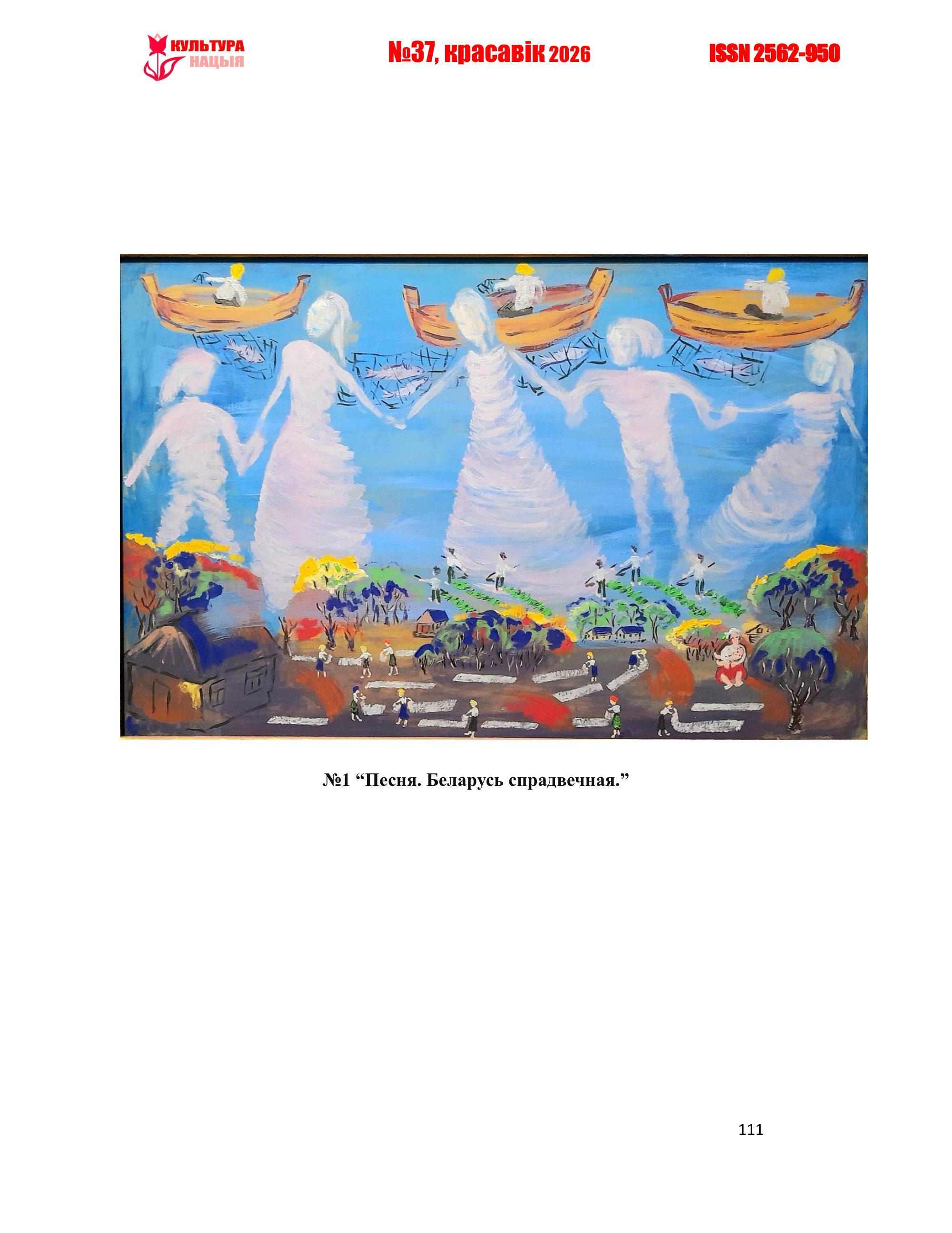
№1 “Песня. Беларусь спрадвечная.”
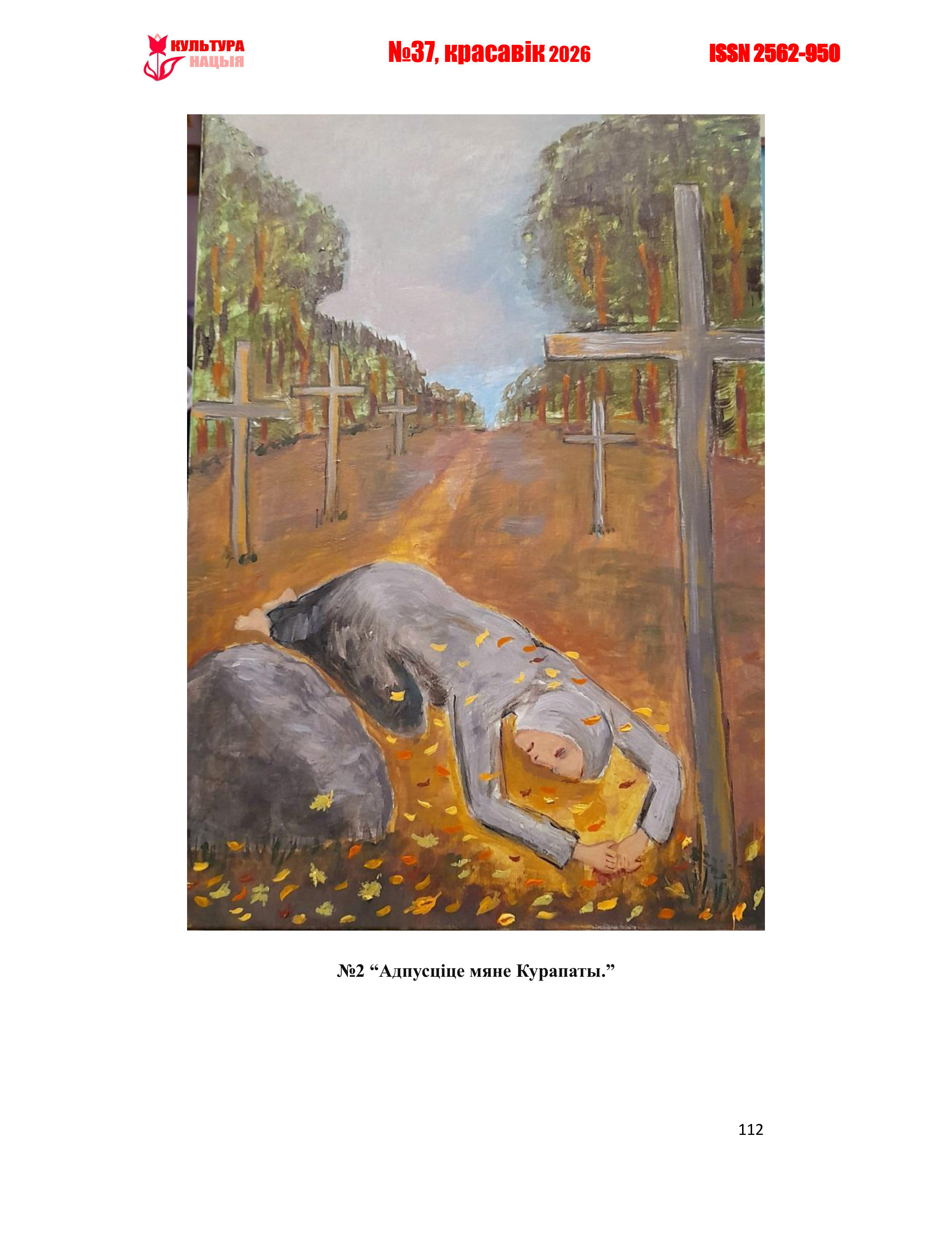
№2 “Адпусціце мяне Курапаты.”
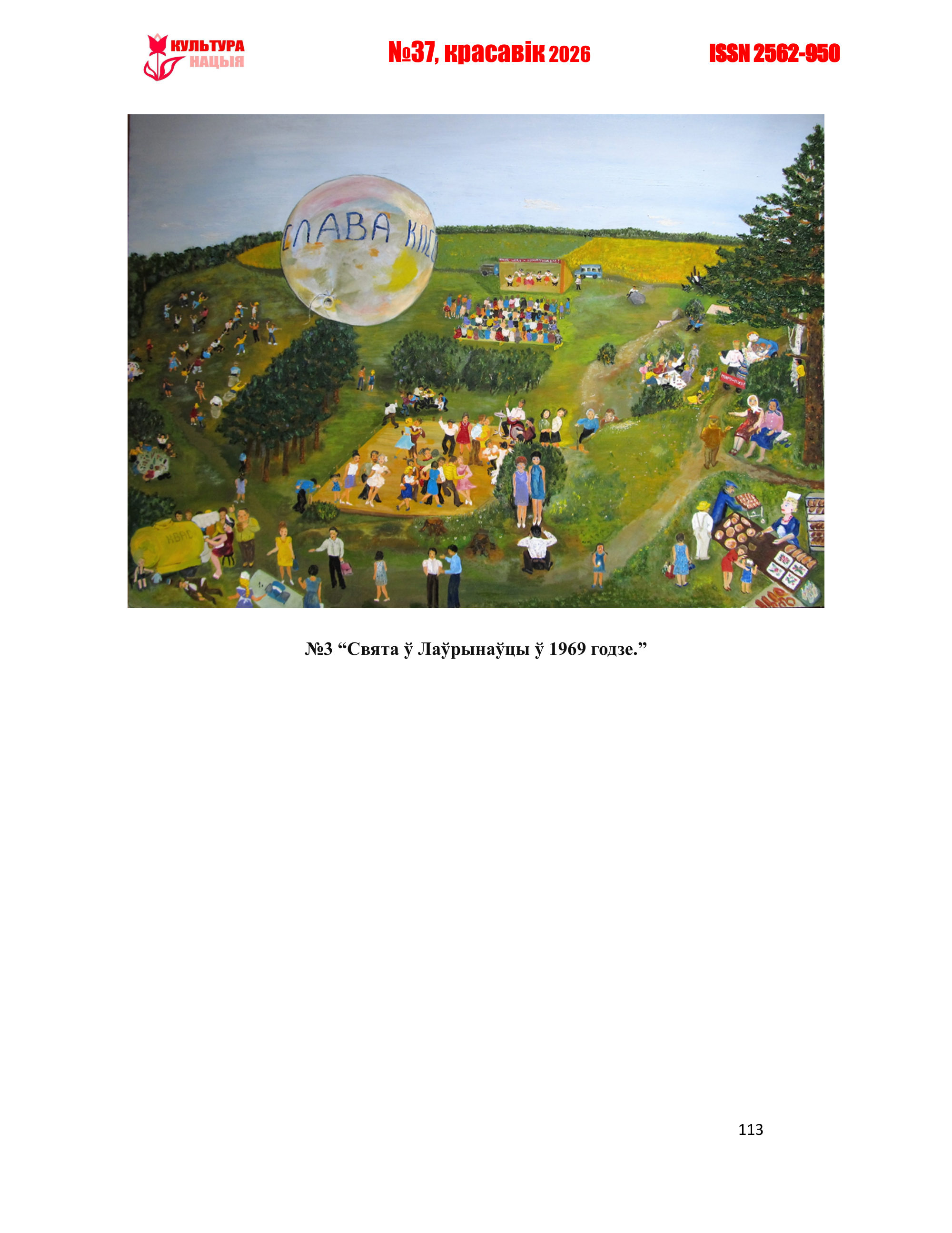
№3 “Свята ў Лаўрынаўцы ў 1969 годзе.”
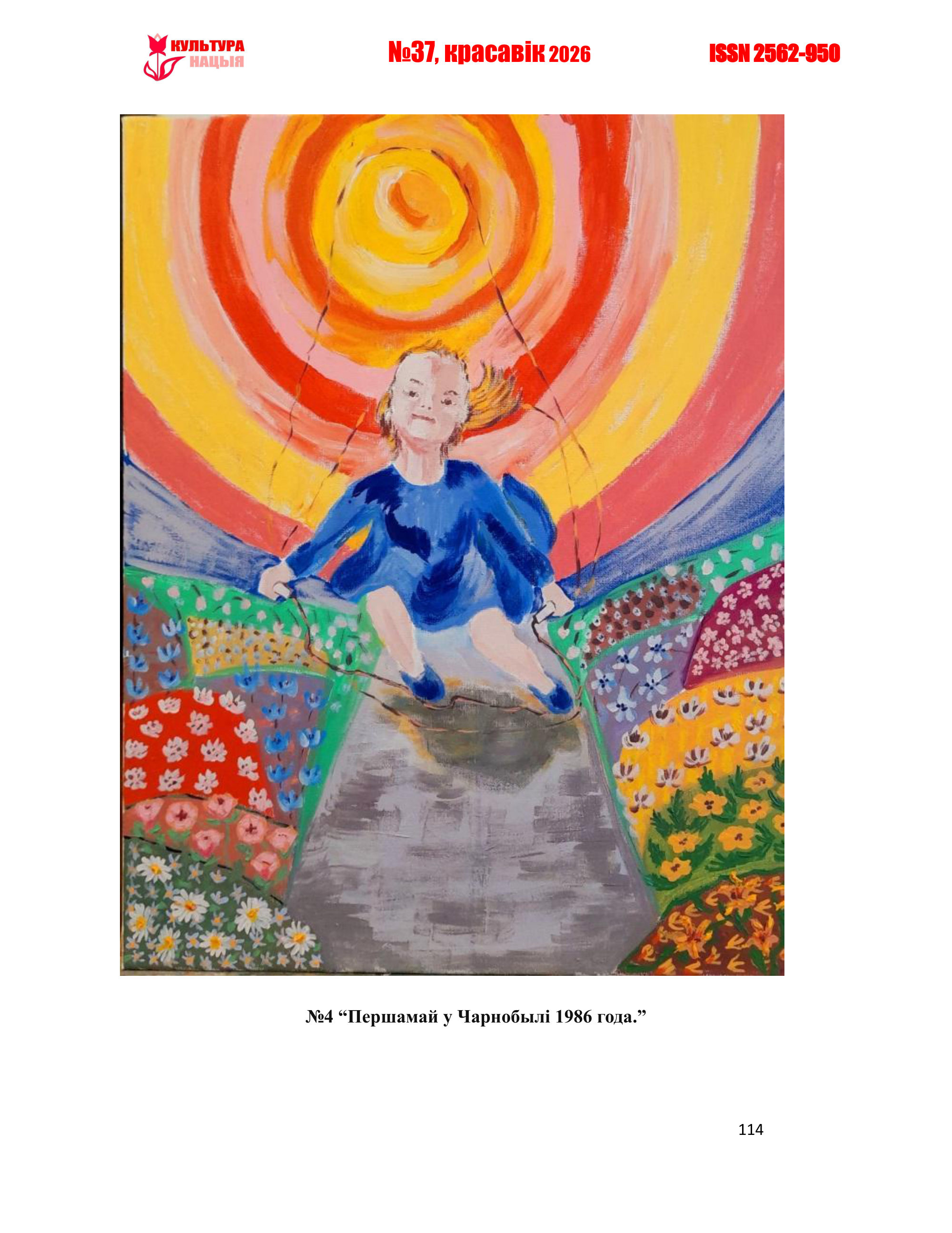
№4 “Першамай у Чарнобылі 1986 года.”
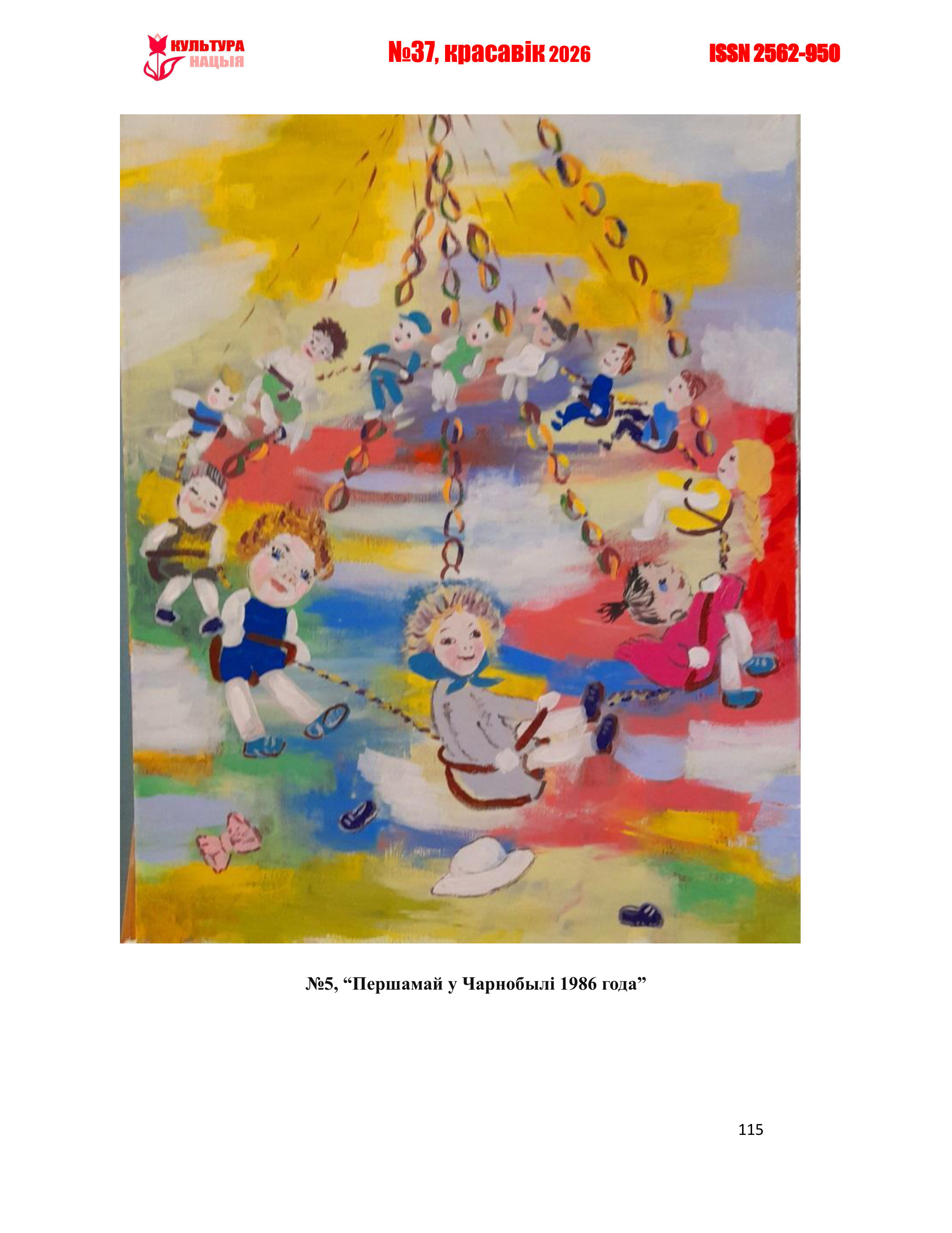
№5, “Першамай у Чарнобылі 1986 года”
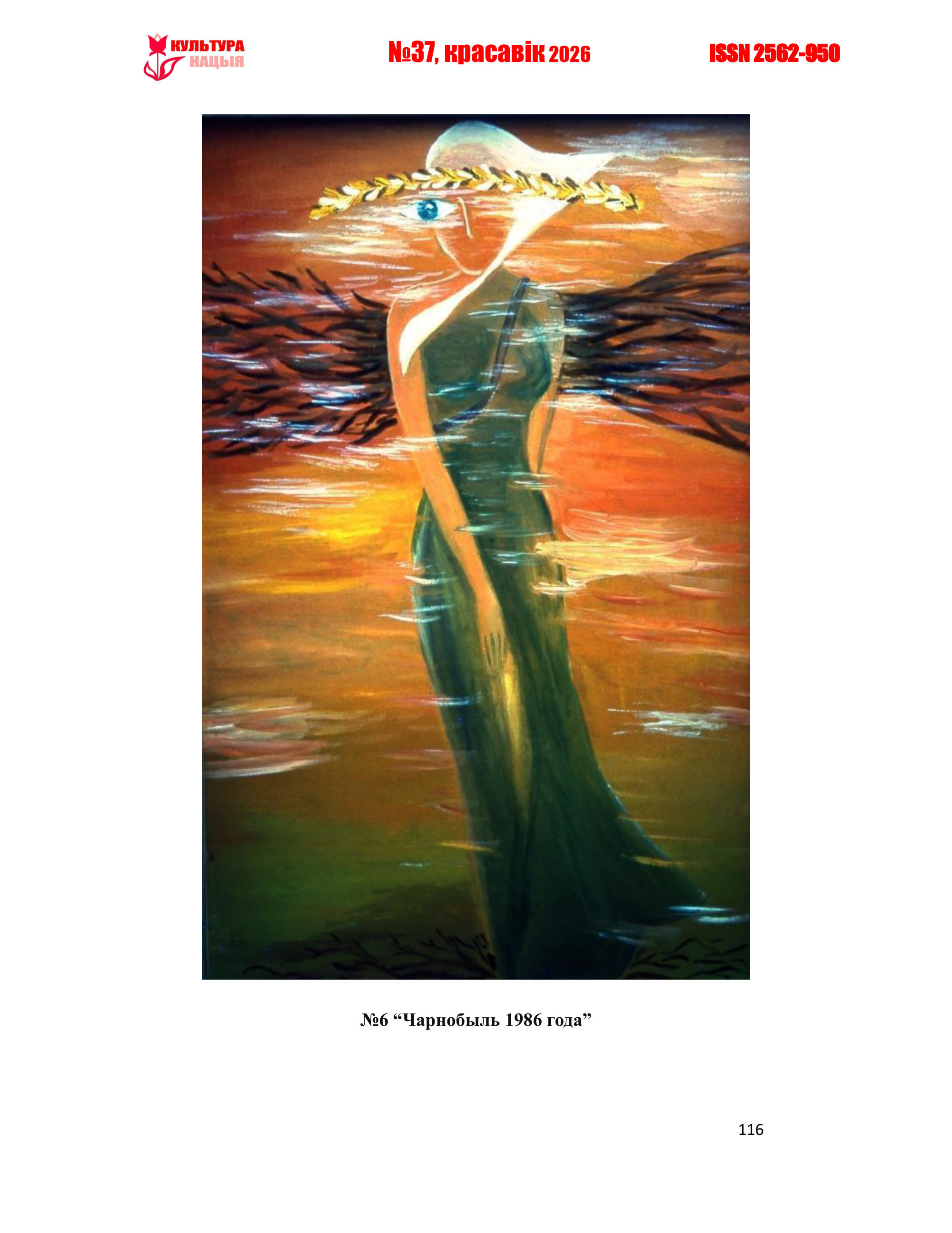
№6 “Чарнобыль 1986 года”
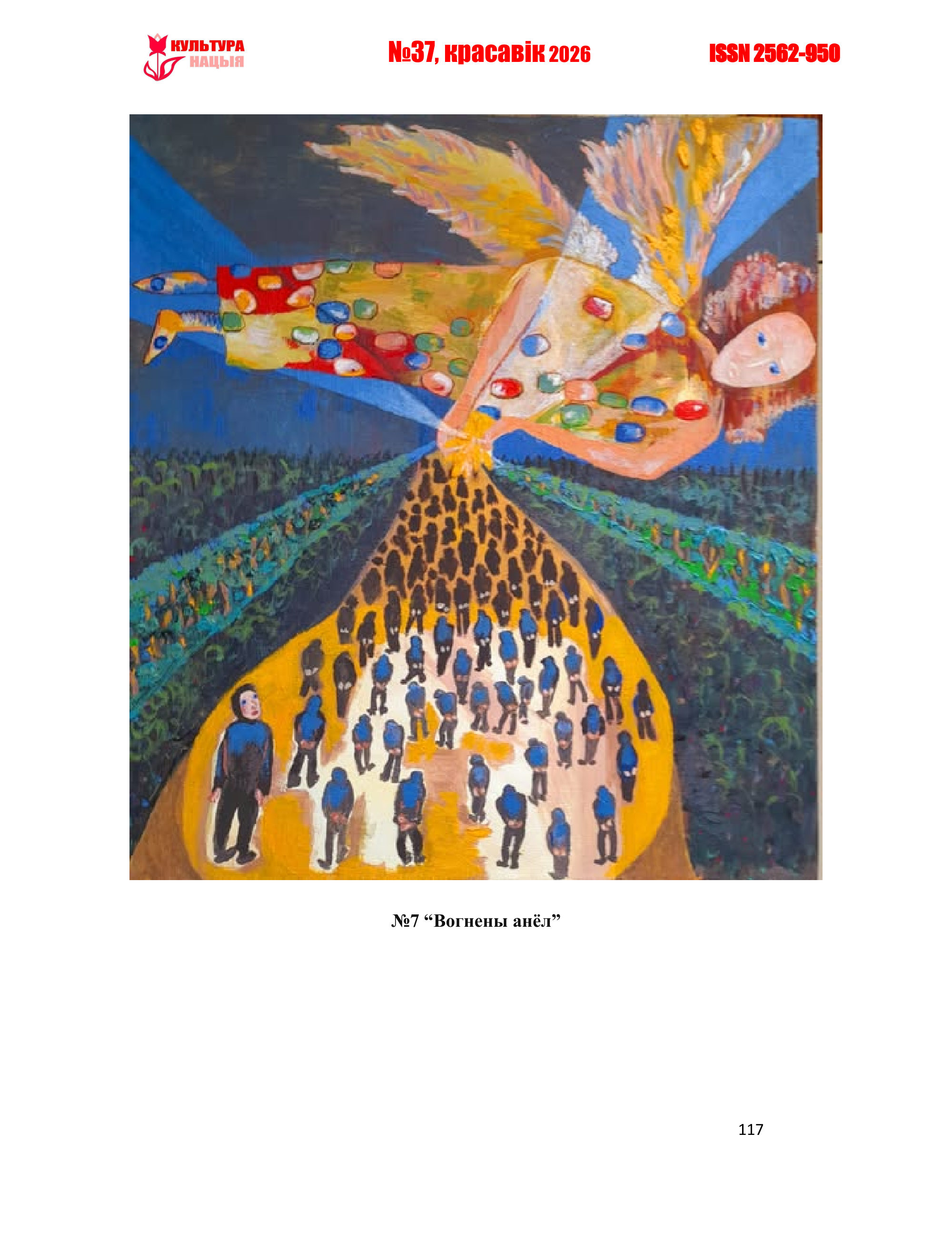
№7 “Вогнены анёл”
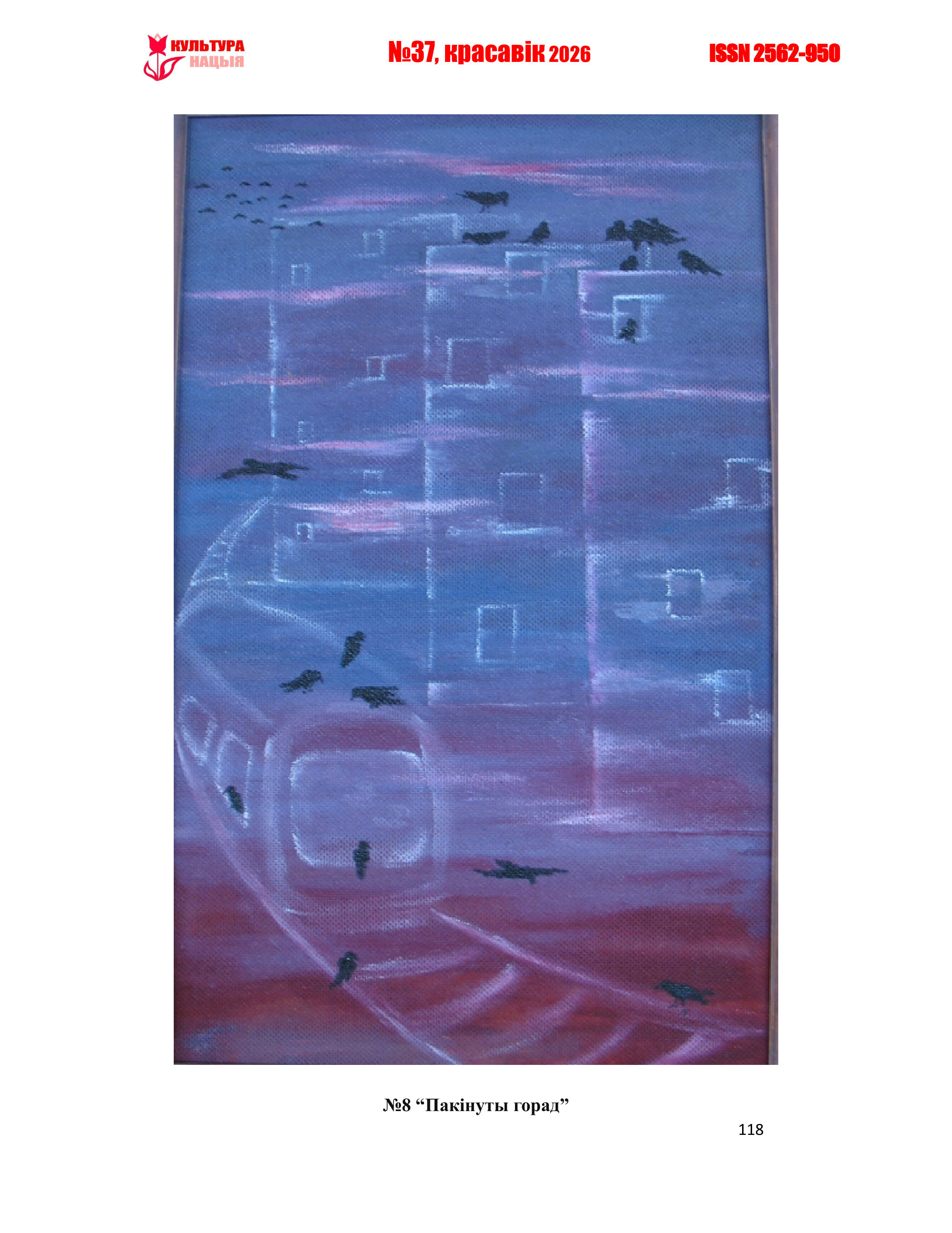
№8 “Пакінуты горад”
118
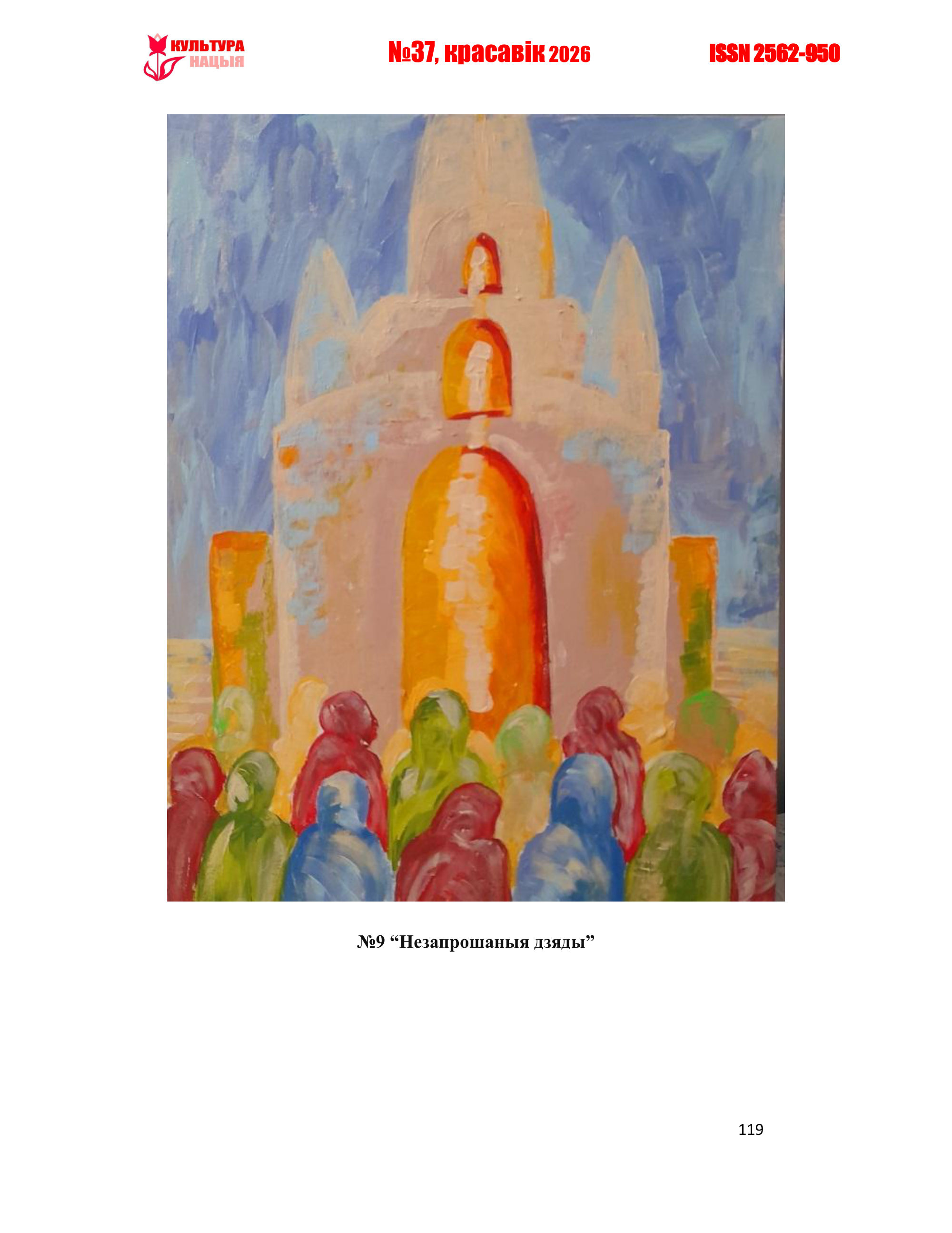
№9 “Незапрошаныя дзяды”
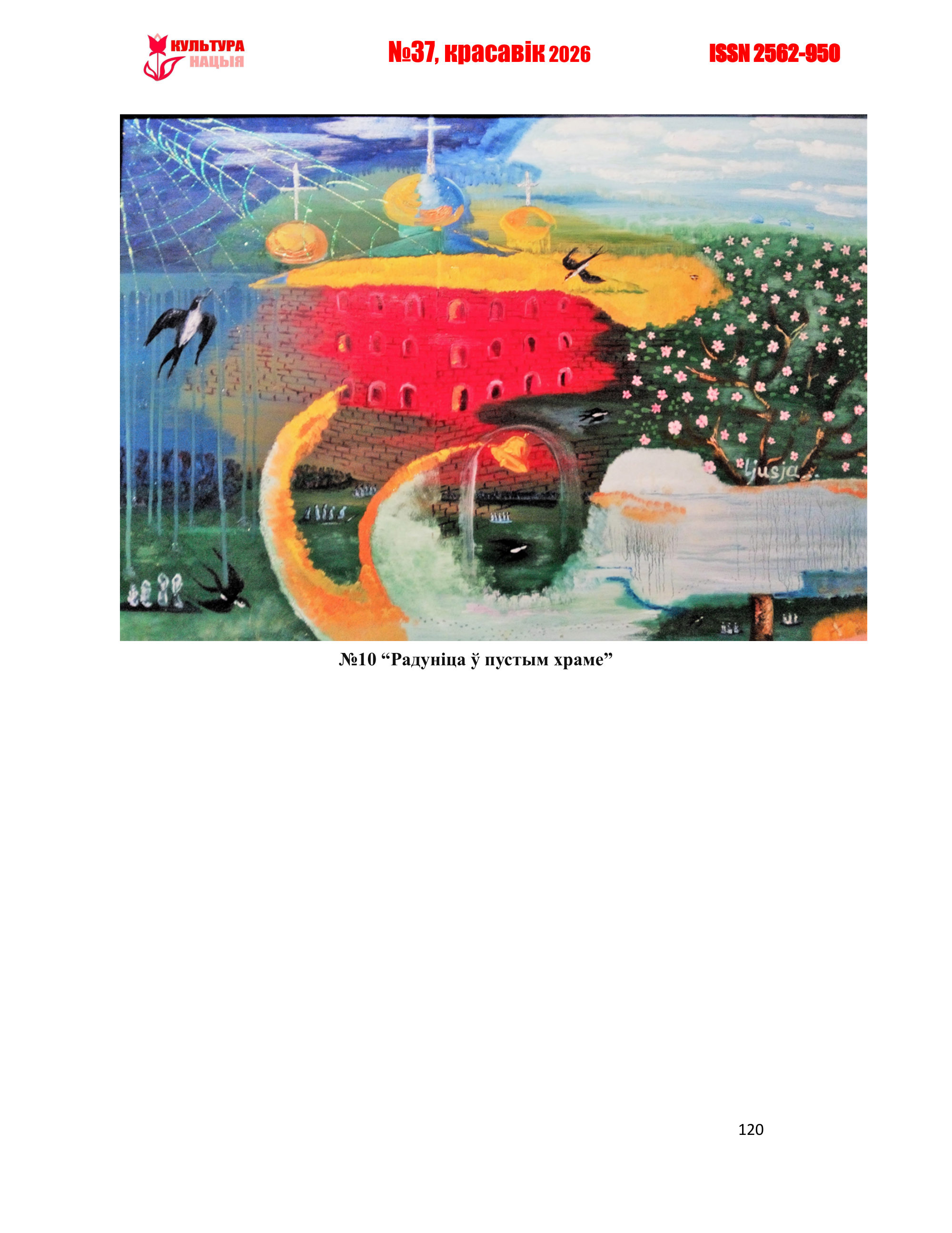
№10 “Радуніца ў пустым храме”
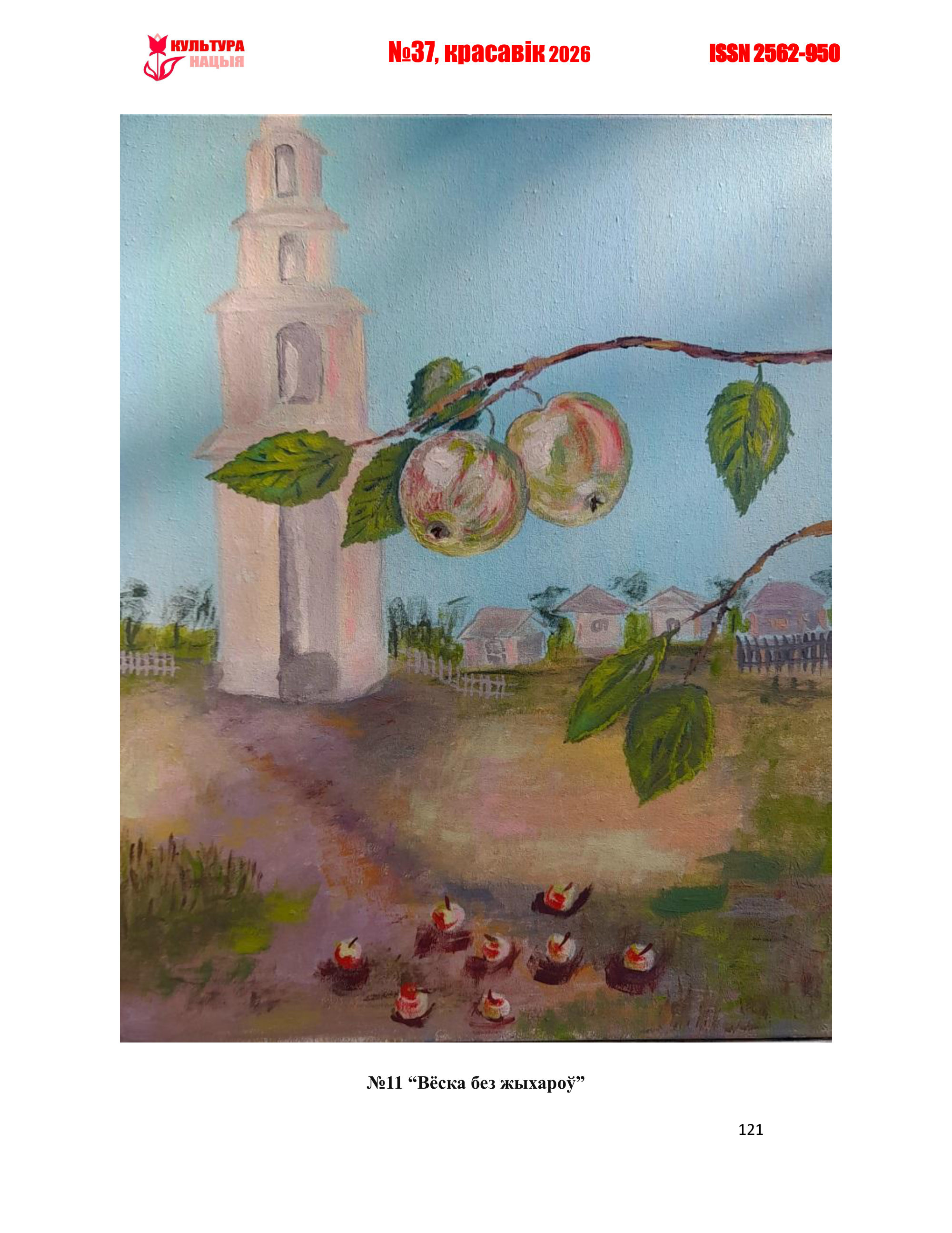
№11 “Вёска без жыхароў”
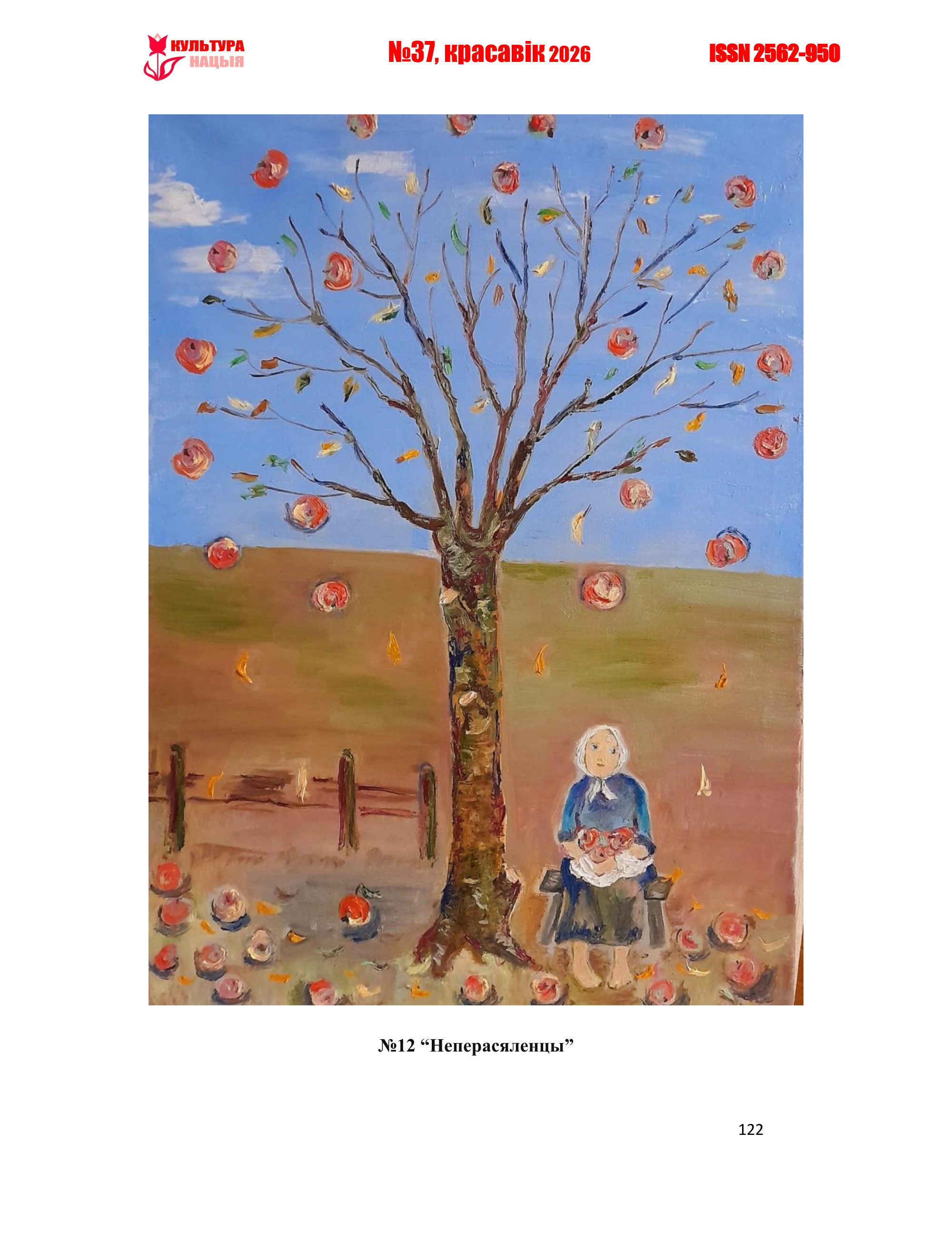
№12 “Неперасяленцы”
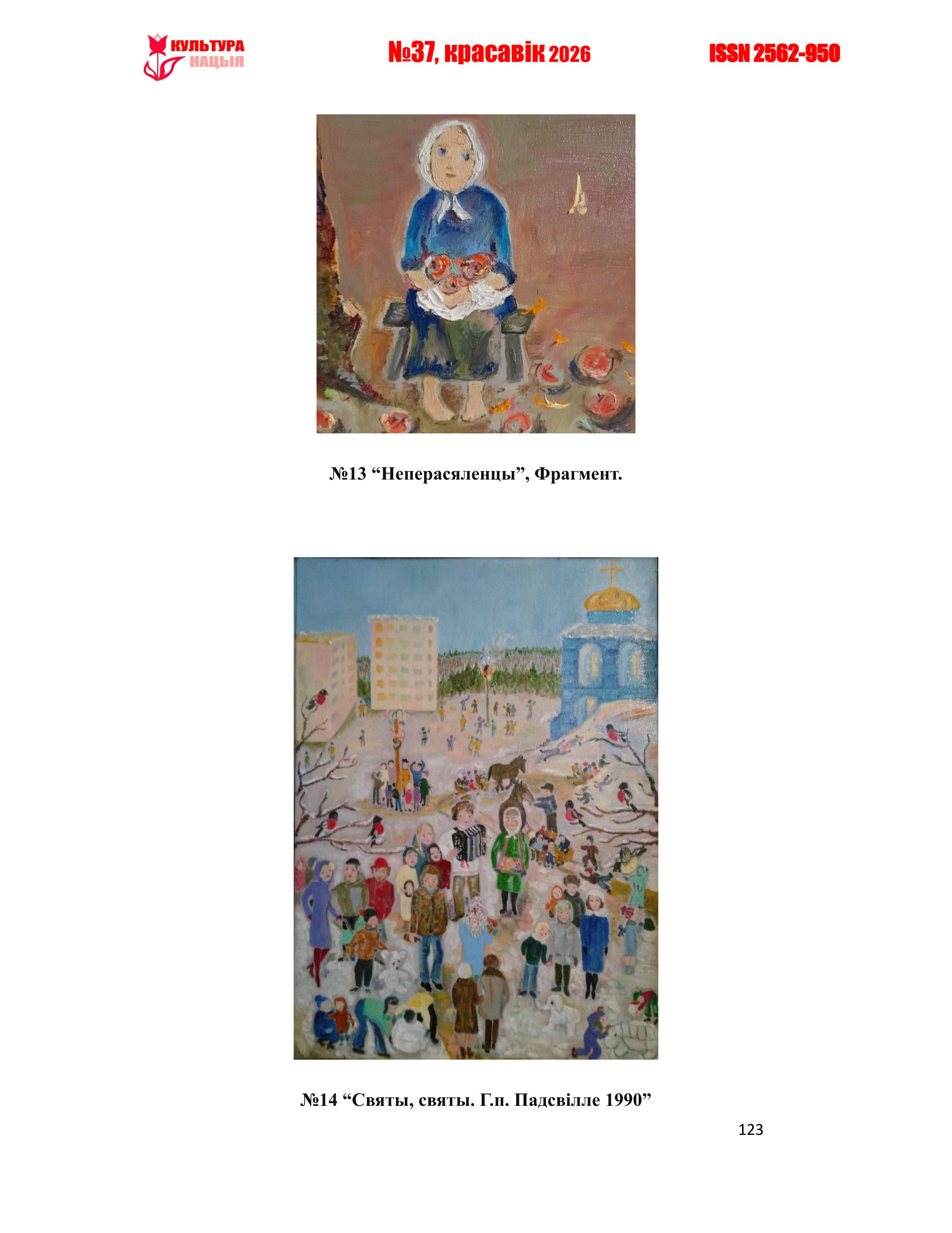
№13 “Неперасяленцы”, Фрагмент.
№14 “Святы, святы. Г.п. Падсвілле 1990”
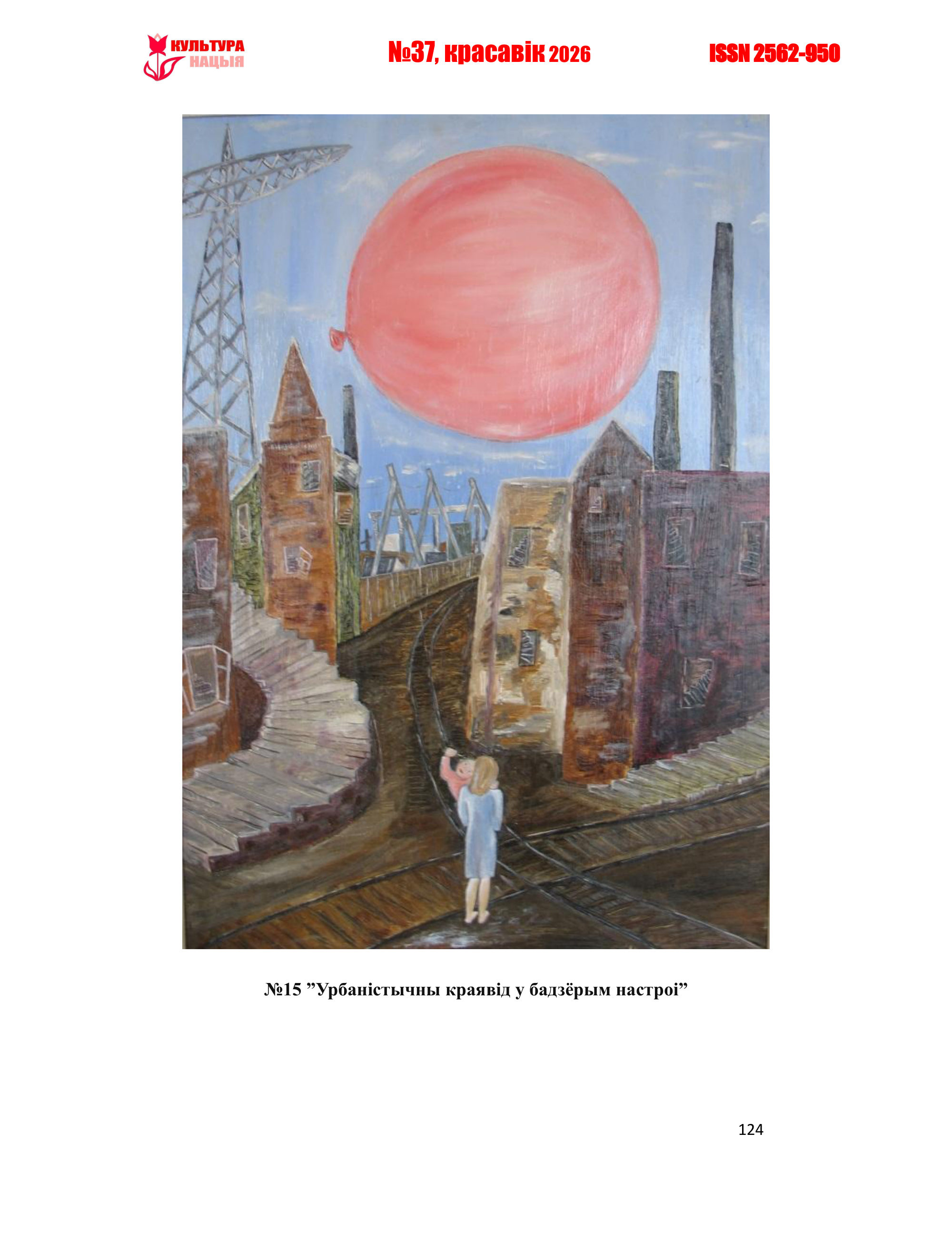
№15 ”Урбаністычны краявід у бадзёрым настроі”
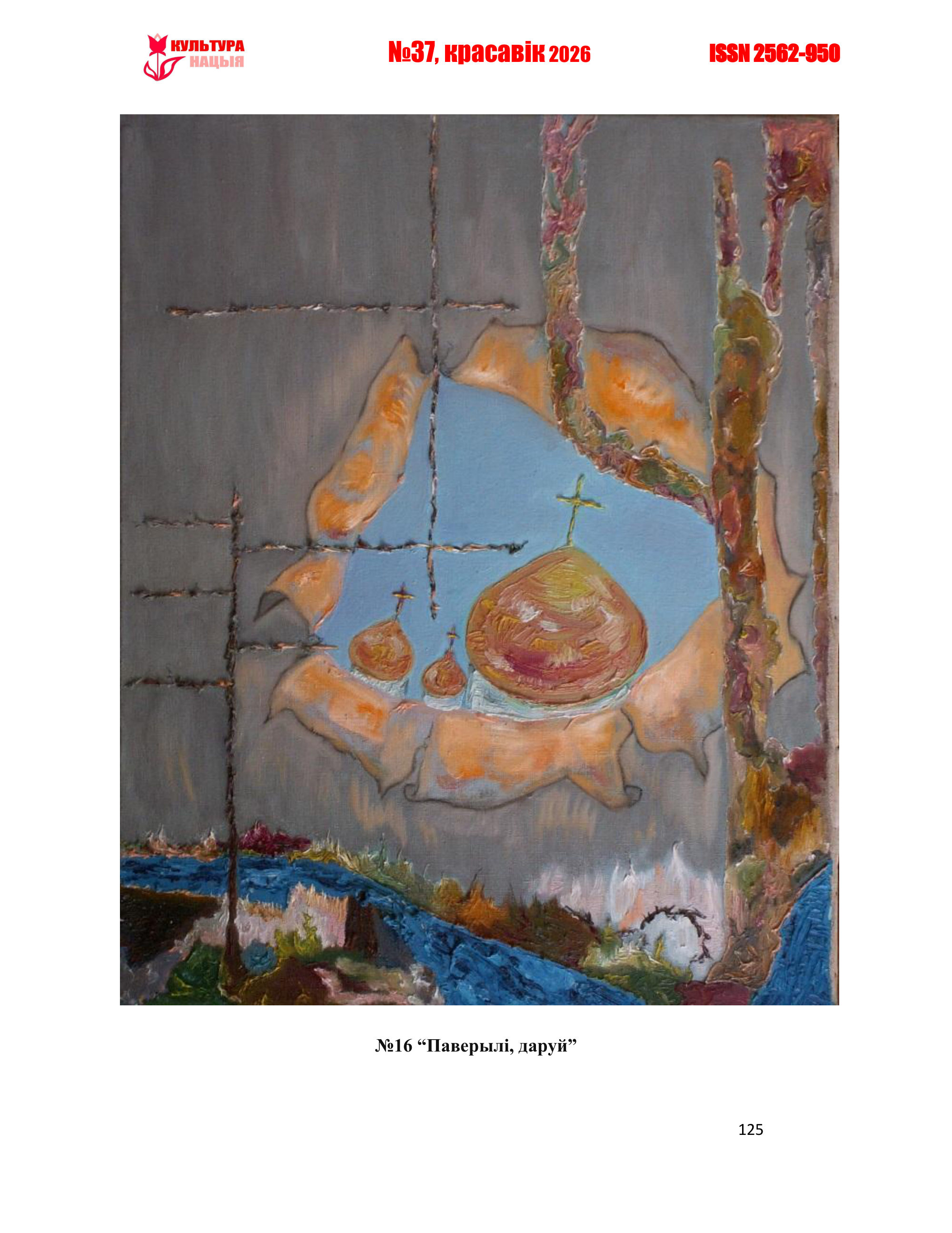
№16 “Паверылі, даруй”
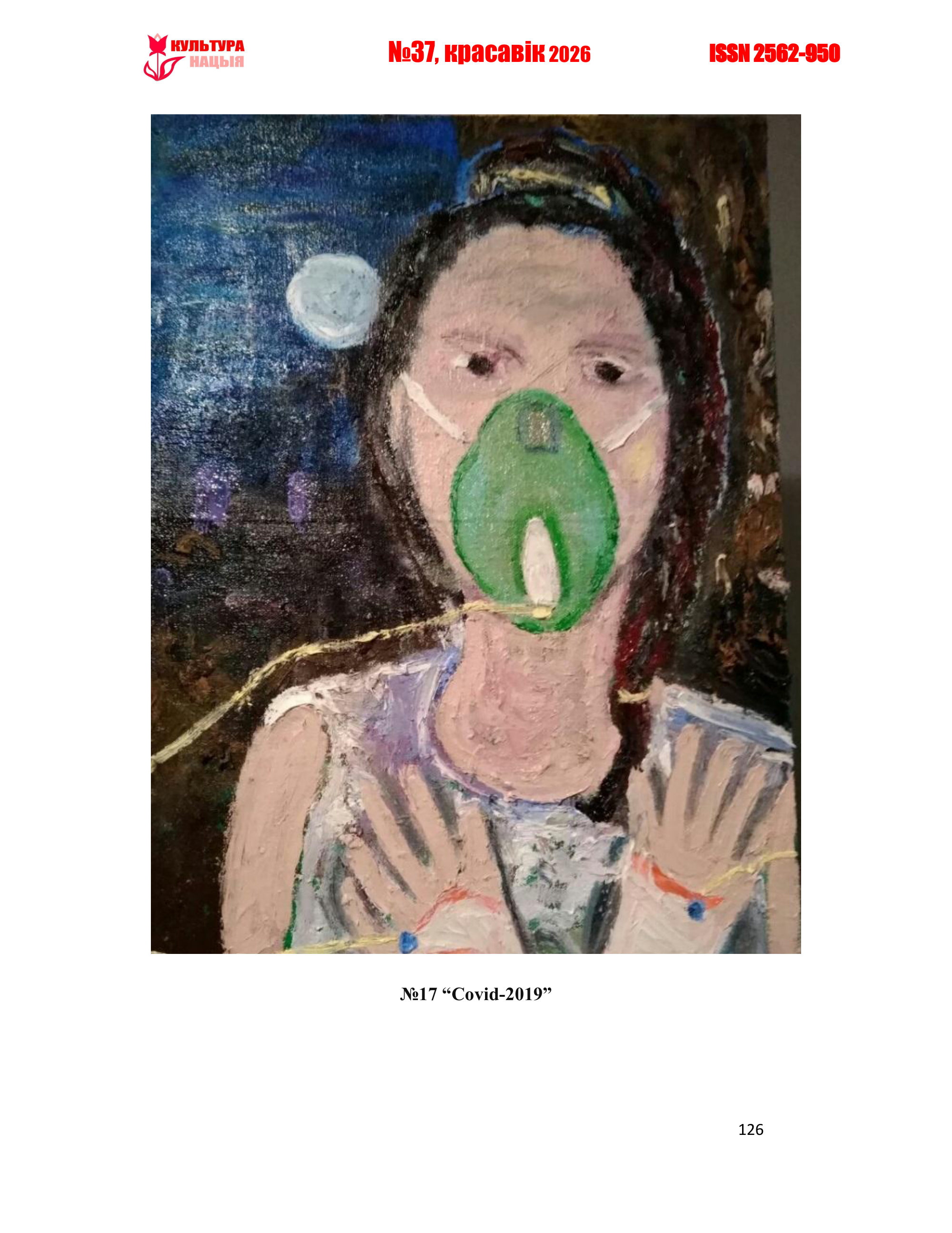
№17 “Сovid-2019”
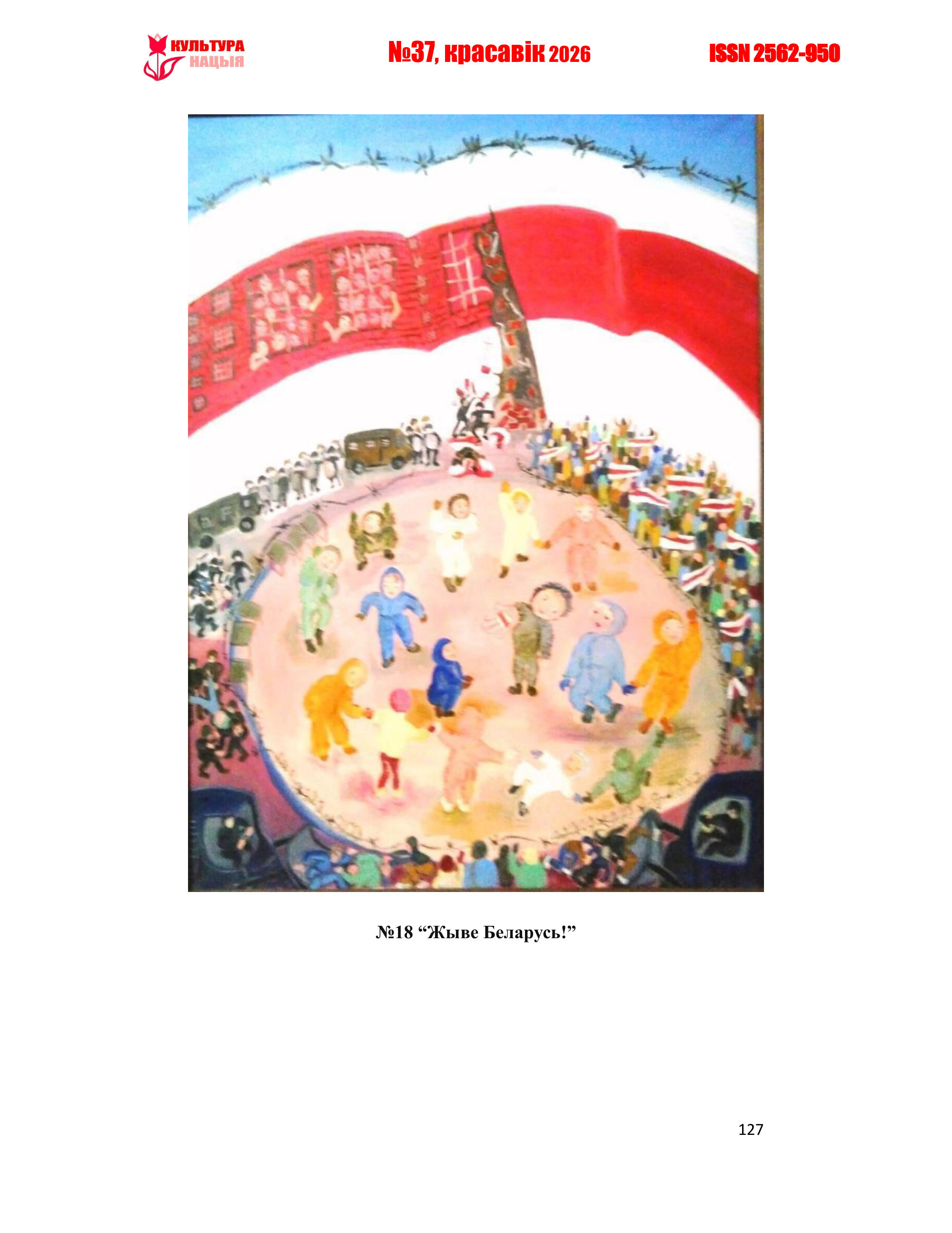
№18 “Жыве Беларусь!”
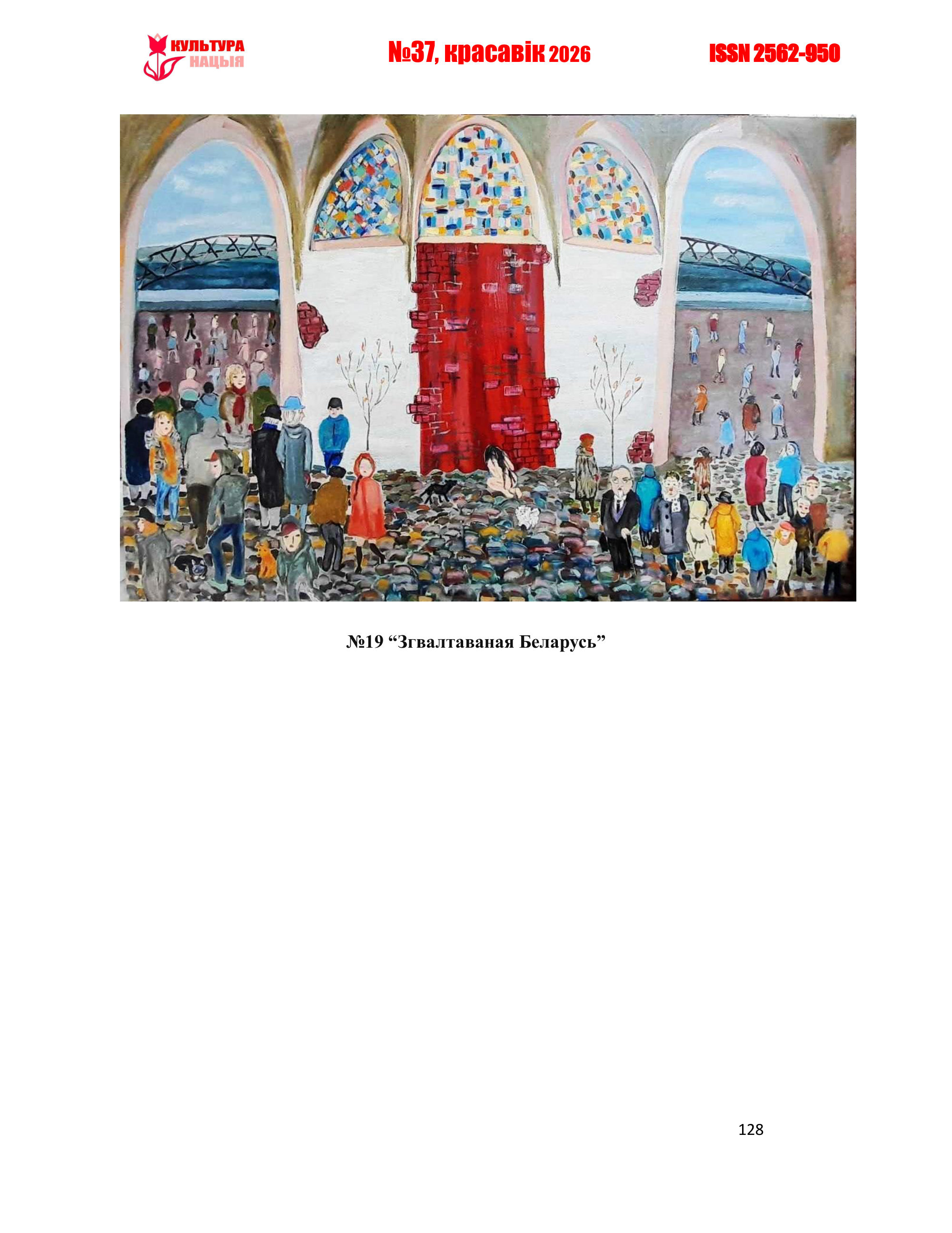
№19 “Згвалтаваная Беларусь”
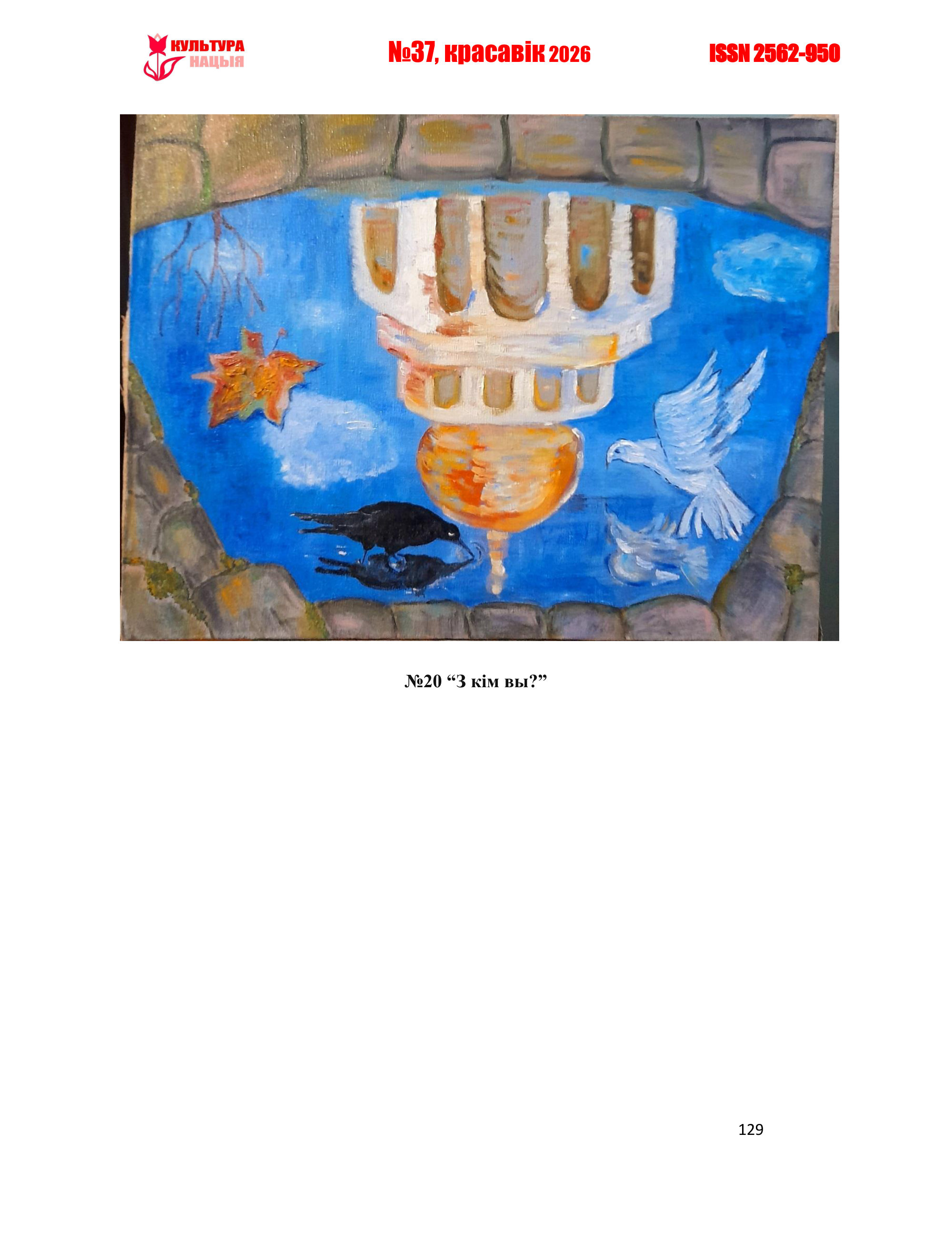
№20 “З кім вы?”
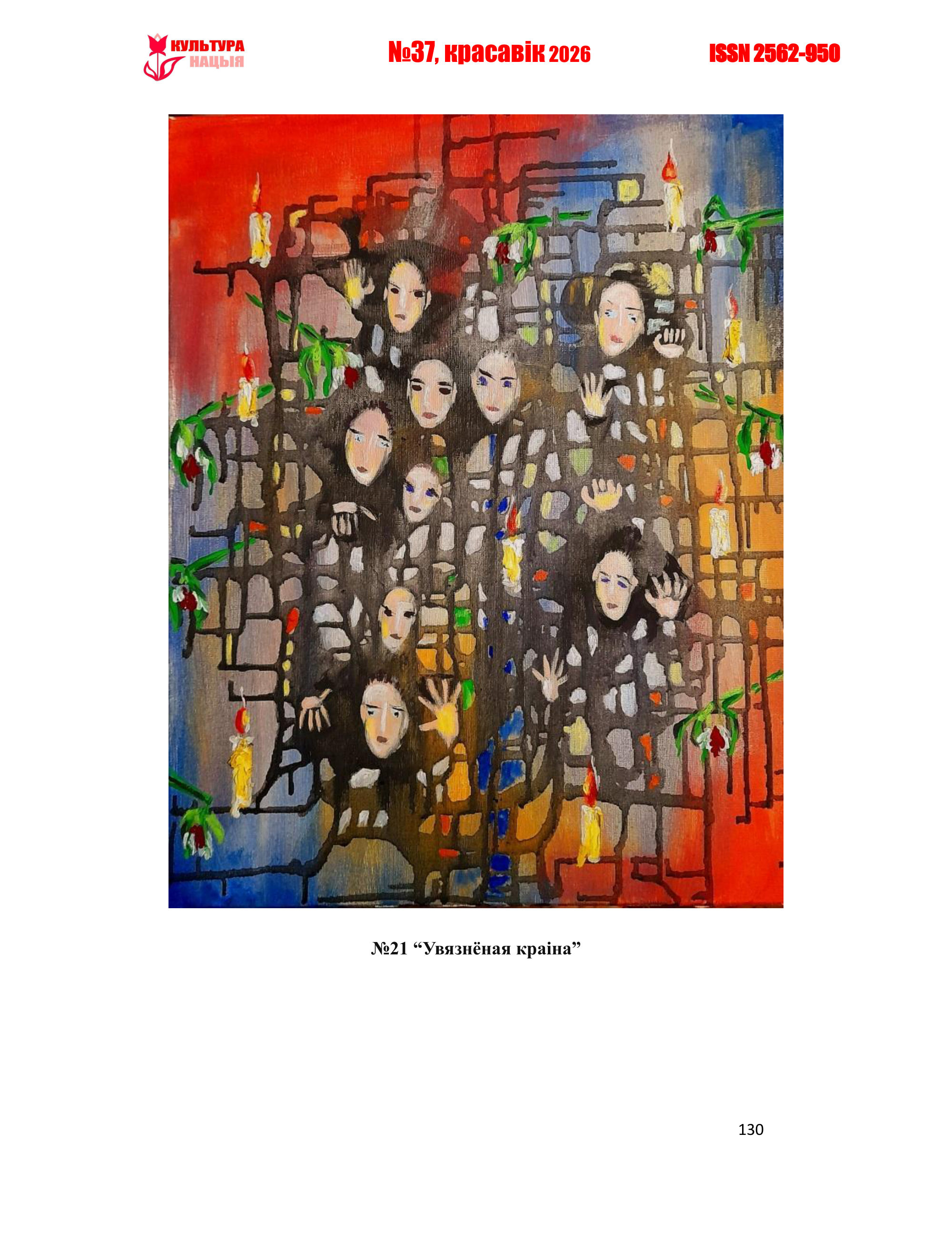
№21 “Увязнёная краіна”
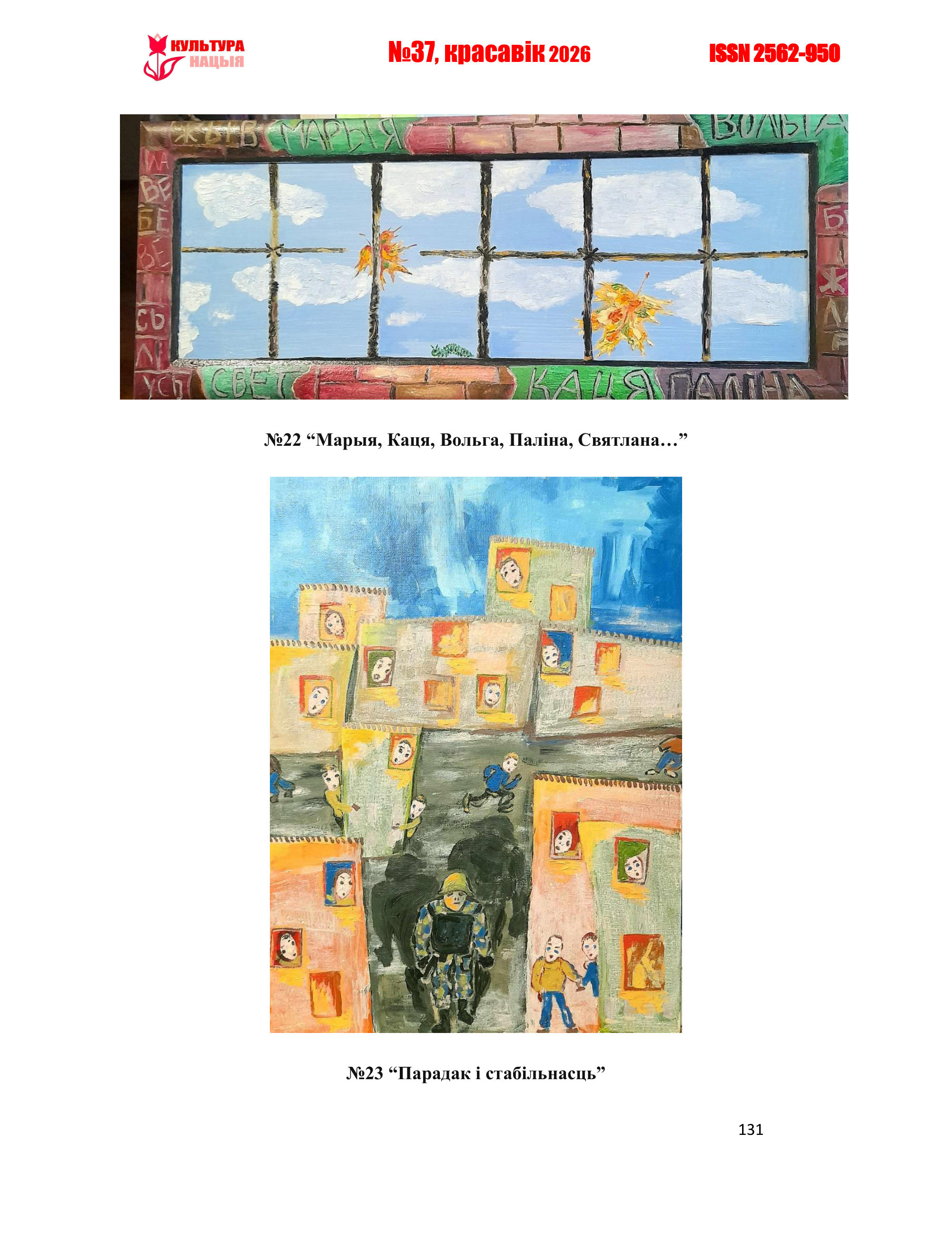
№22 “Марыя, Каця, Вольга, Паліна, Святлана…”
№23 “Парадак і стабільнасць”
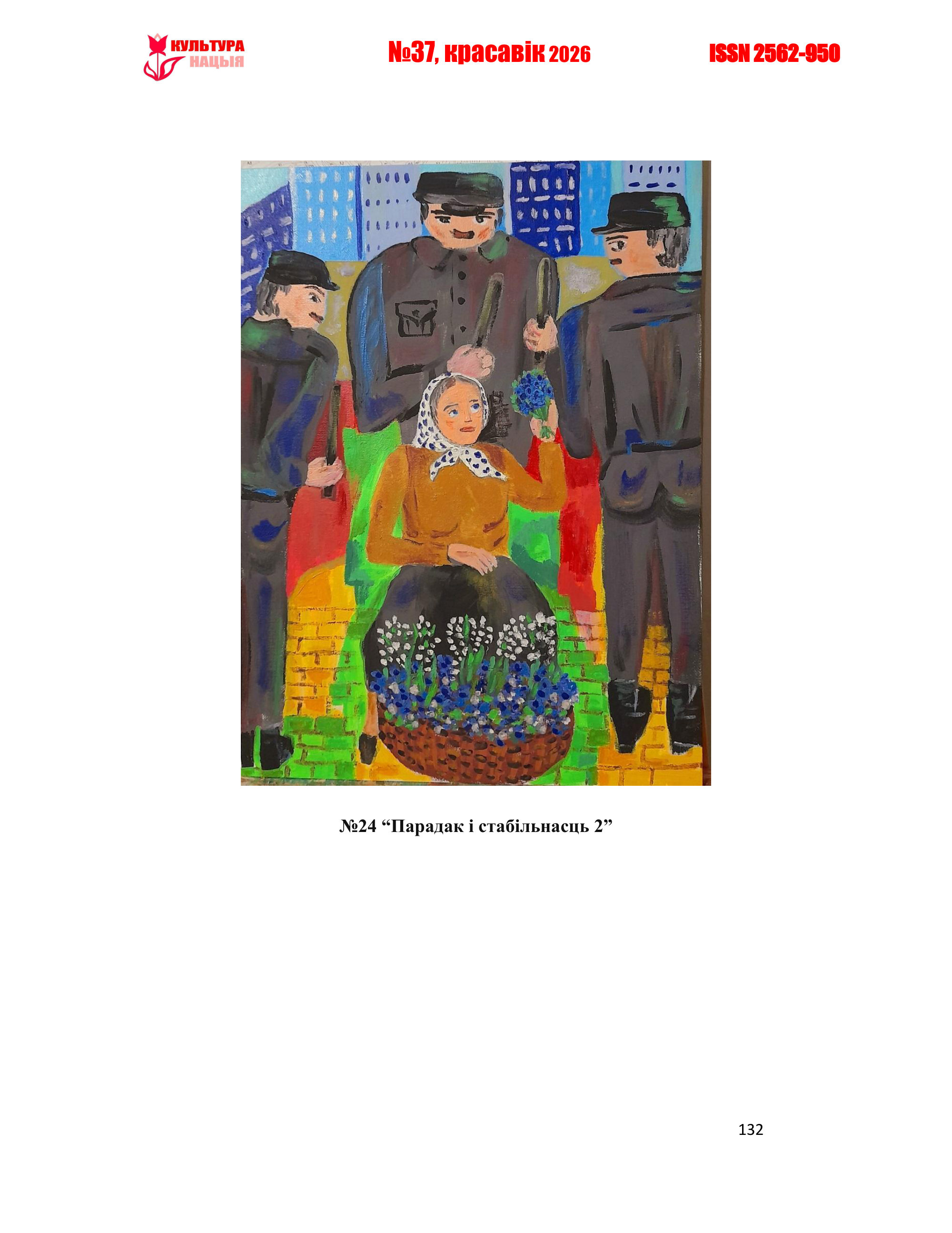
№24 “Парадак і стабільнасць 2”
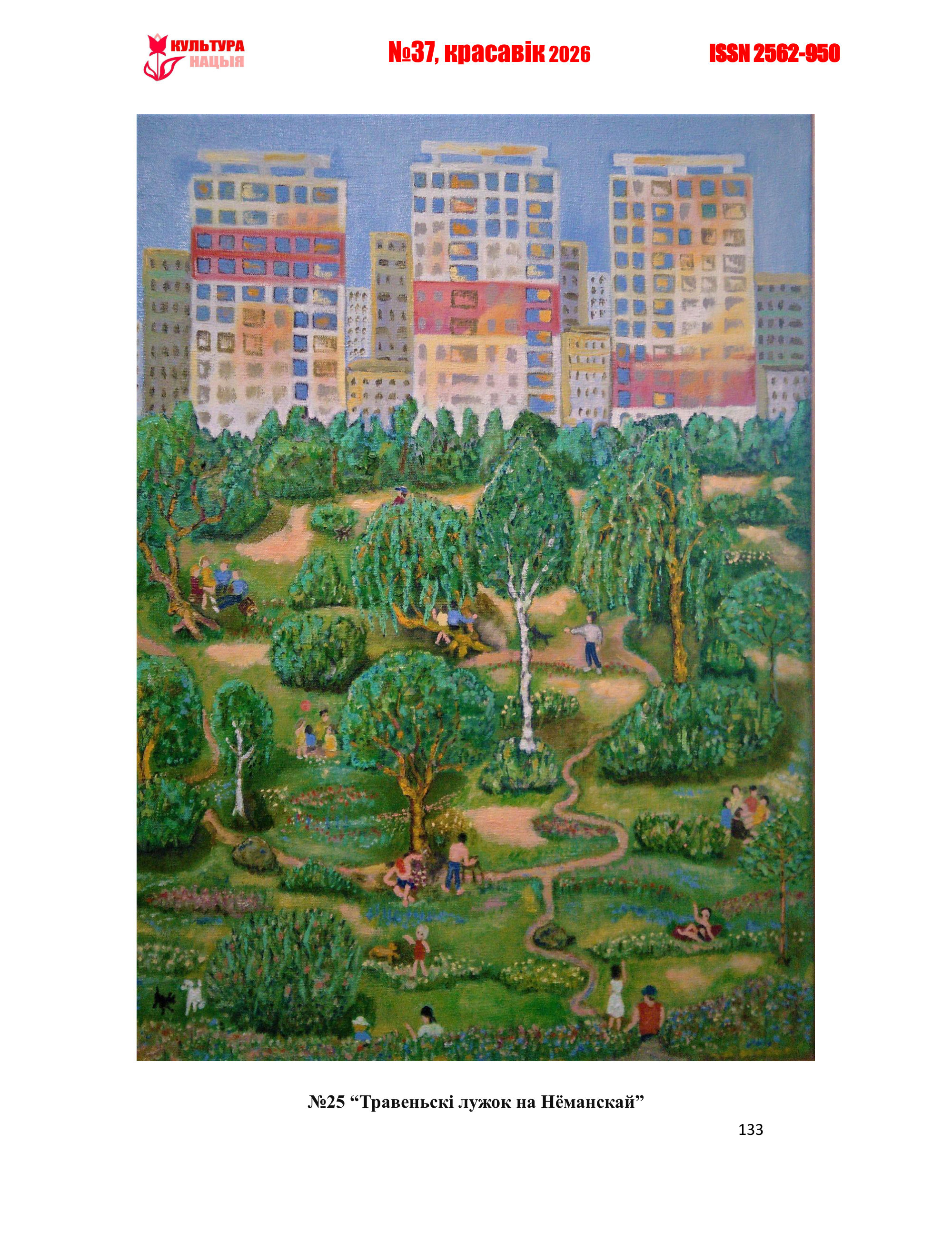
№25 “Травеньскі лужок на Нёманскай”
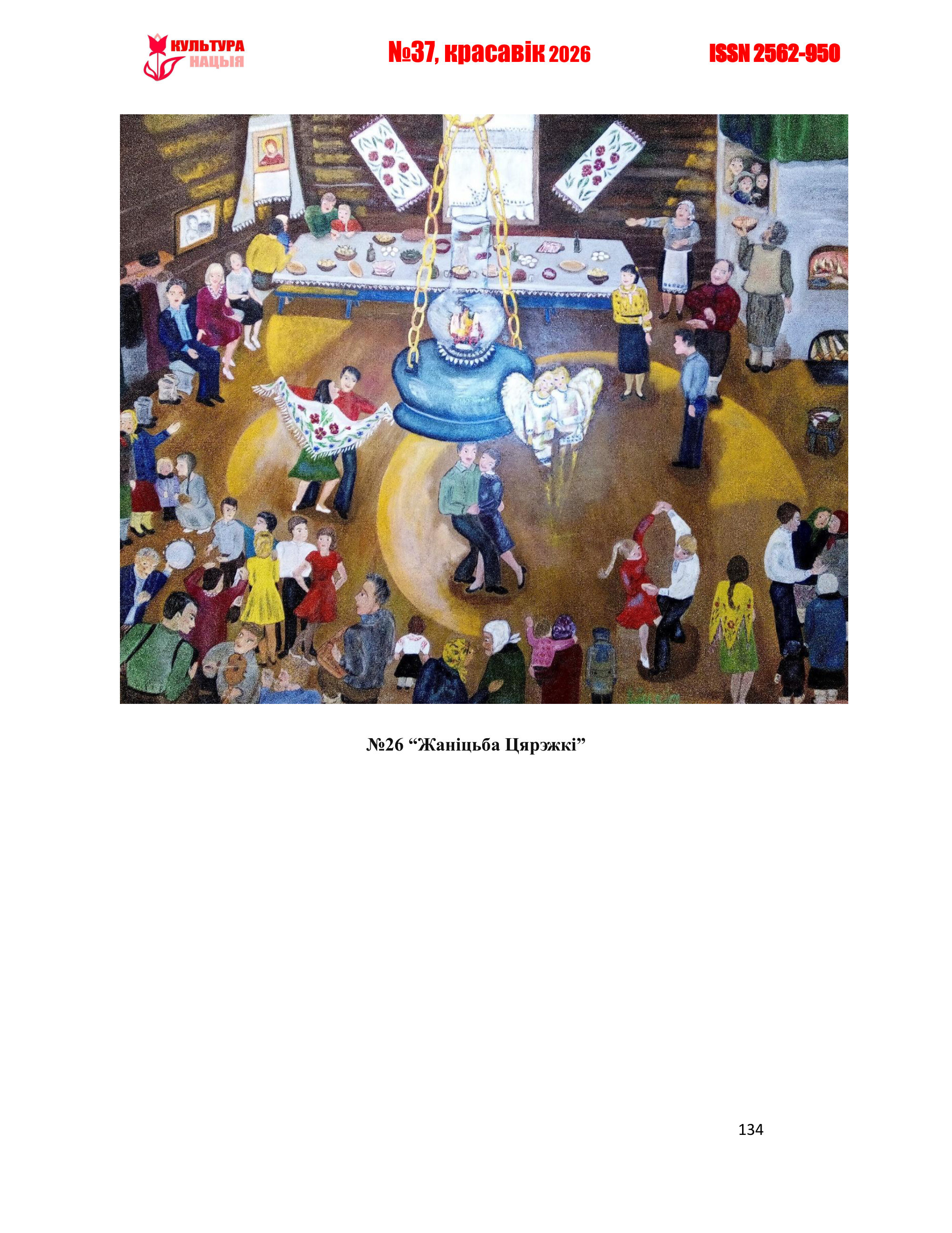
№26 “Жаніцьба Цярэжкі”
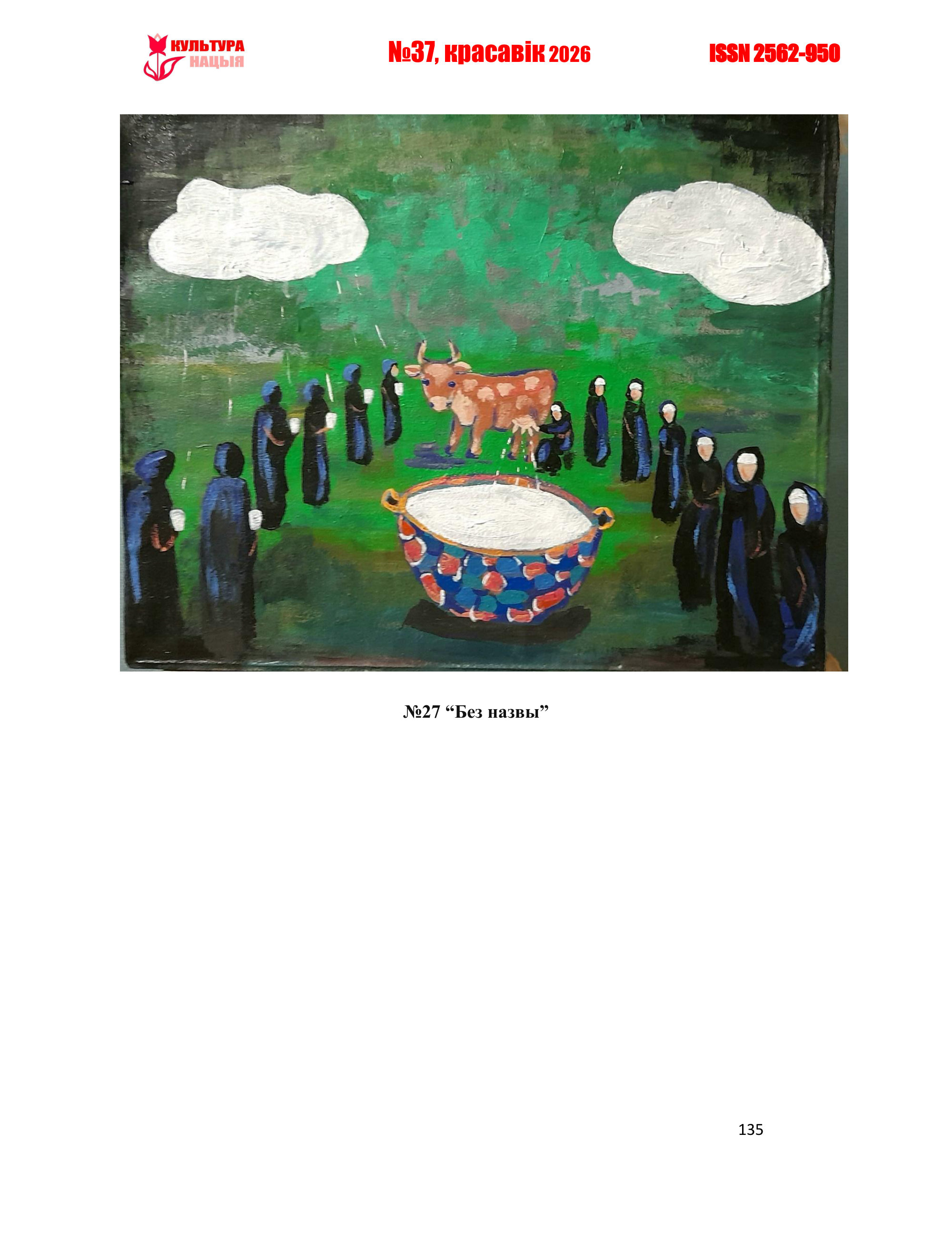
№27 “Без назвы”
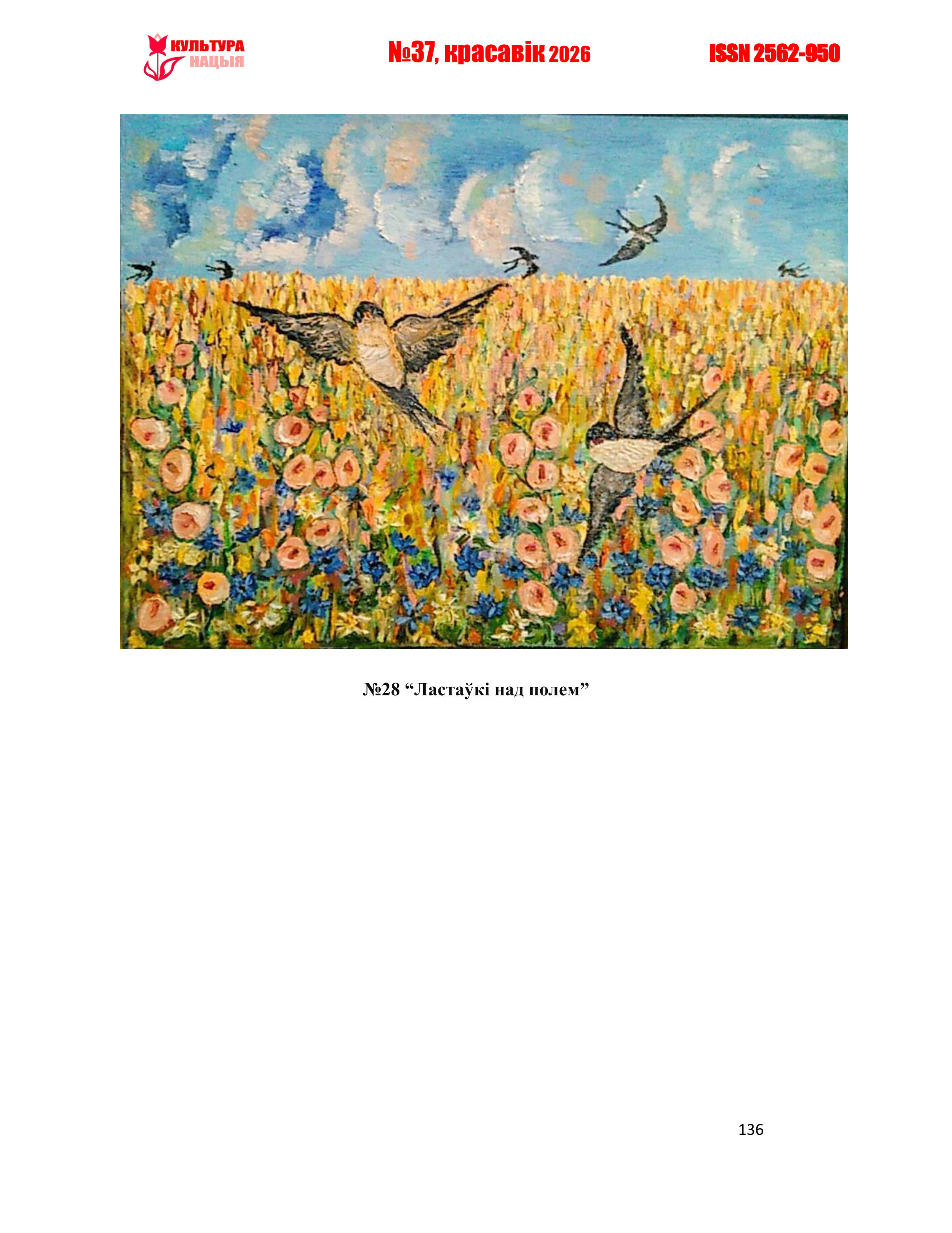
№28 “Ластаўкі над полем”
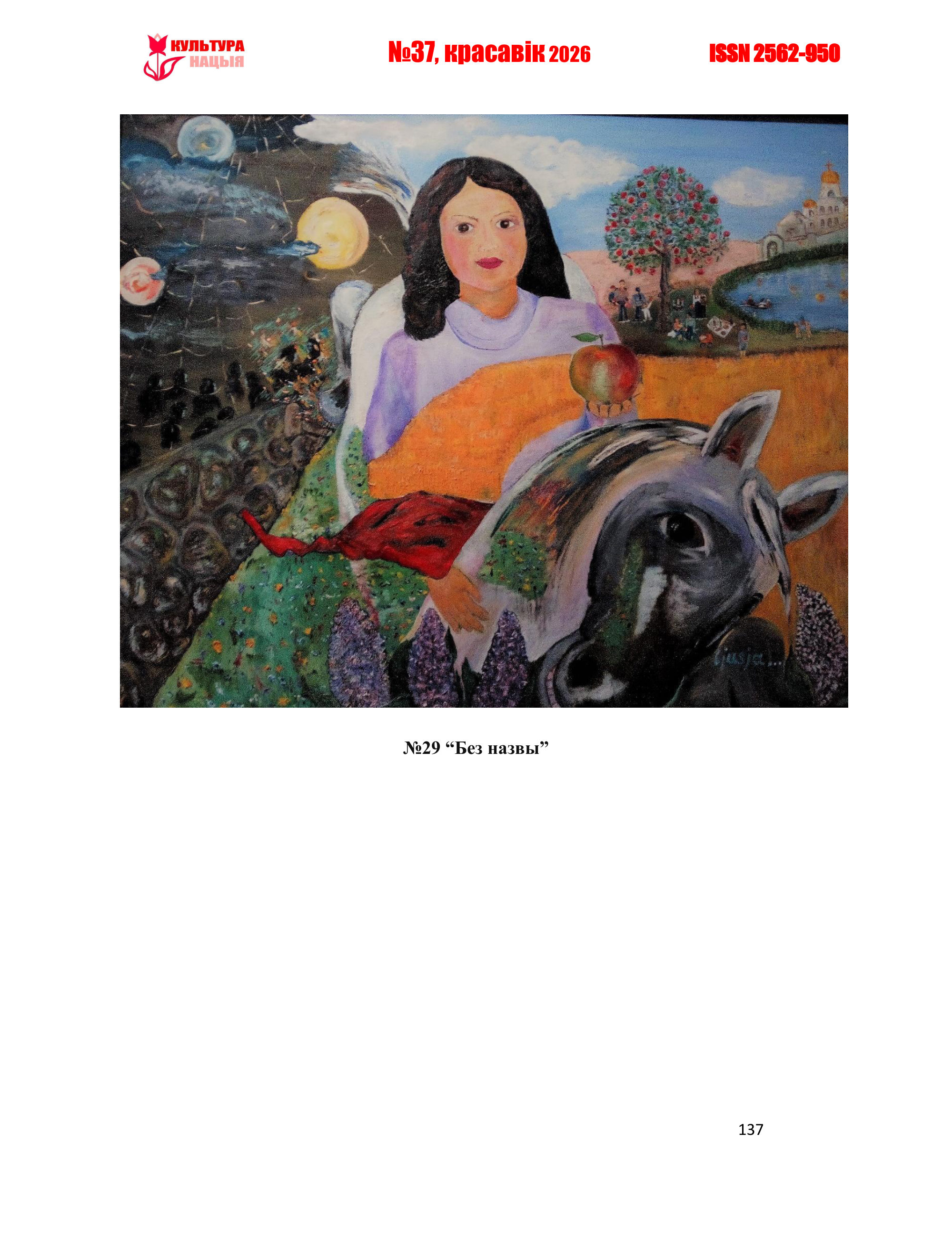
№29 “Без назвы”
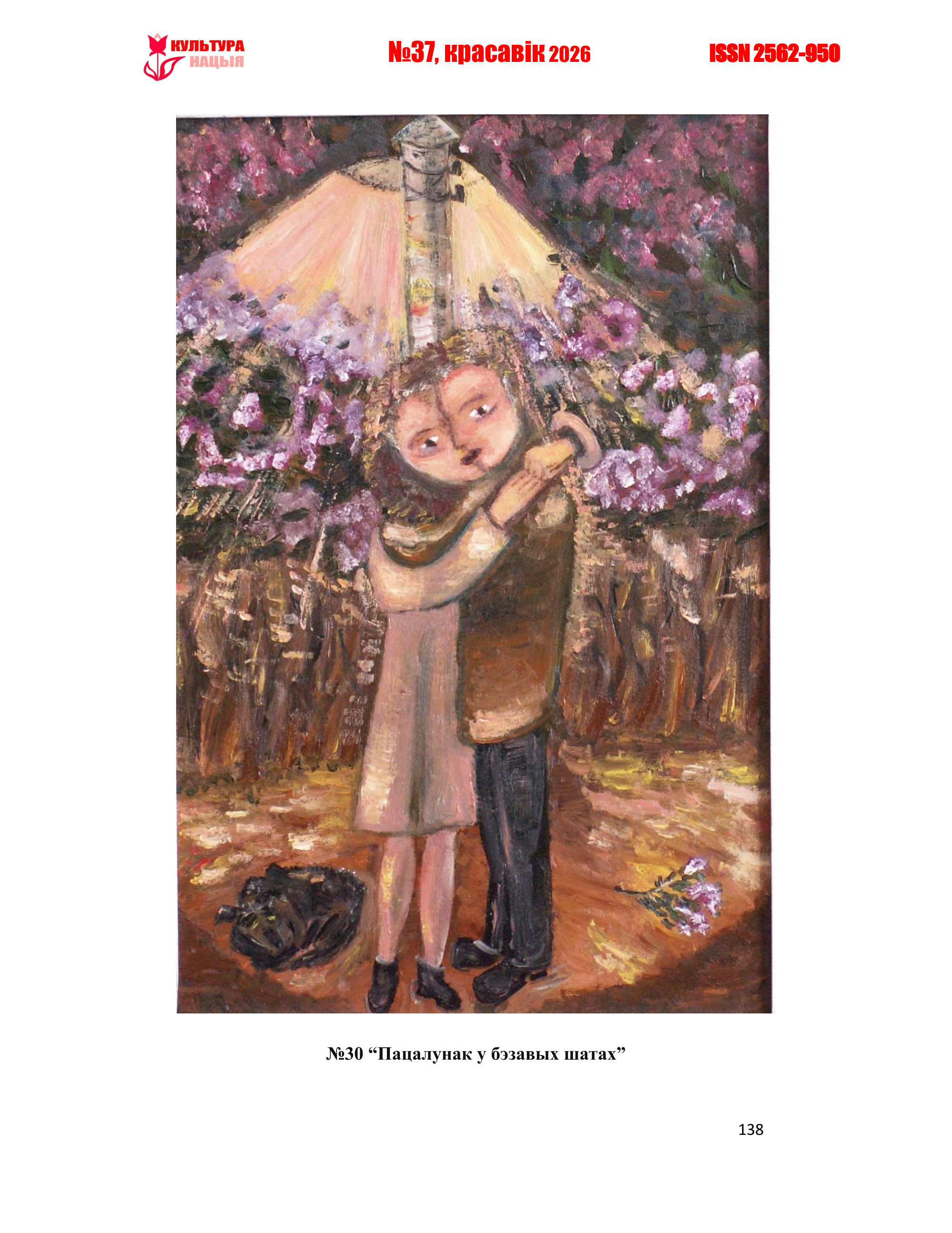
№30 “Пацалунак у бэзавых шатах”
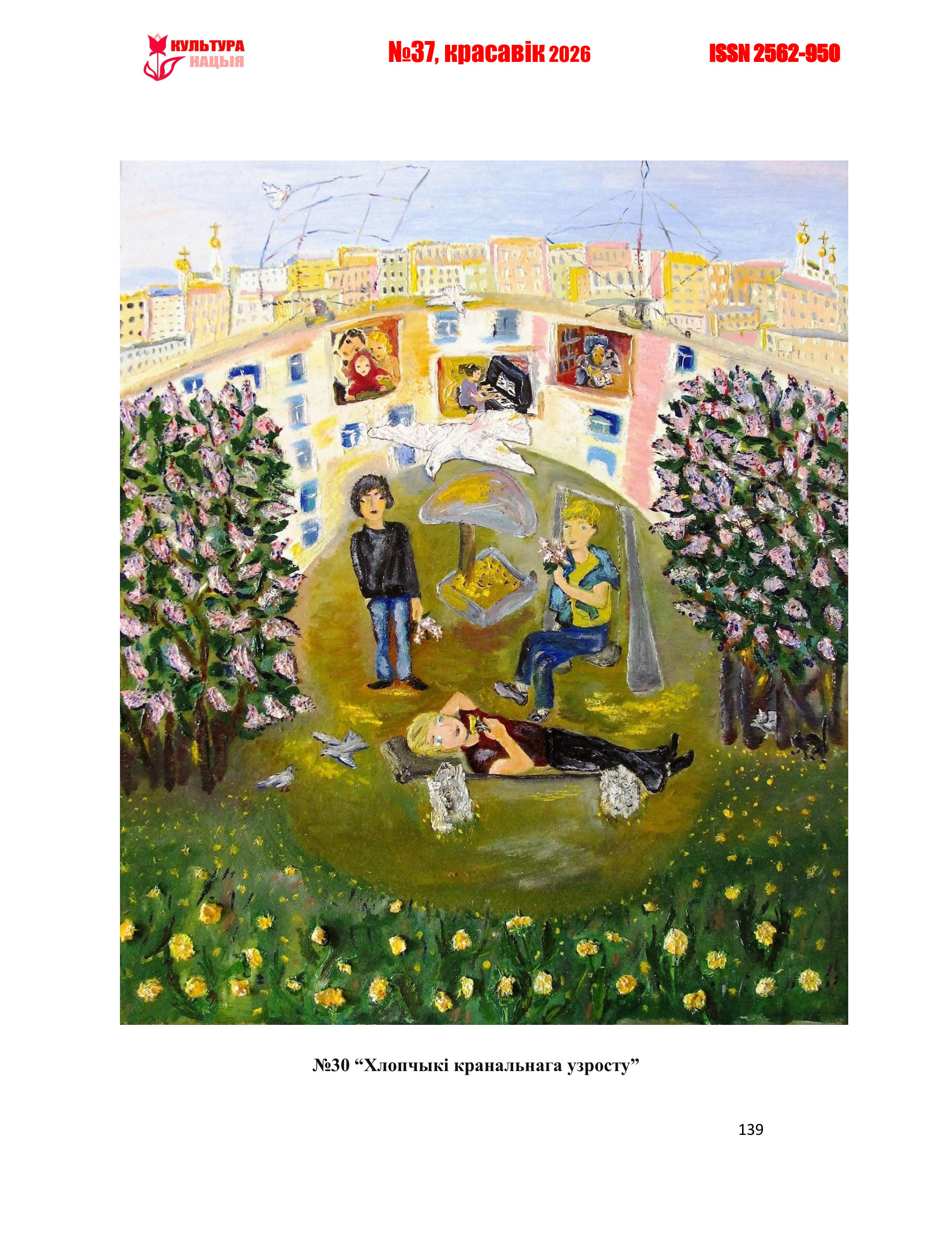
№30 “Хлопчыкі кранальнага узросту”
Літаратура, паэзія
Людміла Андзілеўка: УВАСКРАШЭННЕ ЛАЗАРА ці “кардонавыя думкі”або куды вядзе “Шлях дробнай сволачы”
Колькі грому і маланак выклікаў на сябе Леанід Андрэеў, першы, хто задумаўся, а што далей адбывалася з Лазарам, якога падгнілым, смярдзючым вывелі ў разбэрсаных пеленах да народу? Як ён пачуваўся, пасля таго, калі з жахам разбеглася радня, суседзі…
Колькі было крытыкі, бруду, нянавісці. Як пасмеў на святое замахнуцца?! Не замахваўся, зазірнуў на пару крокаў далей… Паспрабаваў запытацца – што ж потым з ажыўленым зомбі адбывалася? Бо то і быў самы найсамейшы зомбі. Не ўваскрэс жа ён у Славе Святога Духа, навошта тады было Хрысту яшчэ раз паўтараць пакуты ўваскрашэння, што за гульня?
Леанід Андрэеў спрабаваў давесці, альбо вы не разумееце Пісання, альбо не жадаеце думаць ані.
Адкрываючы “яшчык Пандоры”, прадчуваю, як узненавідзяць і мяне сотні тысяч закаханых чытачак Святланы-Евы. Аўтарка змагаецца з хваробай… Ці маю права наогул кранаць – стакроць разважала. Але не мусіць так быць, каб зацінала штось думак бегу. Лёс літаратуры, мастацтва штурхае ў спрэчку, няўдзячную спрэчку. Мне ужо адвалілася ад роднай дачкі наводмаш: “Мама, ты ёй зайздросціш! Ёй далі Гедроца, а табе – не. Вот і ўсё! Яна такая шчырая, такая шчырая!”
МАю думку: шчырасць адрозніваецца ўсё ж ад эксбіцыянізму і нудызму, ад сада-мазахізму і прочых ПСРЛ і ПТРЛ. Гэта не нова! Раней па царкоўных падворках таўклося процьма нябогаў-жабракоў, яны тыцкалі ў твар прыхажан сваімі кульцямі, гнойнымі ранамі, свярбючымі болькамі, калецтвам, сярод іх не стоадсоткава было юродзівых, не стоадсоткава. Добра, як адзін на дзясяткі храмаў. Астатнія – проста калекі.
Я не ханжа, не маю ніводнай прэтэнзіі ні да Асобы пад імем Святлана Курс, ні да пісьменніцы Евы Вежнавец, якая мае дар слова дадаваць да слова, складаючы з іх чароўныя вобразы. Цікавыя абедзьве. Пытанні ў мяне толькі да сапляменнікаў-бізнесоўцаў ад роднай літаратуры, якія дзеля заробку на канаючай Бацькаўшчыне, ладзяць маштабныя феерыі-кампаніі па стварэнню мыльных пухіроў, высвятляючы напрамкі, выхоўваючы густы новага чытача. На вачах дзелавыя людзі ператварылі мастацтва ў “жоўтае чытво”, гонячыся за моднымі тэндэнцыямі, час
выкарыстаць азначэнне – “заходнімі” і не праўдай будзе. Там даўна перахварэлі дурнотай і пайшлі далей, ствараць СВАЁ сапраўднае, вялікае сусветнае мастацтва: мы ж, як заўсёды, пляцемся другасныя паўтаракі, падберым з-пад ног кінутыя аб’едкі: калькуем, малпуем, дагаджаем пад моду чужую падрабляючыся.
Адгрымела слава прэміраванага твора, доўга і справядліва пратрымалася на ўсіх каналах і сайтах сеціва, зацяняючы разрэкламаванай папулярнасцю наступных лаўрэатаў. Пра іх без рэкламы ніхто дужа і не дазнаўся. Я не прапусціла ніводнага інтэрв’ю Святланы-Евы, ніводнай гутаркі, бяседы, допісу. Мне ўсё і да гэтай пары цікава. Нецярпліва чакала новы твор. Карціць жа пабачыць развіццё, перспектывы пісьменніка. Відавочна ў чаканні занепакоілася і сама Кампанія сучаснага літаратурнага працэсу за мяжой. Рух здзьмухаецца, сыходзіць цікаўнасць, а рэкламаваць няма чаго, новыя імёны вымагаюць капіталу: тут жа заараная ніва – толькі засявай...
І паддаецца аўтарка авантуры рэанімаваць першую кнігу, якую самаруч знішчыла і закляйміла. Знішчыла ўвесь наклад “да аснаванья, а зацем...” ажывае “новая” пахаваная пісьменніцай як нябожчык кніга “Шлях дробнай сволачы” і - на – пацвярджае падступную думку-здагадку, а ці быў хлопчык? Ці дзяўчынка? Ці быў Воўча? Неяк раптам тая і гэта кнігі зліліся ва ўражанні ў суцэльную чарнуху. Чытаю “Шлях” бы старонкі газеты “Спідінфо” – а ці не той гэта Мірлік, а Ш. і мастак дужа пазнавальны і вершаскладальнік знаёмы? Казыча чытво струны цёмных вібрацый душы. Аўтарка прапануе паглядзець на гісторыю Беларусі праз залітыя алкаголем вочы бадзялай дзеўкі. Не шукайце маралі – мне б свае грахі замаліць. Тут толькі пра літаратуру…
Чалавек мае абсалютнае права пражываць сваё жыццё, як абыходзіць, як жадае, як лёс спрыяе. Кожны мае права апісаць у кнізе сваё, ці чужое жыццё, фантазіі. Тым больш, калі маеш талент. Аўтарка з найталенавітых. Але я не пазнаю свой час, я ж таксама жыла ў тыя гады. Нібы ў іншым свеце… Мой Адраджэнскі рух не вымяраўся колькасцю выпітага Кальвадосу ці пералікам выпадковых партнёраў.
Тады толькі адкрываўся вакаём, усе з’явы набывалі новы сэнс, нібы ачышчалася прастора – людзі дабрэлі, станавіліся адкрытымі адзін аднаму. Нават чынавенства, разгубленае ў няведанні - каму ж цяпер дагаджаць? - парабілася чалавечным, размаўляла з павагай без пагроз...
Не! Найшчаслівейшыя гады краіны і народа – зусім не такога апісання варты. Шкада, але і “Воўча” аўтаматам за “Шляхам” пайшоў на перагляд! Ці так яно ўсё было, ці паўсюль так чорным-чорна? Ці гэта пра Беларусь наогул?!
За дэманстрацыяй уласных крывацечных язваў - відавочная даніна сучасным літаратурным "законам" выстаўляць хваробы напаказ (без вычварэння тэкст не ў модзе) аўтарка не дазваляе засяродзіцца на лёсах герояў, адчуць глыбіню іх трагедыі. Нібы наўмысна паказвае - а ці такія здольныя перамагчы, ці, наогул, - яны варты лепшага жыцця? Мае продкі жылі не па воўчых законах: “На ўсю акругу ў нас на колькі вёсак адзін бедны п’яніца жыў. Мы яго за хворага трымалі. Ніхто не піў, барані Бог! А вясёлыя былі! Насмяёмся так – жываты трашчаць! Песні якія спявалі! Ніводнай работы не рабілі бяз песні, ой! Ці ў поле, ці ў лес толькі пяём і пяём! Аж галава закруціцца!” – успаміны маёй мамы. А якія падзеі апісвае аўтарка? Чаму не заўважала нічагуткі станоўчага, чалавечнага? Колькі героеў нарадзіла гісторыя! Адны з пакутаў выходзілі прасветленымі, богаадухоўленымі, тыя – моцай напоўненыя… Але хтосці выпадковы ды і адкрываўся кіслым нутром.
Прычыны такога ракурсу бачання ў тым, што аўтарка па духу не беларуска, яна не хрысціянка. У крыві яе вядзёмская сіла. Веда магутная, найбагацейшая з’ява, але яна ўсяго толькі часцінка Госпада-Бога, не ўвесь Сусвет. Можа яго пуп, можа патыліца, можа дупа… Толькі часцінка Велічы. Сіла кіруе ведзьмакамі, альбо яны імі, усяк бывае. Іх зрок правядзе праз падземныя заслоны, знойдзе хады-выхады – ў руках Ключы! Але яны мусяць мець разуменне – куды вядзе гэта сіла? Злосць – сіла ведзьмакоў.
“Зло, собственно, не есть субстанция, но лишение добра. Подобно тому, как мрак не другое что есть, как отсутствие света.” М. Валошын.
Злосць у кожным слове гераінь, нянавісць, жаданне помсты. Забіць чалавека ў разуменні аўтаркі – што муху раструшчыць, атруціць, знішчыць. Вядзьмакі выдатна бачаць у цемры, але нават не здагадваюцца пра існаванне Белага Свету. Злосць, важкая з’ява, мае найбольшую масу на адзінку вымярэння, злосць – кара ведзьмакоў, бо не іх “царствія нябеснае”. Не хачу я такой Белаусі, чыё шчасце здабывае злодзей, п’яніца і дзеўка. Такое жыццё мы і бяз іх даўна маем, стагоддзе пераваліла. Ці ёсць хоць якая надзея перамагчы цемру цемрай? Ці хто спраўляе вяселле за жалобным сталом? Ці шукаюць шчасця народжанаму немаўля на могілках? Сюжэт кнігі бязлітасна адказвае на ўсе пытанні - не! не! не! у беспрабудным стане будучыні не здабыць. Калі чалавек сам сабе не гаспадар... праўда... ён МОЖА заставацца пры тым таленавітым пісьменнікам...
“И не стало времени, и сблизились начало вещи с концом её: ещё только строилось здание и строители ещё стучали молотками, а уж виднелись развалины на месте его и пустота на месте развалин. Ещё только рождался человек, а над головой его зажигались погребальные свечи, и уже тухли они и пустота становилась на месте человека и погребальных свечей.”
Л. Андрэеў “Еліазар”
Маленькія дзеці інтуітыўна імкнуцца да нормы. Для дзіцяці балючая траўма разумець, што ён, альбо яго сям’я ў чымсці не такая, як сям’я яго сяброў. Тое нікім не прывіта, не выхавана, гэта прыродай прадугледжаная патрэба – памятаць, востра адчуваць норму. Вось гэты барометр якраз і ламаюць пісьменнікі, мастакі, рэжысёры, законадаўцы, грамадскія дзеячы, сваім гнайнікам надаючы статус нормы і нават прэстыжнасці.
Ці было б у дваццатым столькі светлай, чыстай моладзі, якая прыняла на сябе эстафету... каб "Адраджэнне" стваралася ў беспрабудным пахмеллі і блудзе?
“Жыццё – багна, сусвет – цемра, грамадства – смурод! – даводзіў філосаф-чарвяк, точачы кучу гною.” Высунуў бы нос вонку – там сонца, неба, белы свет... Яго пункт назірання патанае ў выграбной яме, а ён у сімвал філасофіі ўзнімае свае высновы.
Бессмяротнасць Шолахаўскага "Ціхага Дона", перш за ўсё, у нескажонай праўдзе - там няма правых і вінаватых, там няма меркавання аўтара, там - ШЛЯХ НАРОДА і ЧАЛАВЕЧАЙ ДУШЫ З СТАНУ ДЗІКУНА ДА АЧАЛАВЕЧВАННЯ.
Мядзьвежую паслугу робяць актыўныя літаратурныя бізнесоўцы, задаючы “духоўныя тэндэнцыі” новаму чытачу. Якую гісторыю атрымае моладзь? Яна ўжо сягоння нічагуткі не памятае не толькі здавён, нядаўныя дзевяностыя, што прынеслі столькі здабыткаў Беларусі, столькі гістарычнага матэр’ялу, у адсоткаў восьмідзесяціпяці выклікае толькі гідлівае – а што вы зрабілі? Хто ён такі, той ці гэны?! Ім усё звалілася з неба… Манкурства і пустэча. А як падаваць родную гісторыю ды ў ключы Спідінфо… то яна тым і зайграе.
Abstract. In the “Literature” section, read Lyudmila Andilevka’s story “THE
RESURRECTION OF LAZARUS or “Cardboard Thoughts” or where “The Path of the Small
Bastard” leads and her poem “Fly, Pahonja”.
Л. Андзілеўка: ЛЯЦІ, ПАГОНЯ!
Вершы і музыка Л. Андзілеўка, рэдактар слоў П. Садоўскі
Мы як вада – мы точам камень,
А заўтра хваляй устаём.
І паланёнае вякамі
З чужога вызвалім сваё.
У нашых сэрцах Каліноўскі,
Жыцця вытокі у руках –
Святы і чысты сімвал Боскі –
Наш бел-чырвона-белы шлях.
Багаславяць дзяды з бацькамі
Над светам праўду ўзняць на шчыт
І “чорны вершнік палявання”
Навекі кане у нябыт.
Пара прыйшла! Той дзень – сягоння!
Саспеў наш праведны пратэст!
Ляці! Ляці! Ляці, Пагоня!
Нясі па свеце Дабравест!
Аннотация. В разделе «Литаратура» прочтите рассказ Людмилы Андзилеўка «УВАСКРАШЕННЕ ЛАЗАРА ці «кардоновые думки» или куда ведут «Шлях дробной сволачи» и ее верш «Ляці, Пагоня».
Новыя выданьні
У гэтым раздзеле падаём інфармацыю пра нядаўнія беларускія выданьні –
25-ы том часопіса“Acta Albaruthenica”
Юры Грыбоўскі. Беларусы ў Латвіі (1918 – 1945 гг.). Беласток 2026. 1054 с., іл.
Пётра Мурзёнак. Нарысы Беларуса. Камунікат, Беласток 2025, 696 с.
Івонка Сурвілла: “У восем гадоў я была на вайне”, Połackija Łabirynty 2026
25-ы том часопіса “Acta Albaruthenica” (https://albaruthenica.uw.edu.pl/archiwum/)
25-ы нумар часопіса “Acta Albaruthenica” прысвечаны шырокаму колу даследаванняў па пытаннях беларускага мовы, культуры, літаратуры і ідэнтычнасці з асаблівым акцэнтам на перспектыву памежжа, а таксама гістарычны і сучасны кантэкст.
Том пачынаецца раздзелам “In Memoriam”, прысвечаным памяці прафесара Мікалая Цімашука, выдатнага даследчыка і выкладчыка, які зрабіў багаты ўнёсак у развіццё беларусістыкі.
Значную частку гэтага нумара складаюць навуковыя артыкулы на тэмы дыялекталогіі, сацыялінгвістыкі, этналінгвістыкі і гісторыі мовы. Аўтары аналізуюць у тым ліку такія тэмы, як лексіка, звязаная з ежай, гісторыя назваў дзён тыдня ў беларускай мове, межы беларускіх дыялектаў, функцыянаванне мянушак і праблематыка генерычнага мужчынскага роду. Важнае месца займаюць артыкулы, прысвечаныя праблеме мовы і ідэнтычнасці, ‒ як у гістарычным плане, так і ў сучасных працэсах самаідэнтыфікацыі, міграцыі і матывацыі да вывучэння беларускага мовы.
Выпуск дапаўняюць літаратуразнаўчыя даследаванні, у якіх праводзіцца аналіз езуіцкай драмы, эмігранцкай прэсы, сучаснай літаратуры і гістарычных наратываў XIX стагоддзя. Завяршаюць нумар агляды найноўшых публікацыяў па беларусістыцы і справаздачы з навуковых канферэнцыяў і палявых даследаванняў.
25-ы том часопіса “Acta Albaruthenica” дэманструе дынаміку і міждысцыплінарны характар сучасных беларускіх моўна-культурных даследаванняў.
Запрашаем дасылаць артыкулы ў наступны нумар https://albaruthenica.uw.edu.pl/be
і сачыць за новай інфармацыяй на нашай старонцы ў Facebook Acta Albaruthenica
Volume 25 of Acta Albaruthenica journal has been published.
We invite you to explore Acta Albaruthenica 25/2025, which is available at: https://albaruthenica.uw.edu.pl/archiwum/
This issue is devoted to broadly understood Belarusian studies, encompassing research on language, culture, literature, and identity, with particular attention to borderland perspectives and both historical and contemporary contexts. The volume opens with an In memoriam section dedicated to Professor Mikołaj Timoszuk, an eminent scholar whose academic legacy has made a lasting contribution to the field.
The core of the issue consists of scholarly articles in dialectology, sociolinguistics, ethnolinguistics, and the history of language. The contributors examine, among other topics, food-related vocabulary, historic names of the days of the week, the geographical limits of Belarusian dialects, the role of nicknames, and the sociolinguistic status of the generic masculine. Several articles focus on language and identity, addressing historical patterns of self-identification as well as present-day motivations for learning Belarusian in the context of migration and social change.
The volume also includes literary studies dealing with Jesuit drama, Belarusian émigré press, contemporary literature, and nineteenth-century historical narratives. The issue is complemented by reviews of recent publications in Belarusian studies and reports from academic conferences and fieldwork. Altogether, this volume highlights the interdisciplinary scope and ongoing vitality of research on the Belarusian linguistic and cultural space.
We also welcome submissions for the next issue (see NEWS - ACTA ALBARUTHENICA - czasopismo Katedry Białorutenistyki UW) and invite you to follow the Acta Albaruthenica
Facebook page: https://www.facebook.com/profile.php?id=100090166947198
Юры Грыбоўскі. Беларусы ў Латвіі (1918 – 1945 гг.). Камунікат,
Беласток 2026. 1054 с.
У лютым 2026 году ў Беластоку ў выдавецтве Беларускага Гістарычнага Таварыства й Фундацыі Камунікат пабачыла сьвет навуковая манаграфія Юрыя Грыбоўскага “Беларусы ў Латвіі (1918 – 1945 гг.)”. Аўтар зьяўляецца гісторыкам і прафэсарам, які працуе ў Інстытуце Міжкультурных Дасьледаваньняў Цэнтральна-Усходняй Эўропы Варшаўскага Ўнівэрсытэту. Дасьледуе вайсковую, палітычную й рэлігійную гісторыю Беларусі ХХ стагоддзя. Асабліва засяроджваецца на гісторыі беларуска-польскіх узаемадачыненьняў, беларускага замежжа й беларускага незалежніцкага руху. Аўтар каля 280 навуковых публікацыяў, у тым ліку 13 манаграфіяў.
Манаграфія “Беларусы ў Латвіі (1918 – 1945 гг.)” ёсьць плёнам шматгадовай працы дасьледчыка ў архівах і бібліятэках Беларусі, ЗША, Латвіі, Літвы, Нямеччыны, Польшчы, Расеі, Чэхіі і Эстоніі. У кнізе ўсебакова разглядаецца гісторыя беларусаў у Латвіі з моманту абвяшчэньня незалежнай латвійскай дзяржавы па заканчэньне ІІ сусьветнай вайны. Выбар храналягічных межаў дасьледаваньня абгрунтаваны аб’ектыўнымі прычынамі. Гэтыя часовыя рамкі дазваляюць прасачыць беларускую прысутнасьць на латвійскай зямлі на фоне такіх істотных падзеяў яе гісторыі, як: змаганьне за незалежнасьць, будаваньне дэмакратычнай дзяржавы, усталяваньне аўтарытарнага кіраваньня, панаваньне савецкіх і нямецкіх акупантаў. Менавіта ў разгляданы час Латвія была адным з галоўных асяродкаў беларускага нацыянальнага руху за межамі бацькаўшчыны. У краіне назіралася значная культурна-асьветная і грамадзка-палітычная чыннасьць беларусаў. У ранейшы пэрыяд (да 1918 г.) беларусы ў Латвіі не праяўлялі актыўнасьці. Тым часам у пазьнейшы час (пасьля 1945 г.) беларускае жыцьцё ў гэтай краіне зьнікла, а нацыянальны склад Латвіі зазнаў грунтоўных зменаў.
У манаграфіі аналізуюцца розныя аспэкты латвійска-беларускіх адносіаў, якія раней не былі прадметам грунтоўнай дасьледчыцкай увагі. Як адзначае ў сваёй прадмове да выданьня спадар Юрыс Пойканс, былы Амбасадар Латвійскай Рэспублікі ў Польшчы, кніга паказвае агульную гісторыю, многія кантакты, якія ствараліся на працягу стагоддзяў, а таксама ўсебакова дапаўняе гістарычную думку як латвійскую, так і беларускую.
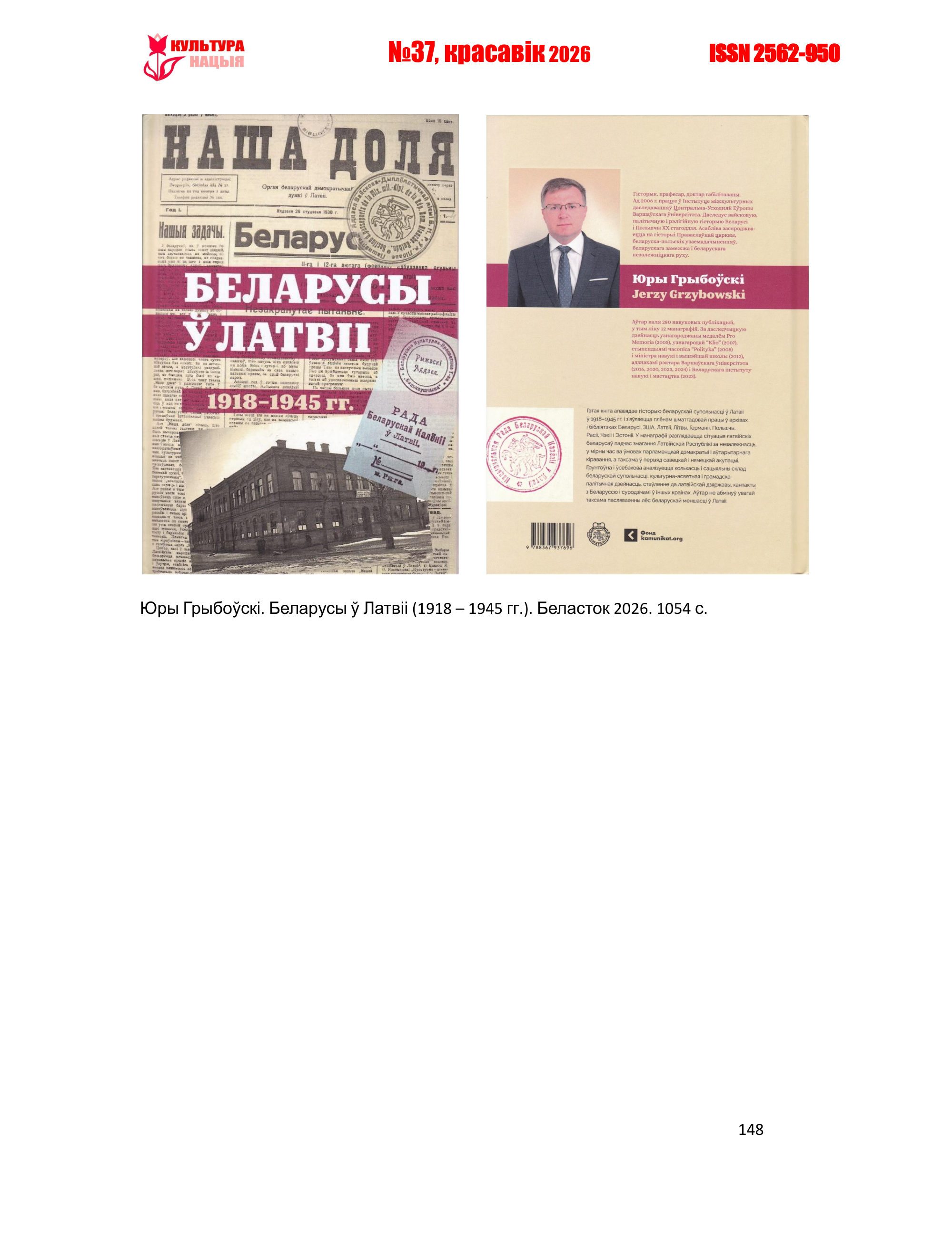
Юры Грыбоўскі. Беларусы ў Латвіі (1918 – 1945 гг.). Беласток 2026. 1054 с.
Пётра Мурзёнак. Нарысы Беларуса. Камунікат, Беласток 2025, 696 с.
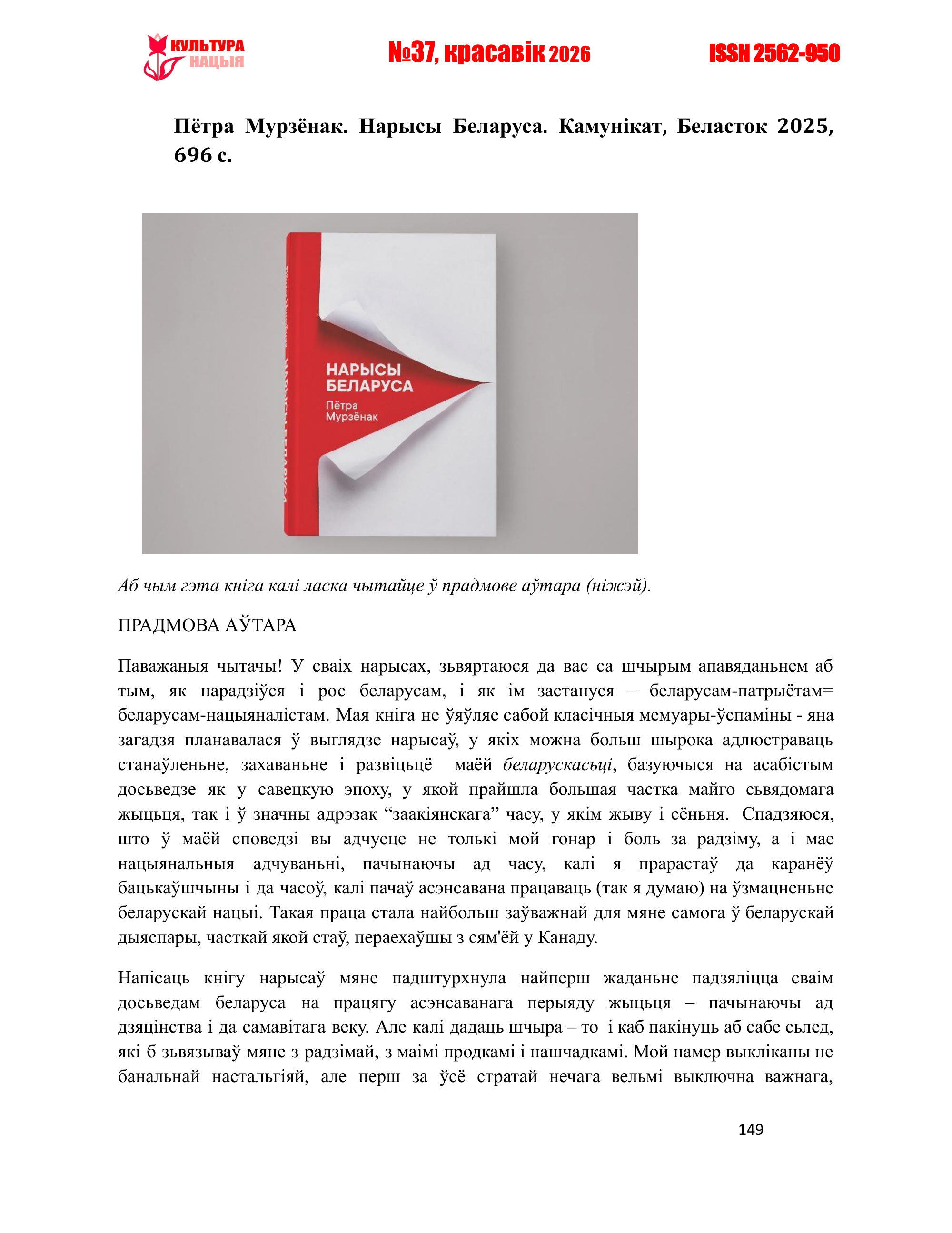
Аб чым гэта кніга калі ласка чытайце ў прадмове аўтара (ніжэй).
ПРАДМОВА АЎТАРА
Паважаныя чытачы! У сваіх нарысах, зьвяртаюся да вас са шчырым апавяданьнем аб тым, як нарадзіўся і рос беларусам, і як ім застануся – беларусам-патрыётам= беларусам-нацыяналістам. Мая кніга не ўяўляе сабой класічныя мемуары-ўспаміны - яна загадзя планавалася ў выглядзе нарысаў, у якіх можна больш шырока адлюстраваць станаўленьне, захаваньне і развіцьцё маёй беларускасьці, базуючыся на асабістым досьведзе як у савецкую эпоху, у якой прайшла большая частка майго сьвядомага жыцьця, так і ў значны адрэзак “заакіянскага” часу, у якім жыву і сёньня. Спадзяюся, што ў маёй споведзі вы адчуеце не толькі мой гонар і боль за радзіму, а і мае нацыянальныя адчуваньні, пачынаючы ад часу, калі я прарастаў да каранёў бацькаўшчыны і да часоў, калі пачаў асэнсавана працаваць (так я думаю) на ўзмацненьне беларускай нацыі. Такая праца стала найбольш заўважнай для мяне самога ў беларускай дыяспары, часткай якой стаў, пераехаўшы з сям'ёй у Канаду.
Напісаць кнігу нарысаў мяне падштурхнула найперш жаданьне падзяліцца сваім досьведам беларуса на працягу асэнсаванага перыяду жыцьця – пачынаючы ад дзяцінства і да самавітага веку. Але калі дадаць шчыра – то і каб пакінуць аб сабе сьлед, які б зьвязываў мяне з радзімай, з маімі продкамі і нашчадкамі. Мой намер выкліканы не банальнай настальгіяй, але перш за ўсё стратай нечага вельмі выключна важнага,
зьвязанага з радзімай, да якой хацелася б перакінуць кладачку, каб нейкім чынам кампенсаваць тую невымерную і цяжка вызнаваемую страту ў сваёй душы.
Як заўтра зьгіне над абшарамі у родным краі цьма, вярнуся да яго, каб прывітаць дзядоў магілы, каб захапляцца дзіўнаю красой — мілей якой няма, каб сэрца наталіць чароўнай, жыватворнай сілай.*
(*тут і далей па тэксту мае беларускія вершы)
Не выдзеліцца, а суцешыць сябе магу толькі тым, што быў не першым у падобным жаданьні падзяліцца сваімі пачуцьцямі і досьведам. Мы можам узгадаць некалькіх беларусаў, якія напісалі кнігі падобнага характару ў далёкіх-далёкіх краях ад бацькаўшчыны, напрыклад, у Аўстраліі – Я. Малецкі (1976)69 ці ў Паўночнай Амерыцы - Р. Жук-Грышкевіч (1993)70, Я. Запруднік (2013)71, В. Кіпель (2015)72, архіяпіскап Мікалай (2017)73.
Пэўна ж, вы можаце справядліва сказаць, што жыцьцёвае апавяданьне такога кшталту будзе даволі суб'ектыўным, калі прыняць да ўвагі яго рэтраспектыўнасьць – развагі пра мінулае з пункту гледжаньня сёньняшняга дня могуць несьці на сабе ацэнкі, якія б не нарадзіліся і не адпавядалі тым думкам, што маглі ўзнікнуць пры тагачасным аналізе. Часткова гэта цалкам магчыма. Але што тычыцца заакіянскага часу, то тут я спадзяюся на дапамогу як дакументаў з асабістага архіву, так і на запісы ў дзёньніку, якія я запачаў, калі апынуўся ў Канадзе.
Відавочна, цяперашні мой аналіз у значнай ступені можа залежыць і ад майго псіхалагічнага стану. Паводле даследаваньня E.Erikson74, можна выдзеліць восем
перыядаў у жыцьці чалавека і кожны з гэтых перыядаў мае спецыфічныя псіхафізіялагічныя характарыстыкі, якія маюць розную напраўленасьць: гэта перыяды дзяцінства - ад нараджэньня да 18 месяцаў і маленства - ад 18 месяцаў да трох гадоў; дашкольнага - ад трох да пяці гадоў - і сярэдне-школьнага ўзросту - ад 6 да 11 гадоў; падлеткавага ўзросту - ад 12 да 18; раньні дарослы перыяд - ад 18 да 40; сярэдні ўзрост - ад 40 да 65; і пажылы ўзрост - ад 65 і вышэй.
Першыя тры, самыя юныя перыяды жыцьця (да пяці год), не ўвойдуць у мой аналіз па простай і зразумелай прычыне – я мала што магу прыпомніць з таго юнага часу (хіба што толькі магу ўявіць нейкія эпізоды з маміных апавяданьняў ці падаць здымкі з таго часу). Што тычыцца маёй цяперашняй узроставай групы (65+), то яна, паводле E.Erikson, сканцэнтравана на адлюстраваньні мінулага і цяперашняга жыцьця - у кароткім выглядзе гэты перыяд абазначаецца як “сумленнасьць супраць адчаю”. Людзі ў гэты перыяд спрабуюць асэнсаваць адпаведны час і ацаніць яго з розных бакоў – з пункту гледжаньня нейкіх дасягненьняў і няўдач, зробленай працы і спецыфічных праектаў, і г.д. Відавочна, што посьпех на гэтым этапе вядзе да пачуцьця мудрасьці, а няўдача - да шкадаваньня, да горычы і адчаю.
Хачу запэўніць чытача, што не адчуваю пакуль што «адчаю», хіба толькі часам ахоплівае “здаровы пессымізм”, што тычыцца сучаснага стану беларускіх спраў, але ён значна саступае як станоўчаму падыходу пры аналізе падзей, так і цьвёрдай надзеі на тое, што Бацькаўшчына рана ці позна асягне галоўныя каштоўнасьці, якімі валодае чалавецтва – свабоду, дэмакратыю, мір, дабрабыт і шчасьце. Безумоўна, што пры аналізе беларускіх спраў неабходны ўзвешаны падыход, каб не нанесьці пры тым вялікай ім шкоды, але часам нельга абыйсьціся і без жорсткай праўды, якой бы яна ні была. Упэўнены, што камусьці мае словы ў кнізе будуць не да спадобы і нават прадбачу рознага кшталту непрыемнасьці для сябе, апроч тых многіх, якія ўжо паспытаў, асабліва тут - у дыяспары. Але здаецца, што надыйшоў такі час, калі мне ўжо не выпадае абыходзіць хібныя і вострыя вуглы, якіх я стараўся пазьбегнуць як у ранейшых публікацыях, так і ў сваіх дзеяньнях на вачах у беларускай грамады. На маё сёньняшняе разуменьне, для росквіту Беларусі такая праўда можа быць больш карыснай, чым яе пазбяганьне. Дык хай будуць ласкавыя мае апаненты.
Буду вельмі ўсьцешаны, калі мой досьвед і мае думкі будуць карыснымі беларусам розных пакаленьняў як у разуменьні нацыянальных праблем, так і ў іх практычнай рэалізацыі. Асабліва буду рады, калі кнігу пачытае моладзь – ёй будаваць новую Беларусь!
Івонка Сурвілла. “У восем гадоў я была на вайне”
Гэтая кніга – успаміны страху і болю, якія перажыла васьмігадовая дзяўчынка Івонка, пакідаючы Беларусь разам з сям’ёю ў 1944 годзе. Сёння Старшыня Рады Беларускай Народнай Рэспублікі Івонка Сурвіла называе тыя дзесяць месяцаў найбольш небяспечнымі. Гэта гісторыя ўцёкаў паміж жыццём і смерцю, а таксама аповед пра бязмежную любоў бацькоў да сваіх дзяцей, якія разам перажываюць вайну. Выданне з’яўляецца перакладам з французскай мовы і па-беларуску публікуецца ўпершыню. Выхад кнігі прымеркаваны да 90-х народзінаў Івонкі Сурвілы, уключае слова рэдактара, біяграфічнае эсэ пра аўтарку, а таксама фоталетапіс ейнага жыцця ды здымкі некаторых мастацкіх працаў. Выданне з’яўляецца даніной пашаны і сведчаннем надзвычайнага лёсу дзеля беларускай справы.
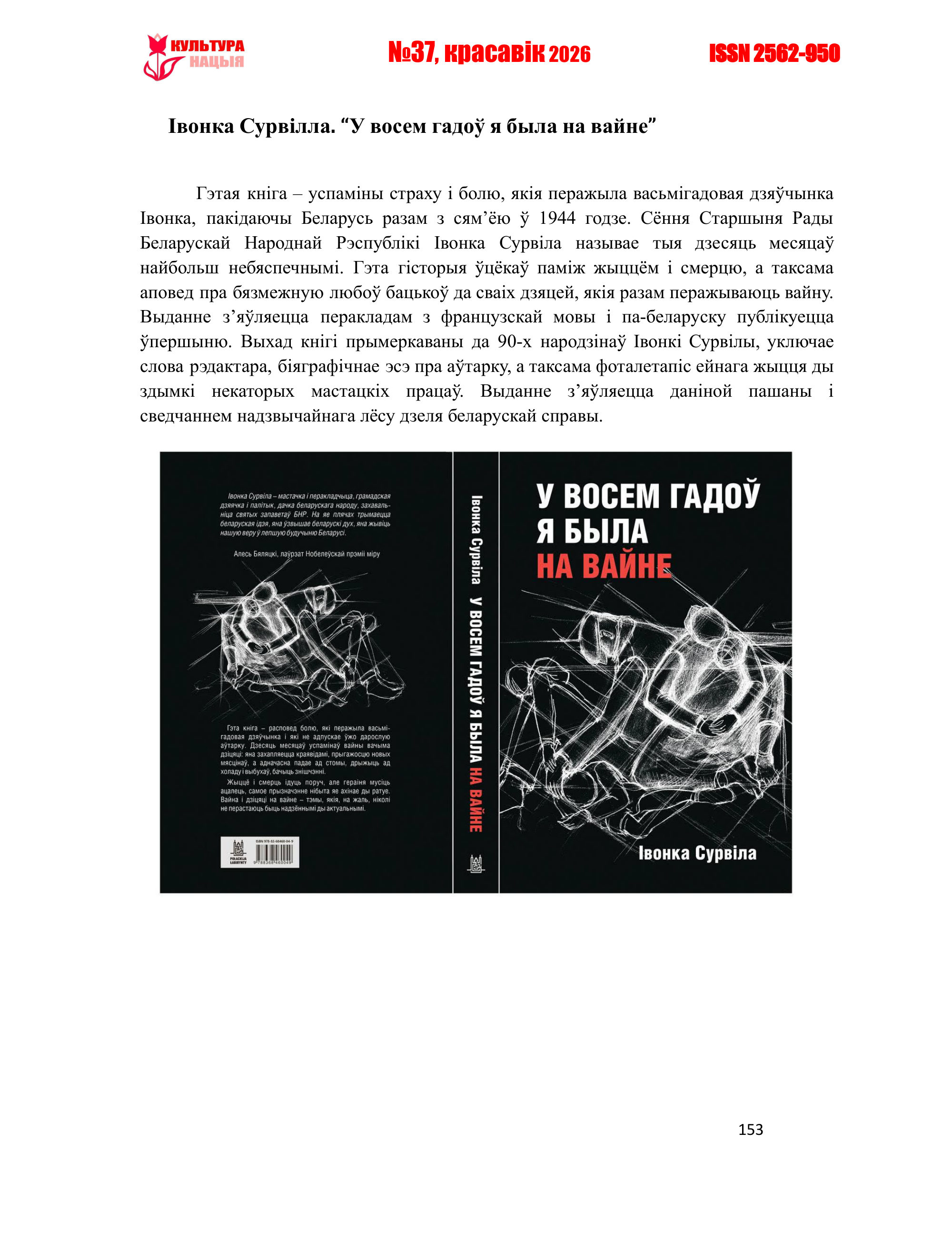
Abstract. In section “New books” we provide information about recent Belarusian publications – two new books and the next issue of the magazine“ Acta Albaruthenica:
(webzine "Culture. Nation," issue 36, November 2025, pp. 170-174, www.sakavik.net)
• Yuri Hrybowski. Belarusians in Latvia (1918 – 1945). Bialystok 2026. 1054 p., ill. https://kamunikat.org/my-addali-w-druk-chargovuyu-knigu
• Piotr Murzionak. Essays of the Belarusian. Communikat, Bialystok 2025, 696 p.
• The 25th volume of the magazine “Acta Albaruthenica” has been published
Aннотация. В разделе "Новые книги" мы размещаем информацию о последних белорусских изданиях - двух новых книгах и очередном номере журнала "Acta Albaruthenica"
• Юрий Грибовский. Белорусы в Латвии (1918 – 1945). Белосток, 2026. 1054 с., ил. https://kamunikat.org/my-addali-w-druk-chargovuyu-knigu
• Петр Мурзёнак. Очерки Беларуса. «Коммюникат», Белосток, 2025 г., 696 стр.
• Вышел в свет 25-й том журнала «Acta Albaruthenica».
Сяргей Кандраценка: Інтэрв’ю з П. Мурзёнкам, аўтарам кнігі “Нарысы Беларуса”, для чытачоў «Будзьма» і ЗБС «Бацькаўшчына»
С.К. «Нарысы беларуса» атрымаліся вельмі аб’ёмнай і насычанай кнігай, у тым ліку дакументамі і фотаматэрыяламі. Але калі коратка: пра што яна? Як бы Вы самі, літаральна некалькімі сказамі, апісалі яе будучаму чытачу?
П.М. Кніга не належыць да жанру мемуараў, хаця яна і дасткова аўтабіяграфічная. Ад самага пачатку яна задумывалася як кніга пра станаўленьне маёй беларускасьці ў бацькоўскім доме і на радзіме, так і пра ўмацаваньне маёй беларускасьці ў дыяспары пасьля эміграцыі ў Канаду ў 1998 годзе. Такім чынам, галоўнай ідэяй кнігі стала апісаньне і характарыстыка станаўленьне беларускасьці на маім асабістым прыкладзе. Пазьней я падумаў, што ў нейкім сэнсе яна можа выглядаць як падручнік для беларуса-эмігранта.
Я вырас у сям’і настаўнікаў, якія працавалі ў некалькіх школах Пастаўскага раёна Віцебскай обласьці. Я вырас ў вёсцы, менавіта там ў часы дзяцінства і юнацтва, у вясковым асяроддзі, у блізкасьці да прыроды і да быту вяскоўцаў закладывалася аснова маёй беларускасьці.
Гады вучобы ў Мінскім медыцынскім інстытуце і працы навукоўцам у Беларускім навукова-дасьледчым інстытуце гематалогіі і пералівання крвыві (НДІПК, 1974-1984), а пасьля ў Інстытуце фізіялогіі Нацыянальнай Акадэміі навук (1984-1998) не шмат дадалі да маёй беларускай нацыянальнай ідэнтыфікацыі ў савецкія гады, ў часы панаваньня камуністычнай партыі, у гады, якія прыпалі на будаўніцтва камунізма ў СССР, ў часы “ілжывага росквіту” нацыянальных культур, пры адначасным
падаўленьні нацыянальнай сьвядомасьці на ўсіх “акраінах” былой Расійскай імперыі.
Мая беларускасьць значна вырасла і стала мацней, калі я далучыўся да беларускага жыцьця ў дыяспары. Пачынаючы з 2000 года і да цяперашняга часу я займаюся беларускімі справамі. Часткова гэта дыктуецца абставінамі, але з большага, маім унутраным запалам быць карысным, не пабаюся гэтага слова, для роднай Беларусі. Пакідаючы Беларусь у 1998 годзе, я быў вельмі расчараваны як прыйшоўшай прасавецкай і антынацыянальнай лукашэнкаўскай уладай, так і апатычнасьцю саміх беларусаў да ўсяго нацыянальнага. Я не магу сказаць, што прыехаўшы ў новую краіну я адразу апантана рынуўся ў беларускія справы. Матывы майго падключэньня да рознага роду актыўнасьцяў падрабязна апісана ў кнізе. Каб не паўтарацца, коратка нагадаю пра іх – гэта найперш арганізацыя беларускай суполкі ў Атаве (Атаўскі адддзел Згуртаваньня беларусаў Канады), правядзеньне розных імпрэз, сустрэч, маніфестацый і г.д.
Даволі значная частка кнігі апавядае пра мой сьвядомы ўдзел у іншых галінах нацыянальнага будаўніцтва асабліва заўважны і для мне самаго з часу заснаваньня вэб-часопіса “Культура. Нацыя” у 2012 годзе. Магчыма словы “нацыянальнае будаўніцтва” гучаць для кагосьці занадта моцна і пафасна, але мяркую, менавіта гэтыя карнявыя словы былі пакладзены мной
С. К. (2)У «Нарысах» побач суіснуюць вельмі розныя рэгістры – ад аналітычнага разбору гісторыі Беларусі з лічбамі і мапамі да асабістых мемуараў і нават амаль трылерных сюжэтаў з жыцьця эміграцыі. Чаму Вам было важна захаваць такую панарамную і жанрава разнастайную структуру кнігі?
П.М. Дзякую вам за ўважлівае прачытаньне кнігі. Сапраўды, кніга атрымалася разнастайнай. Магчыма, з-за таго, што яна , па-першае, ў нейкім сэнсе адлюстроўвае розныя этапы станаўленьня маёй беларускасьці. Беларускасьць – ключавое слова ў
кнізе, вакол якога лагічна групаваліся жыцьцёвыя розныя падзеі і прыклады, якія адпаведна апісаны ў 12 главах і чатырох частках кнігі. Структура кнігі склалася адпаведна логіцы, і храналогіі падзей.
С. К. (3) У Вас вельмі насычаны рытм жыцця і шмат розных роляў. Вы працуеце, узначальваеце БІНІМ у Канадзе, выдаеце часопіс «Культура. Нацыя» і займаецеся справамі Згуртавання Беларусаў Канады. Як Вы знаходзіце час для напісання кніг? І ці застаецца ў гэтым рытме месца для адпачынку і, напрыклад, заняткаў спортам?
П.М. Вы пералічылі некалькі маіх грамадскіх абавязкаў, якія безумоўна займаюць шмат часу, а трэба ўлічваць, што я працую ў Канадзе ўжо 28 гадоў (!) (мой стаж у Беларусі склаў 31 год). Ужо праз 2 тыдні адразу пасьля прыезду ў Канаду я пачаў працаваць у Атаўскім даследчым інстытуце кардыялогіі, а пазьней у міністэрстве аховы здароў'я. Як часам жартуе адзін знаёмы адносна працы - «столькі не жывуць».
Безумоўна, я не змог бы нешта ствараць без дапамогі маёй сям'і – найперш маёй жонкі Наталіі, якая для мяне ўсё – і дапамога, і падтрымка і любоў. Нізкі ёй паклон і мая бязьмерная ўдзячнасьць.
Пісаць кнігі – не хуткая справа. Пачынаецца з артыкулаў, якія патрабуюць папярэдняй падрыхтоўчай працы – пошук крыніц, пастаянны скрынінг-маніторынг штодзённай інфармацыі і яе аналіз і г.д. І толькі пасьля накапленьня дастатковага аб'ёму інфармацыі можа нарадзіцца ідэя кнігі. Асобную долю грамадскай працы займае часопіс «Культура. Нацыя», якая ўключае як само электроннае выданьне, так і праца з
аўтарамі, рэдакцыя тэкстаў і г.д. У дадатак, асобна хачу сказаць пра свае паэтычныя схільнасьці (вершы пачаў пісаць з 1995 года.
С. К. (4) Якім Вы бачыце далейшае развіцьцё часопіса «Культура. Нацыя»? Ці плануеце выходзіць за межы тэкставага фармату альбо за межы
інтэрнэт-фармату?
П.М. На сёняшні дзень выйшлі 36 нумароў часопіса. Аб гісторыі стварэньня часопіса і яго дасягненьнях больш падрабязна можна знайсьці ў 8-й главе кнігі (сс.455-477). Наступны нумар часопіса будзе апублікаваны ў красавіку 2026 года. Рэдакцыя часопіса – невялікая. Асноўная нагрузка лажыцца на рэдактара. Тыя хто знаёмы з такога рода працай разумеюць яе характар і аб'ёмы. Шмат у чым мне дапамаюць Н. Баркар, А. Каралькевіч, Ю. Рапецкі, за што я ім вельмі ўдзячны.
Падтрымліваць нават такі сьціплы праект – даволі складаная справа. Быў перыяд, калі рукі апускаліся. Асноўнае – гэта аўтары. Тым не менш за амаль 13 гадоў існаваньня часопіса ў часопісе апублікаваны матэрыялы больш чым ад 80 аўтараў.
Ці запатрабаваны часопіс? Мне цяжка пра гэта сказаць. Аб'ём часопіса вагаўся ад 50 да 500 старонак. Наведваньне вэб-сайта, на якім разьмяшчаецца часопіс (www.saкavik.net ), паступова расьце (маем чытачоў з 86 краін, з іх больш паловы. 54%, гэта чытачы з Беларусі). Да прыкладу, у апошнія месяцы сайт наведваюць ад 800 да 1000 чытачоў. Мы мяркуем, што не так ужо і кепска.
Калі казаць пра развіцьцё часопіса, то магу толькі сказацаь, што пакуль будуць сілы і магчымасьці, то будзем працягваць гэту працу. Дапускаю, што фармат часопіса будзе мяняцца ў адпаведнасьці з патрабаваньмі часу і развіццьём тэхналогій.
С. К. (5) Як рэдактар, каго з аўтараў «Культуры. Нацыі» Вы б сёньня вылучылі як найбольш цікавых і значных? У чые тэксты варта ўчытвацца з асаблівай увагай?
П.М. Я вельмі цаню кожнага аўтара, які прыслаў хаця бы некалькі радкоў у часопіс. Але сярод самых актыўных магу упамянуць некалькіх аўтараў – Сяргей Панізьнік, І. Пракаповіч, І.Шумская, А.Згерскі. Назаву і аўтараў, якія спрычыніліся да напісаньня «Стратгіі развіцьця беларускай нацыі – А. Анісім, А.Згерскі, А. Трусаў, І.Шумская. На жаль, актыўнасьць аўтараў, якія непасрэдна жылі ці жывуць у Беларусі зьнізілася, так думаю, з-за рэпрэсіўных дзеяньняў гаў...га крымінальнага рэжыму ў краіне.
С. К. (6) Ладную частку кнігі складае агляд бягучай грамадска-палітычнай сітуацыі ў Беларусі і беларускім замежжы, а таксама спроба прагнозу на будучыню. Ці не страціў ён актуальнасці праз істотныя змены ў міжнароднай палітыцы, прынамсі тых яе аспектах, якія закранаюць беларусаў? Якія сцэнары
развіцьця Беларусі ў бліжэйшыя гады Вам здаюцца найбольш імавернымі?
П.М. Агляд палітычнай сітуацыі у Беларусі і па- за яе межамі заўжды прадугледжвае аналіз, папярэднія высновы і рэкамендацыі. Сітуцыя ў сьвеце вельмі складаная – тут і непрадказальная міжнародная палітыка адміністрацыі Трампа, і вайна Расіі супраць Украіны, пастаянная каланіяльная палітыка Расіі ў дачыненьні да Беларусі, і антынацыянальная ўнутраная палітыка Лукашэнкі (аж да этнацыду свайго народа).
Ацэнкі, дадзеныя ў кнізе, улічваючы міжнародныя тэндэнцыі зроблены на канкрэтны гістарычны момант. Відавочна. што магчыма нават праз пару месяцаў яны сваю актульнасць згубяць. Але іх усё роўна іх варта рабіць, і не толькі для гісторыі. Назіраючы зьмены ў дынаміцы сацыёлагі і палітолагі могуць рабіць нейкія высновы. Да прыкладу, зараз некаторымі асобамі (М. Статкевіч, І. Лосік, П. Севярынец, У. Мацкевіч) робяцца спробы аналізу прычын паразы Рэвалюцыі-2020. Ці важна гэта для будучых падзей, на мой погляд, так, важна.
Прадказваць перспектыву для Беларусі не проста. Адно хачу заўважыць, што ў гістарычным плане, развіцьцё Беларусі ішло ў станоўчым накірунку толькі пры спрыяльных зьнешніх умовах. Такімі умовамі сёньня можа быць параза Расіі ў вайне з Украінай, уплыў ЗША - прамы ціск на Лукашэнку, ці праз эканамічныя санкцыі. У той жа час, не варта чакаць, на маю думку распаду Расіі. Я таксама не прыхільнік магчымай (перабольшанай) ролі узброенных фармаваньняў, кшталту палка
Каліноўскага (які зараз змагаецца ў складзе ЗСУ).
Усё ж хочацца, каб Беларусь сталася актыўным, рэальным міжнародным суб’ектам. Каб такое сталася неабходны істотныя унутраныя зьмены нацыянальнай сьвядомасьці саміх беларусаў, іх палітычнай культуры. Толькі тады могуць адбыцца ўнутраныя зьмены. А на гэта патрэбен час. Пакуль што, па нашых ацэнках, пул прыхільнікаў Лукашэнкі даволі значны і ўлада яшчэ здольна імі маніпуляваць - праз “качанавых”, праз Нацыянальны сход, праз “пятыя калоны”.
Увогуле – я прыхільнік кансалідацыі ўсіх нацыянальна-сьвядомых сіл, якія на мой погляд яшчэ здольны выпрацаваць правільную стратэгію і рэалізаваць яе на практыцы. Але для гэтага патрэбна ВОЛЯ, якой бракуе многім лідэрам “групак” і “платформаў”, якія сядзяць па сваіх кутках.
Я прыхільнік сп. С. Ціханоўскай, Нацыянальнага лідэра, і людзей, якія гуртуюцца вакол яе.
А будучую Беларусь бачу нейтральнай, дэмакратычнай, і шчаслівай. І яшчэ важны момант – хачу бачыць Беларусь, якая перастала быць калоніяй Расіі.
С. К. (7) Якую ролю, на Ваш погляд, сёння можа адыгрываць культура і інтэлектуальная супольнасць у фармаваньні будучыні Беларусі?
П.М. Культура – важнейшы складнік фармаваньня і існаваньня любой нацыі. Задайце сабе пытаньне – А ці можа жыць і развівацца рускамоўная беларуская культура? Адказ, здаецца відавочны. Таму, так думаю, пакуль беларусы не вызваляцца з-пад каланіяльнага расійскага іга (культурнага, палітычнага, эканамічнага) Беларусь не мае перспектыў мець добрую будучыню. Роль беларускай дыяспары важная але далёка не істотная і не вызначальная (як гэта ў некаторай ступені паказала і беларуская дыяспра пасьля 2-й сусьветнай вайны), Тым не менш, улічваючы яе колькасьць (а зараз за мяжой пражывае каля 2.2 мільёнаў этнічных беларусаў, або амаль кожны чацьвёрты), то вынікі яе дзейнасьці, так думаю, могуць быць заўважнымі і ў блізкай перспектыве.
С. К. (8) Ці ёсць ужо задума наступнай кнігі — і ў які бок Вы хочаце рухацца далей як аўтар?
П.М. Так, такія задумкі ёсць. У прыватнасьці, хацелася б падвесьці вынікі сваёй працы ў часопісе «Культура. Нацыя». А ўжо напісана чатыры кнігі, больш сотні артыкулаў. Беларуская нацыя ўсё яшчэ развіваецца. І мы разам з ёю. Таму праца ў часопісе будзе займаць дастойнае месца ў маіх працоўных раскладах. Веру, што будуць яшчэ і артыкулы, і кнігі. І вядома ж вершы (ужо маю пяць зборнікаў, і вершы час ад часу нараджаюцца).
З жыцьця беларускіх суполак
Рэдакцыя часопіса “Кульура. Нацыя” і Беларускі інстытут нвукі і мастацтва ў Канадзе шчыра віншуюць добравядомага дзеяча беларускай дыяспары, старшыню Рады БНР спн. Івонку Сурвілла з 90-гадовым юбілеем!!!
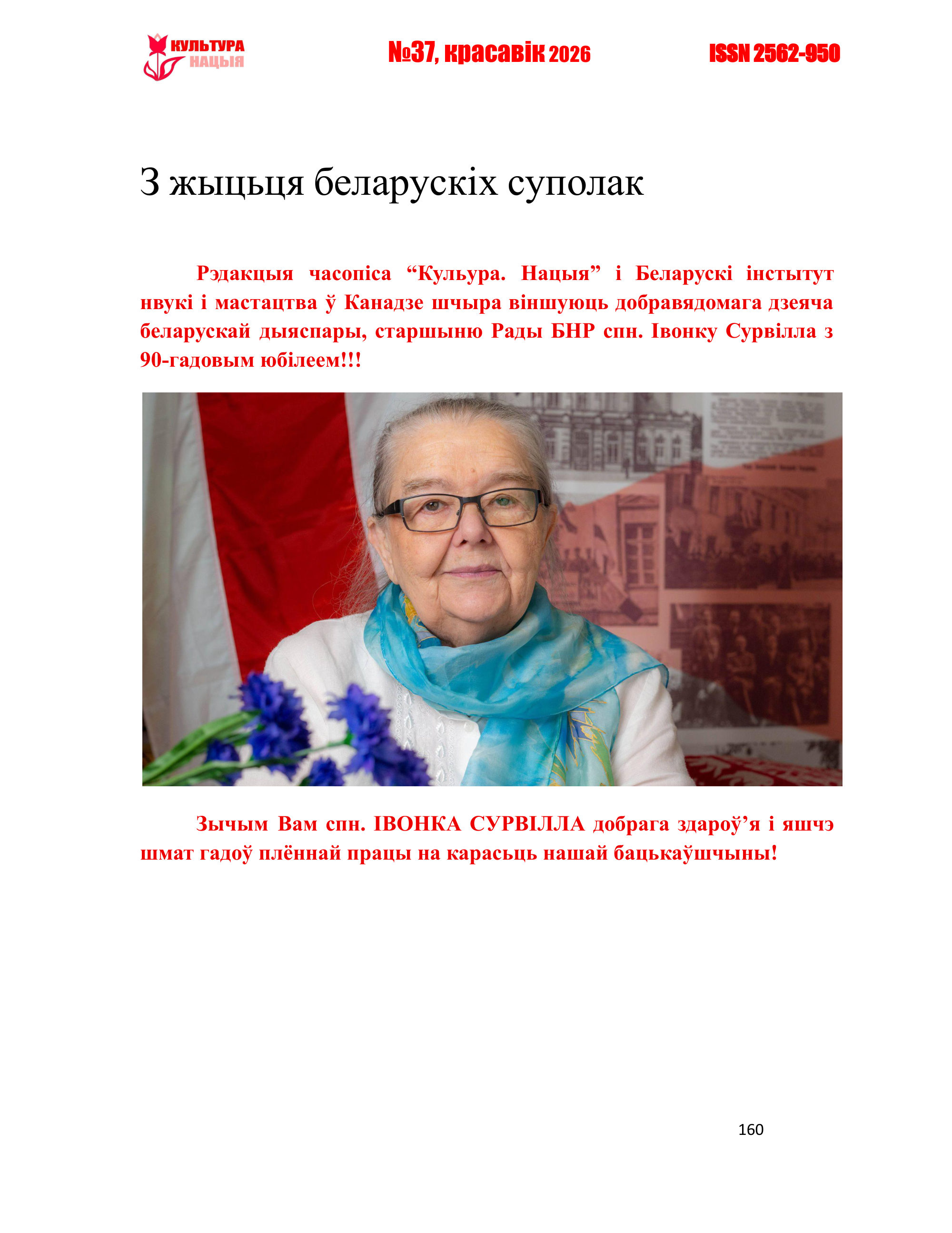
Зычым Вам спн. ІВОНКА СУРВІЛЛА добрага здароў’я і яшчэ шмат гадоў плённай працы на карасьць нашай бацькаўшчыны!
Міжнародны дзень палітзьняволеных. Сустрэча беларусаў ў Чэшскай Амбасадзе ў Канадзе / International Day of Political Prisoners. Meeting at the Czech Embassy in Canada
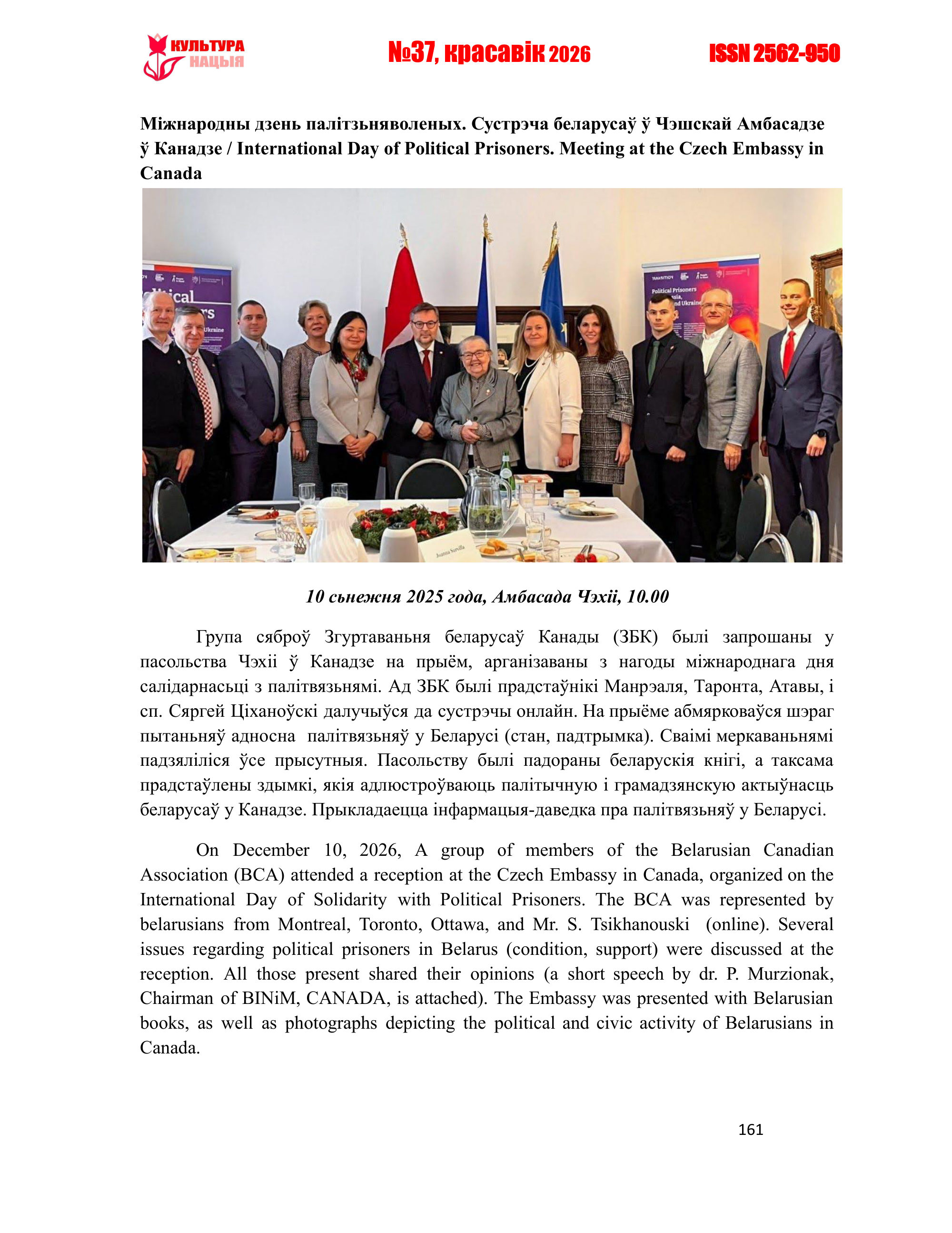
10 сьнежня 2025 года, Амбасада Чэхіі, 10.00
Група сяброў Згуртаваньня беларусаў Канады (ЗБК) былі запрошаны у пасольства Чэхіі ў Канадзе на прыём, арганізаваны з нагоды міжнароднага дня салідарнасьці з палітвязьнямі. Ад ЗБК былі прадстаўнікі Манрэаля, Таронта, Атавы, і сп. Сяргей Ціханоўскі далучыўся да сустрэчы онлайн. На прыёме абмярковаўся шэраг пытаньняў адносна палітвязьняў у Беларусі (стан, падтрымка). Сваімі меркаваньнямі падзяліліся ўсе прысутныя. Пасольству былі падораны беларускія кнігі, а таксама прадстаўлены здымкі, якія адлюстроўваюць палітычную і грамадзянскую актыўнасць беларусаў у Канадзе. Прыкладаецца інфармацыя-даведка пра палітвязьняў у Беларусі.
On December 10, 2026, A group of members of the Belarusian Canadian Association (BCA) attended a reception at the Czech Embassy in Canada, organized on the International Day of Solidarity with Political Prisoners. The BCA was represented by belarusians from Montreal, Toronto, Ottawa, and Mr. S. Tsikhanouski (online). Several issues regarding political prisoners in Belarus (condition, support) were discussed at the reception. All those present shared their opinions (a short speech by dr. P. Murzionak, Chairman of BINiM, CANADA, is attached). The Embassy was presented with Belarusian books, as well as photographs depicting the political and civic activity of Belarusians in Canada.
From the speech of P. Murzenok, Chairman of Belarusian Institute of Art and Science in CANADA
First, I would like to thank the Embassy of the Czech Republic for the opportunity to discuss Belarusian problems. To save time, I will read about 700 prepared words.
Many admit that there is no justice in the world, but it is also fair to say that it never was. Speaking of my Belarus, the injustice lies in the fact that Belarus until now cannot become free from colonial dependence on Eurasian Russia.
It seemed that a window into freedom was opened for Belarusians with the collapse of the USSR. At least it was right time when my national consciousness awakened – I’ll give just one example - I sent my youngest son to study at the only Belarusian-language lyceum in the city of 2 million Minsk, which he successfully graduated. Why did I do so? Because I really hoped that under the white-red-white flag our country would embark on a new, democratic and free path of life.
However, the efforts of the Belarusian Popular Front in the 1990s were not victorious. Then, the Revolution of Hope-2020 ended in defeat. Thousands of conscious Belarusians are in prison, hundreds of thousands of active and conscious Belarusians were forced to leave their homeland.
Nevertheless, let us not lose hope, just as Mahatma Gandhi or Nelson Mandela did not abandon it, just as our Belarusian heroes – Maria Kalesnikova, Mikalai Statkevich, Ales Bialiatski, P. Sevyarynets, D. Dashkevich and many, many others – do not abandon it too.
The country is gripped by the terror of the Lukashenko regime and by the despair of
Belarusians both at home and abroad. Personally, for me, the despair from the defeat of the
Revolution-2020 seems much greater than when I left my homeland in 1998.
Personally, for 25 years, almost since I arrived in Canada, I have been directly involved in public activities as one of the leaders of Belarusians in Canada in general, and especially regarding the Belarusian community in Ottawa. Here I would like to note that I consider our Belarusian team in Ottawa to be one of the best in the Belarusian diaspora around the world.
I am sharing only a small part of some of the photos and documents on how we organized Belarusian Saturday school, held relevant protests and events, lobbied Belarusian interests, interacted with other diasporas, collected donations for political prisoners and for other projects...
I will not list everything. I will only emphasize that my national consciousness has only become deeper and stronger over the past 30 years. Forgive me for my self-assessment here,
while I console myself with the fact that in 2012, I founded and lead the enlightenment web-zine "Culture. Nation". At the end of last month, its 36th issue was published.
It seems like a lot has been done. However, I always ask myself how effective my work and work of my friends is here abroad? Is it useful? The day before yesterday, I spoke with a Canadian 12th grade student who is preparing to study political science. She asked me two questions, to which I could not find a direct and honest answer. In short, the first question was:
1. how does the physical gathering of Belarusians abroad help sustain political resistance when protest inside Belarus is so heavily restricted? And other one:
2. Do you think that putting oneself at personal risk through protests can still be an effective way for citizens to challenge a regime like Lukashenko’s?
I doubt very much that anyone can give a direct answer to these questions. Obviously, our civil work abroad can be a moral support for those healthy forces that remain in Belarus.
Many of us support the activities of the government of S. Tsikhanouskaya, who, having taken on the burden of the work of the National Leader, has made the release of political prisoners the first position on her program, and certainly I personally ask the Czech government to continue to aid her team and other Belarusian democratic forces.
Of course, we strongly believe that Ukraine should win the war with Russia. However, in my opinion, the West is not fully realistic about the ultimate goals of an aggressive Russia – and they are obvious to me - since the XVth century, the movement of Eurasian Russia to the west has only stopped periodically. I will be very sorry if the streets of Europe will increasingly see “rejoicing Russian drunkenness.”
З прамовы П. Мурзёнка, старшыні БІНІМ, КАНАДА
Я найперш хачу падзякаваць пасольству Чэшскай Рэспублікі за арганізацыю сустрэчы і за магчымасьць абмеркавасць беларускія праблемы, і асабліва, пытаньне аб беларускіх палітычных зьняволеных. З тым каб не красьці вашага часу, я прачытаю памалу і упэўнена падрыхтаваныя нататкі (700 слоў).
Многія прызнаюць, што ў свеце няма справядлівасьці, але і справядліва сказаць, што яе ніколі і не было. Калі казаць пра родную Беларусь, то для мяне несправядлівасьць заключаецца ў тым, што Беларусь ніяк не можа стаць свабоднай і вызваліцца з-пад каланіяльнай залежнасьці ад еўразійскай Расіі.
Здавалася, з развалам СССР акно ў свабоду адчынілася для беларусаў. Па крайней меры менавіта тады ў мяне праснулася нацыянальная свядомасць – прывяду толькі
адзін з прыкладаў - я скіраваў свайго малодшага сына вучыцца ў адзіны беларускамоўны ліцэй у 2-млн горадзе Мінску, які ён пасьпяхова скончыў у 1997 годзе. Чаму? Бо вельмі спадзяваўся, што пад бел-чырвона-белым сьцягам наша краіну ступіла на новы, дэмакратычны і вольны шлях жыцьця.
Аднак, тое акно магчымасьцяў поўнасьцю не расчынілася. Высілікі БНФ ў 90-гады не былі пераможнымі, бо ў краіну вярнулся прасавецкія парадкі на часле з дыктатарамкрыміналам Лукашэнкам. Рэвалюцыя надзеі-2020 скончылася паразай. Тысячы сьвядомых беларусаў у турмах, сотні тысяч актыўных і сьвядомых беларусаў былі вымушаны пакінуць радзіму.
Тым не менш не будзем траціць надзею, як яе не пакідалі Махатма Гандзі ці Нельсан
Мандэла, як не пакідаюць яе, вельмі на тое спадзяюся, нашы героі-беларусы – Марыя
Калесьнікава, Мікалай Статкевіч, Алесь Бяляцкі, П.Севярынец, Д.Дашкевіч і многія,
многія іншыя. Слава беларускім героям!
У краіне пануе тэрор лкашэнкаўскага рэжыму і адчай беларусаў як у краіне, так і за мяжой. Асабіста для мяне здаецца адчай ад паразы Рэвалюцыі-2020 значна большы, чым той, калі я пакідаў радзіму ў 1998 годзе.
Цяпер аб тым, што намі беларусамі рабілася ў прыватнасці тут у Атаве для таго, каб набліжаць тыя моманты, калі краіна набудзе вольны і дэмакратычны стан. Асабіста я ўжо на працягу 25 гадоў, амаль з таго часу як прыехаў у Канаду, непасрэдна ўключаны ў грамадскую дзейнась у якасьці аднаго з лідэраў беларусаў у Канадзе ў цэлым, і асабліва, што тычыцца беларускай грамады ў Атаве. Тут хачу заўважыць, што разглядаю нашу беларускую каманду ў Атаве адной з найлепшых у беларускай дыяспары ва ўсім сьвеце.
Я перадаю толькі невялікую частку некаторых здымкаў і дакументаў, як мы арганізоўвывалі і ладзілі адпаведныя пратэсты і імпрэзы, лабіявалі беларускія інтарэсы ва ўрадзе Канады, узаемадзейнічалі з дыяспарамі Літвы, Латвіі, Украіны, Польшчы, арганізоўвывалі беларускую суботнюю школу, збіралі ахвяраваньні для палітвязьняў, для ЗБС “Бацькаўшчыны” і на іншыя праекты...
Не буду пералічваць усяго. Нагадаю, толькі, што мая нацыянальнасьць свядомасьць, за апошнія 30 гадоў стала толькі глыбей і мацней. Прабачце тут за самаацэнку, але суцяшаю сябе тым, што ў 2012 годзе заснаваў і вяду асьветніцкі часопіс “Культура. Нацыя”. У канцы мінулага месяца выйшаў 36-ты яго нумар.
Здаецца шмат зроблена мной і сябрамі нашай каманды. Тым не менш кожны раз задаюся пытаньнем, а наколькі эфектыўнаў ёсьць наша праца тут за мяжой, ці карысная яна?? Пазаўчора, размаўляў з канадыйскай студэнткай 12-класа, якая рыхтуецца займацца паліталогіяй – яна папрасіла дапамагчы ёй падрыхтаваць даклад
па беларускіх праблемах. Яна задала мне два пытаньні, на якіяя не змог знайсьці прамога і чэснага адказу. У сэнсе, не казаў, што, калі б то, ці гэта, ды каб не ворагі... і г.д. Калі коратка, першае пытаньне:
1. how does the physical gathering of Belarusians abroad help sustain political resistance when protest inside Belarus is so heavily restricted? Другое:
2 Do you think that putting oneself at personal risk through protests can still be an effective way for citizens to challenge a regime like Lukashenko’s?
Я вельмі сумняваюся, што хтосьці можа даць прамы адказ на гэтыя пытаньні. Відавочна, што такая праца можа быць маральнай падтрымкай тых здаровых сіл, якія застаюцца ў Беларусі. Мы падтрымліваем дзейнасьць урада С. Ціханоўскай, якая узяўшы на сябе цяжар працы Нацыянальнага лідара першы пунктам сваёй праграмы вызанчае вызваленьне палітвязьняў і я просім урад Чэхіі надалей аказываць дапамогу яе камандзе і іншым беларускім дэмакратычным сілам.
Безумоўна, мы моцна разлічваем на перамогу Украіны ў вайне з Расіяй. Аднак, на мой погляд, Захад не да канца рэалістычна ацэньвае канчатковыя мэты агрэсіўнай Расіі – а яны для мяне відавочныя – пачынаючы з 15 ст. рух еўразійскай Рассі на захад спыняецца толькі перыядычна. Мне будзе вельмі шкада калі на вуліцах Еўропы ўсё болей і болей будзе заўважна “лікуюшчая расійская п’янь”.
Дадаткова, мы прадстаўляем матэрыялы ад Беларускай сацыялагічнай групы:
Дынаміка рэпрэсіўнага ціску ў Беларусі
(асаблівасці 2025 года)
Генадзь Коршунаў
Беларуская сацыялагічная група
Уводзіны
Маштабны ціск і бясконцыя рэпрэсіі – рэчаіснасць сучаснай Беларусі. Аб гэтым сведчыць кожная новая справаздача праваабаронцаў. Апошнім часам рабіць паўнавартасны маніторынг рэпрэсіўнага ціску становіцца больш складана. З 2024 года беларускі рэжым адмовіўся ад дэманстратыўнасці ціску, а з 2025 года ўвогуле ўключыў рэжым «ціхіх рэпрэсій» – максімальнае прыхоўванне інфармацыі аб рэпрэсіях і пераслед за яе распаўсюд. Агульную дынаміку ціску ўсё ж можна ацаніць. Для гэтага можна прааналізаваць тыя звесткі, што пакуль застаюцца адкрытымі: спісы "тэрарыстаў" і "экстрэмістаў", колькасць новых экстрэмісцкіх арганізацый і абнаўленні спісаў экстрэмісцкіх матэрыялаў (колькасць судоў і колькасць саміх матэрыялаў). Калі да таго дадаць колькасць (сама)ліквідаваных НДА і звесткі па новых палітвязнях –
атрымліваецца 7 паказнікаў, дастатковых для разумення тэндэнцый рэпрэсіўнага ціску на беларускае грамадства.
«Новыя» палітвязні
Пачынаючы з 2022 года колькасць «новых» палітвязняў зніжаецца кожны год. У параўнанні з 2024-м у 2025-м годзе інтэнсіўнасць прызнання зняволеных палітвязнямі таксама знізілася: 593 супраць 448. Аднак у нашым выпадку гэты паказнік працуе не вельмі добра – праз засцярогі сваякоў камунікаваць з праваабаронцамі і зацягнутасць працэдуры прызнання палітвязнямі. 3 0 10 20 30 40 50 60 70 80 90 01'2025 02'2025 03'2025
(Сама)ліквідацыя грамадскіх арганізацый
Ліквідацыя НДА запаволілася. Параўнанне з мінулагоднімі лічбамі паказвае зніжэнне на 74% (з 385 знішчаных за год да 107). Гэта максімальнае зніжэнне з усіх паказнікаў. Такая лічба тлумачыцца вельмі проста – за папярэднія гады закрылі амаль усіх, хто, па меркаванню рэжыма, быў недастаткова лаяльнымі. Больш амаль няма каго ліквідаваць.
Суды па экстрэмісцкім матэрыялам
З другога квартала 2025 года колькасць судоў па «экстрэмісцкім матэрыялам» таксама пайшла на зніжэнне (хаця на гадавых лічбах гэта мала адбілася – -5%). Зніжаецца і колькасць пазіцый, што атрымліваюць «экстрэмісцкі» статус за адно паседжанне. Калі раней былі паседжанні, пад час якіх экстрэмісцкімі прызнавалі больш за 100 матэрыялаў, то зараз часцей працуе іншая логіка: адно паседжанне – адзін матэрыял.
Новыя «экстрэмісцкія» фармаванні Прырост эстрэмістскіх фармаванняў таксама запаволіўся. Калі ў 2024 годзе такімі было прызнана 83 арганізацыі, то ў 2025 годзе – 58. Гэтым годам экстрэмістамі прызнаваліся не толькі палітычныя і медыйныя праекты, але адукацыйныя платформы, сінктэнкі і – што паказальна – падструктуры ініцыятыў, прызнаных «экстрымістамі» раней. І тут з новым «экстремізмам» складана.
Новыя грамадзяне-«тэрарысты»
З 2022-га па 2024-ы гадавая колькасць «новых» терарыстаў вагалася паміж 156 і 172 чалавекамі. Мінулым годам тэрарыстамі прызналі 219 чалавек (прырост на 40%). Гэта максімальны паказнік за ўсе гады назірання. Як і з экстрэмістамі, прызначыць чалавека «тэрарыстам» вельмі проста.
Высновы
— Колькасць палітвязняў зараз не з’яўляецца універсальным індыкатарам жорсткасці рэпрэсій у Беларусі. Для аналізу дынамікі ціску неабходна выкарыстоўваць набор сектарных паказнікаў — У шэрагу сфер рэпрэсіўная палітыка наблізілася да стану насычэння. Сфера НДА і лічбаваінфармацыйная прастора ў значнай ступені зачышчаныя і крыміналізаваныя, адсюль фармальнае зніжэння індыкатараў ціску. Такое зніжэнне не сведчыць пра змякчэнне рэпрэсіўнага курсу. Яно адлюстроўвае толькі вычарпанне патэнцыялу для пашырэння рэпрэсій — У сферах з неабмежаванай колькасцю аб’ектаў для ціску рэпрэсіі дасюль нарошчвацца. Зараз гэта праяўляецца толькі ў росце колькасці новых «экстрэмістаў» і «тэрарыстаў» (іншыя паказнікі у гэтым кірунку схаваныя пад страхам сваякоў затрыманых і зняволеных) — Трэба ўлічваць, што сферы права і правапрымянення захоўваюць сістэмна рэпрэсіўны характар — Змяншаючыся ў адных сектарах і ўзмацняючыся ў іншых – рэпрэсіі ў Беларусі трываюць
Наступны 38-мы нумар часопіса «КУЛЬТУРА. НАЦЫЯ» выйдзе ў лістападзе 2026 года
— канец нумара · усе нумары —